In this article, Imogen Fitt reflects on Global Engage’s 12th Digital Pathology and AI Congress: Europe, and explores one of the market’s most overlooked, unresolved problems.
Cranfield, UK, 6th January 2026 – Written by Imogen Fitt
A few weeks on from London’s Digital Pathology and AI Congress and the industry conversation is still front of mind for many. With more than 500 attendees and more than 50 exhibitors, the event once again highlighted a sector full of ambition, technical progress and confidence in Digital Pathology’s long-term role in diagnostic medicine.
Yet beneath the demonstrations and panel discussions, a familiar tension resurfaced. Digital Pathology (DP) adoption continues to grow, with revenue increasing by 13.3% in 2024, according to Signify Research’s latest market data; however, progress remains uneven. For many vendors, particularly those heavily exposed to the US market, expectations are not being met, and more than five years on from the pandemic, patience with slow and inconsistent clinical adoption is wearing thin.
After two days, more than 20 meetings and countless informal conversations, one question repeatedly surfaced; one vendors struggle to answer convincingly.
Why should customers adopt DP now?
The Promise Is Clear, the Urgency Is Not
It is now well accepted that the case for DP is not hypothetical. Pathology departments globally are facing sustained pressure from rising case volumes, increasing diagnostic complexity and ongoing workforce shortages, while digitisation is widely recognised as offering practical, tangible ways to respond to these challenges rather than only offering abstract future benefits.
Crucially, this argument is also no longer being driven solely by vendors. A growing body of academic and real-world evidence now underpins the value proposition, including a 2025 study[1] examining implementation across eight leading European laboratories. This research demonstrated measurable clinical and financial impact and reinforced what early adopters have been articulating for several years. In parallel, industry support has matured, with case studies, think tanks and multi-stakeholder working groups playing an increasingly visible role in formalising best practice and shaping a more coherent narrative for the market.
Despite this, frustration among vendors is hard to ignore. Adoption is progressing, but not at a pace or scale that will sustain every supplier in what has become an increasingly crowded ecosystem. While some vendors are scaling successfully, others are struggling to maintain momentum, and consolidation, which is already underway, will accelerate. As a result, the debate has shifted. The question is no longer whether digital pathology makes sense in principle, but how its well-established value proposition can deliver repeatable, institution-specific impact in the near term, enabling vendors to build sustainable, resilient businesses in an increasingly competitive market.
The Cost and Complexity Barrier Keeps Decisions Deferrable
For vendors, the uncomfortable reality is that DP remains easy to delay. Projects are still perceived as long and labour-intensive if not executed carefully, and high upfront costs continue to dominate purchasing conversations. DP is rarely a snap decision. Even with improving vendor support, clearer implementation pathways and growing experience in the market, the road ahead is often long, complex and, crucially, deferrable.
This challenge is compounded by internal competition for budget. In larger institutions, DP initiatives frequently take a back seat to enterprise-wide IT programmes such as LIS replacements, EMR upgrades, oncology platforms or radiology IT refreshes.
Interoperability adds further friction. DP rarely stands alone in the IT stack. It must integrate with LIS, EHR and, increasingly, genomics and broader laboratory informatics platforms. This is at a time when labs are actively trying to simplify fragmented IT environments. APIs are expensive, integration work is often painful, and many customers are frustrated by limited LIS connectivity, but are unwilling to pay what it takes to resolve it. Much of this sits outside vendors’ direct control unless these companies partner aggressively or expand into informatics themselves, a strategy that is becoming increasingly common.
Another often underestimated drag on adoption is the sheer administrative weight that accompanies large-scale implementations. Once DP moves beyond a departmental pilot and into an enterprise conversation, progress slows as governance structures multiply. Business cases must pass through multiple committees, clinical safety reviews, data protection assessments and procurement frameworks, each with its own timelines and documentation requirements. Risk registers are populated, tick-boxes accumulate and momentum is easily lost. From a vendor perspective, this creates a frustrating disconnect: commercial pipelines appear healthy, yet conversion to revenue is delayed by months or even years as projects inch through administrative machinery.
The result is a familiar dynamic: DP is widely acknowledged as beneficial in the long run, but there is always a reason to start tomorrow.
Closing the Cost Versus Value Gap Means Rethinking “Why Now?”
The cost versus value gap remains one of DP’s most persistent commercial challenges. For some customers, delay is justified by what might come next. As scanners and software are increasingly deployed in real-world settings, reported issues relating to product shortcomings are becoming more visible. Slideless technologies are also advancing, and early testing is underway, fuelling the belief that the landscape will look very different in a few years’ time. But pathology is, by nature, sceptical. Moving away from glass entirely will require substantial clinical and operational evidence, and widespread conversion is unlikely to happen quickly. Waiting for future technologies and existing product updates risks becoming a convenient way to avoid decisions in the present.
This places the burden back on vendors to answer a simple but difficult question: why now, not later? Some are responding by investing in R&D and novel business models, shortening the implementation journey, simplifying deployments and reducing perceived risk. Others are finding ways to generate value and revenue earlier, rather than waiting for reimbursement frameworks to evolve. Crucially, not all benefits can be positioned as long-term promises. Biomarker discovery and advanced AI applications may be compelling, but for many customers they sit too far in the future to justify near-term investment on their own.
What resonates more strongly are immediate, tangible returns. Supporting a younger, digitally native workforce. Delivering faster time-to-value. Offering repeatable, predictable implementations that genuinely make day-to-day work easier for pathologists.
Closing the cost versus value gap is ultimately less about technology and more about execution. Workflow redesign takes time, trust and training, and customer success has become as commercially important as innovation. Vendors that invest in education, automation to reduce human error, and meaningful community engagement are far more likely to convert cautious interest into committed adoption.
One Market, Many Buyers
Finally, it’s important to note that DP is not a single buying decision made by a single buyer. It is a multi-stakeholder process shaped by clinical ambition, operational constraints and financial realities, often within the same organisation.
Pathologists, laboratory managers, IT leaders, procurement teams and senior executives all bring different priorities, risk tolerances and definitions of success.
In this context, robust market research becomes less of a value-add and more of a necessity. Evidence-based customer personas, grounded in broad, representative market data rather than assumptions or the views of a small number of key opinion leaders, enable vendors to not only understand who their buyers are, but also how they evaluate options and make decisions.
Clinicians prioritise evidence and patient impact. Administrators focus on compliance, sustainability and ROI. IT teams care about interoperability, security and long-term architecture. Procurement wants clarity on specifications, pricing and total cost of ownership. These differences should shape product development, marketing strategy and sales execution.
As the market matures, success will increasingly favour vendors that sharpen their focus, adapt their messaging and remove friction from adoption.
In short: Digital pathology should not feel like extra work, but a rational progression that makes sense to pursue sooner rather than later.
For vendors navigating uneven adoption and intensifying competition, deep market understanding remains one of the few levers fully within their control. Those willing to invest in insight, challenge assumptions and refine their approach will be far better positioned to turn promise into sustainable performance.
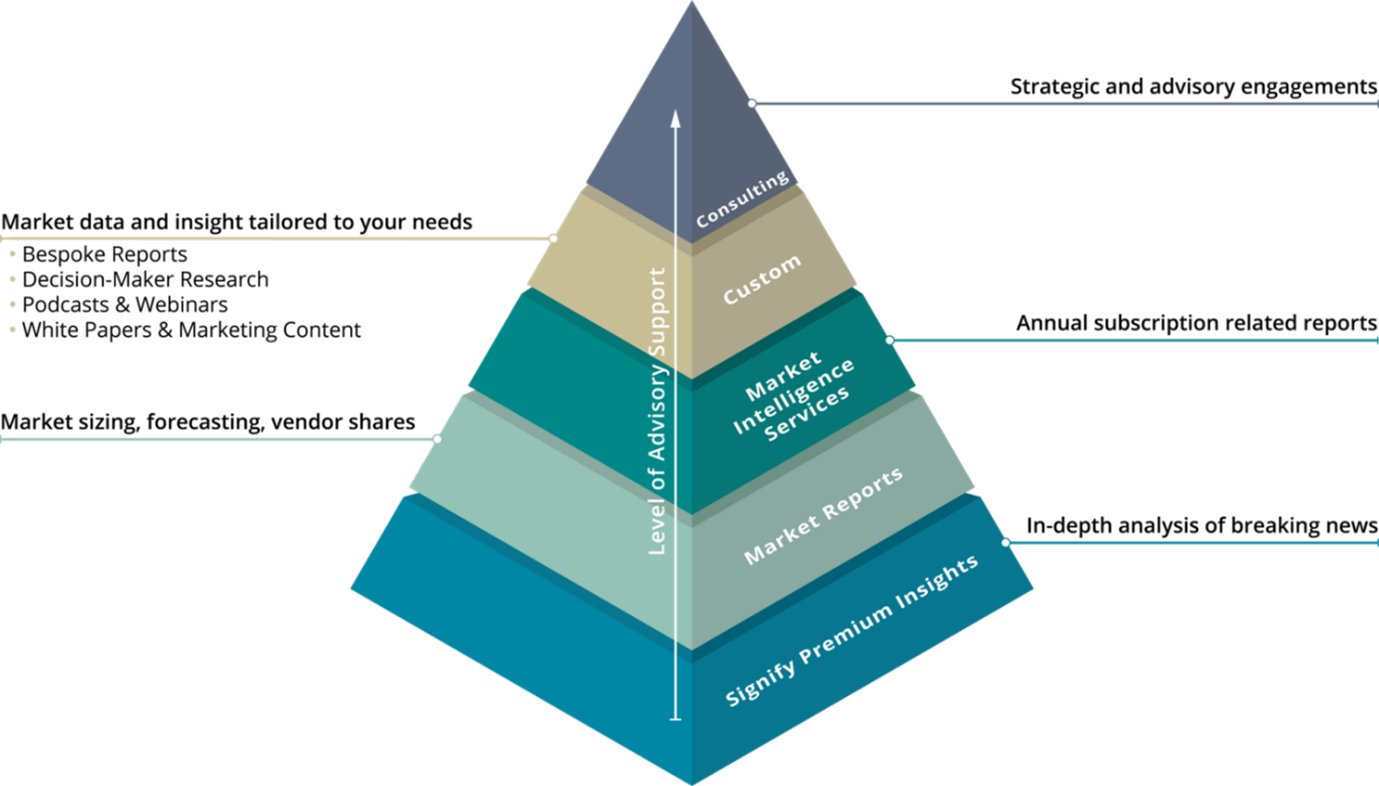
Signify Research’s services include:
- Market Intelligence Services Ongoing, data-driven insight and forecasts, combining strategic trends, market sizing, and competitive benchmarking
- Premium Insights Subscription Bi-weekly intelligence on the latest developments in Digital Pathology, Genomics, and Real-World Data. Concise, 1,200-word articles unpacking what each development means for the market.
- Custom Research & Strategic Support We also offer tailored research projects, white papers, and strategic consulting — ideal if you need deeper analysis, voice-of-customer research, or region-specific data to support commercial decisions.
If you’d like to discuss how these insights can directly support your business objectives, please don’t hesitate to message me or schedule a brief call here.
Related Research
Signify Research has been tracking the digital pathology market since 2017 and now interviews more than 150 stakeholders in the ecosystem as a part of our research every year. This includes not only digital pathology vendors but also pharmaceutical companies, CROs, pathologists, IT infrastructure companies, and adjacent LIS and radiology Healthtech vendors to provide as comprehensive an analysis as possible.
Digital Pathology Market Intelligence Service – World – 2025 provides rolling 12-month coverage of the global Digital Pathology market.
Other purchasers of our research have utilised the data and analysis within the report to:
- Inform product investment and business strategy.
- Evaluate the ever-changing competitive landscape to assess the impact of announcements and select potential partners.
- Acquire a holistic view of the nuances between different geographic and customer markets.
- Understand adjacent markets such as enterprise imaging, laboratory information systems, and the influence these will have on Digital Pathology in the future.
Please reach out if you’d like to learn more, or visit our website here to download the service brochure.
About Imogen Fitt
Imogen joined Signify Research in 2018 as part of the Healthcare IT team. She holds a 1st class Biomedical Sciences degree from the University of Warwick. Since joining the team, Imogen has studied various healthcare markets and is now expanding Signify Research’s coverage in Digital Laboratory & Lifesciences markets. She has published reports on Breast Imaging, General Radiography, AI in Drug Development and Clinical Trials, LIS/LIMS, digital pathology, oncology IT, and Real-World Data.
About Lizzie Bourn
Lizzie joined Signify Research in January 2025 as a Market Analyst within the Digital Laboratory & Lifesciences team. She holds a BSc in Biology from the University of Leeds with an industrial placement year at Amgen where she worked in patient safety. In her free time, Lizzie enjoys travelling, experimenting with new recipes, watching sports and learning how to play golf.
About the Digital Laboratory & Lifesciences Team
The Digital Laboratory and Lifesciences team provides market intelligence and detailed insights on the multiple healthcare technology markets where the clinical world intersects with the preclinical. Our areas of coverage include digital pathology, laboratory information systems, clinical Real-World Data (cRWD) platforms, oncology information systems, tumour board software, oncology decision support software and radiotherapy IT. Each report provides a data-centric and global outlook of its markets with granular country-level insights. Our research process blends primary data collected from in-depth interviews with healthcare professionals and technology vendors to provide a balanced and objective view of the market.
About Signify Research
Signify Research provides Healthtech market intelligence powered by data that you can trust. We blend insights collected from in-depth interviews with technology vendors and healthcare professionals with sales data reported to us by leading vendors to provide a complete and balanced view of the market trends. Our coverage areas are Medical Imaging, Clinical Care, Digital Health, Diagnostic and Lifesciences and Healthcare IT.
Clients worldwide rely on direct access to our expert Analysts for their opinions on the latest market trends and developments. Our market analysis reports and subscriptions provide data-driven insights that business leaders use to guide strategic decisions. We also offer custom research services for clients who need information that can’t be obtained from our off-the-shelf research products or who require market intelligence tailored to their specific needs.
More Information
To find out more:
E: en*******@*************ch.net
T: +44 (0) 1234 986111
www.signifyresearch.net
No audio available for this article yet.
No quiz available for this article yet.