The Sierra Color Calibration Portfolio
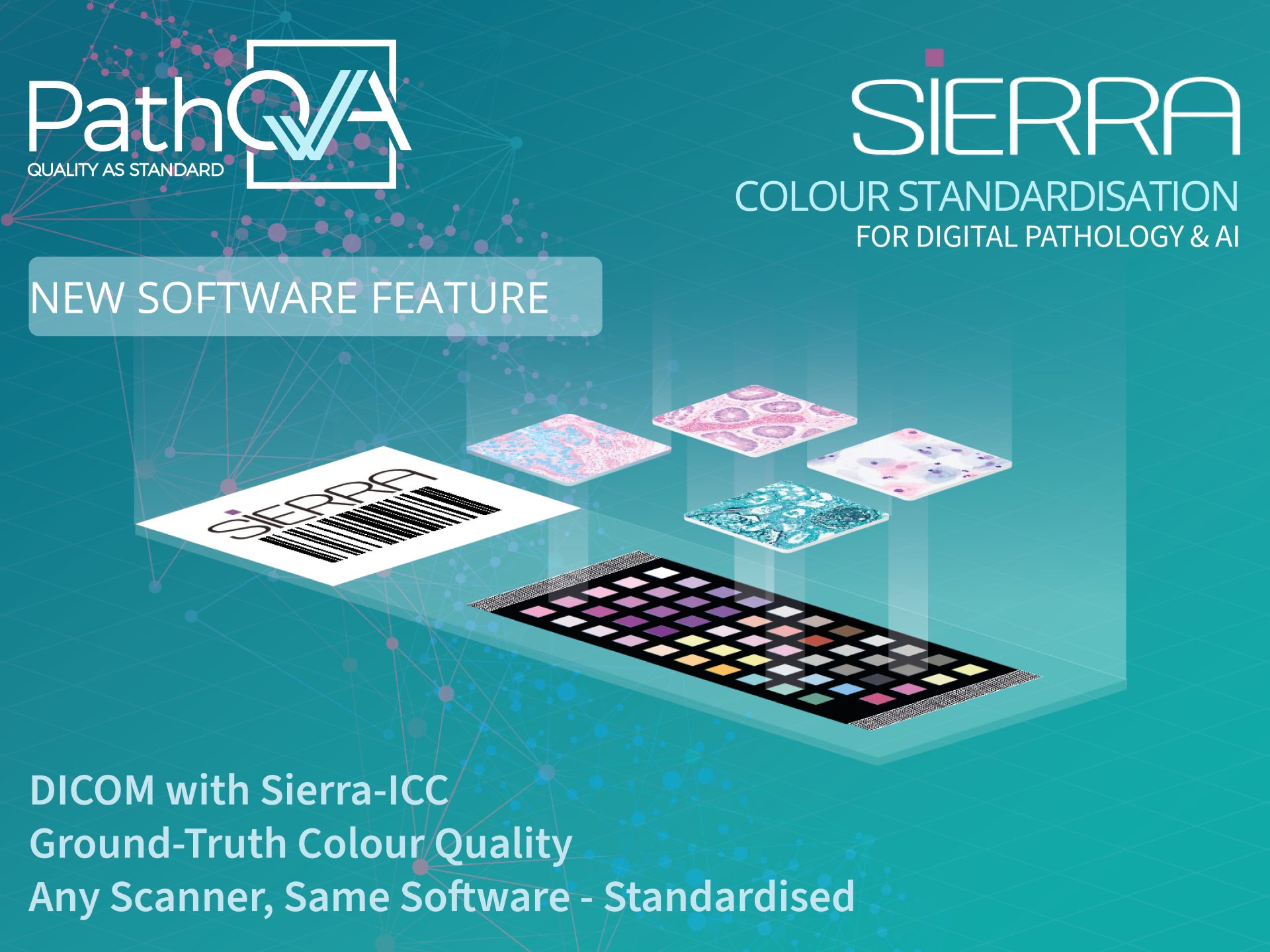
PathQA’s portfolio comprises three core products, designed to be used in unison to achieve ground truth color standardization. PathQA’s professional services team is also available for customized development and integration.
Sierra Slide
The measure of a digital pathology scanner’s color reproducibility
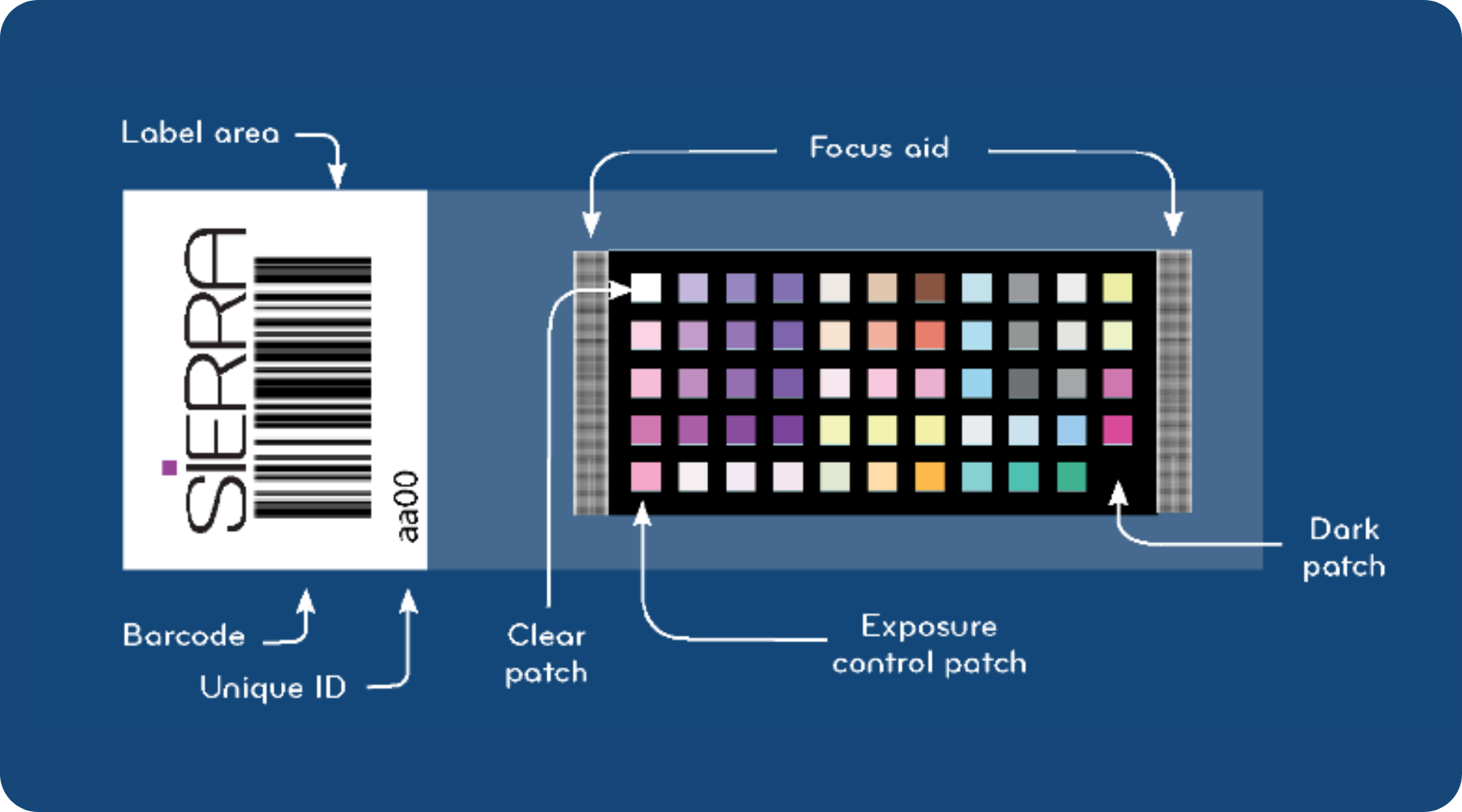
The slide features 55 biopolymer patches, which mimic histologically stained human tissue. PathQA’s accurate measurements of the slide generates a ‘ground truth’ for color correction in whole slide digital images using Sierra technology
- Small patches of biopolymer bind pathology stains and mimic tissue
- Creates breadth of pathology colors reducing risk of color distortion
- Stained with same protocol as pathology
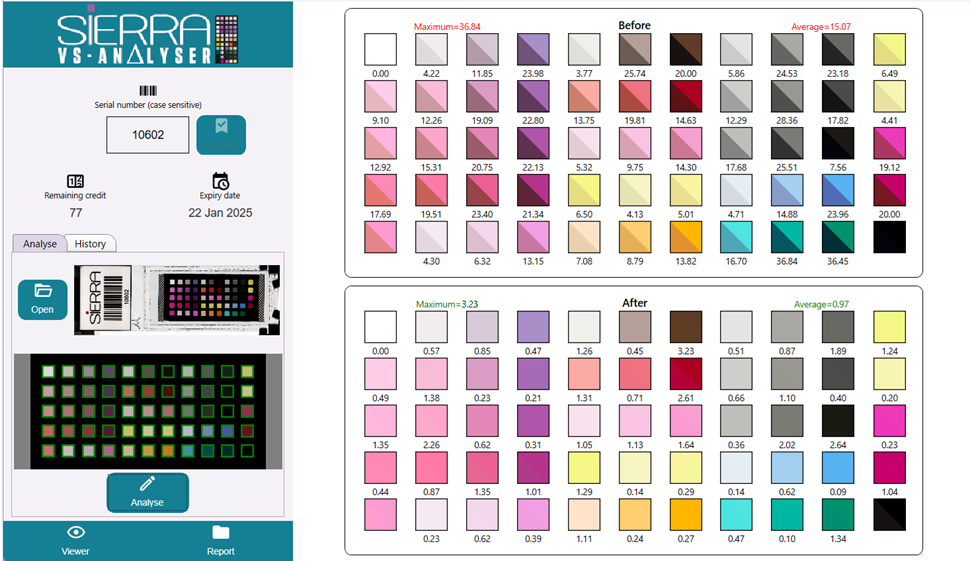
Sierra Validate and Standardise (VS) Analyser
Validating color reproducibility
How can we be sure that the digital image we see is truly representative of the slide? The software analysis tool, Sierra VS-Analyser, enables a full appreciation of any variances from ground truth color. When used in combination with Sierra Slide the color reproducibility of digital pathology scanners can be validated using quantitative metrics for color accuracy in a downloadable report and visual impact on tissue assessed in the integrated viewer.
Sierra Validate and Standardise (VS) Profiler
Standardising scanner color reproducibility
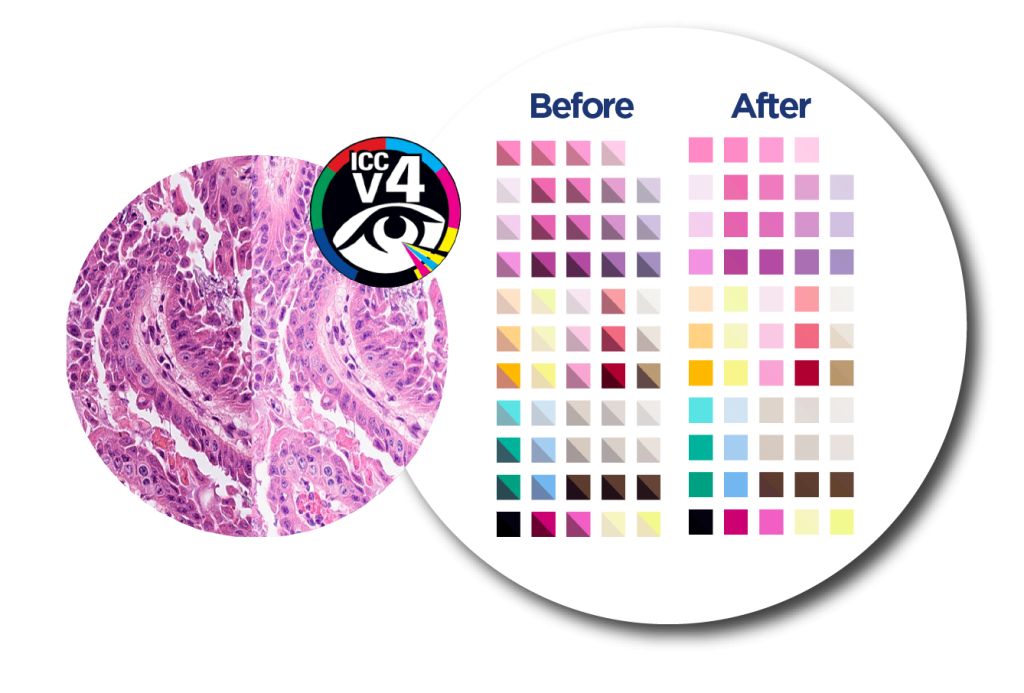
As described by the FDA, there are three datasets concerning WSI scanners: true color, intended color, and output color. By using Sierra VS-Profiler in combination with Sierra Slide you can assess a scanners ability to match the true color with the intended color. Assessing the error between the two data sets, Sierra VS-Profiler generates an ICC profile that can be used to calibrate WSI devices by embedding at scanning or correct and standardise images in downstream viewing and analysis workflow.
- Assess scanner’s ability to color match
- Mix of true color and ground truth color
- Generates an ICC profile to correct the image
Impact On Digital Pathology
- Standardization: Uniform color fidelity across various devices and manufacturers.
- Quality Assurance: Enhances QA metrics, aligning with regulatory guidelines.
- AI Integration: Improves diagnostic accuracy and reliability for AI applications in pathology.


Where to meet next

Stockholm, Sweden

12–16 September 2026

Meet the team at ECP 2026. Request an appointment to connect during the event.
PathQA at Future Conferences