Summary
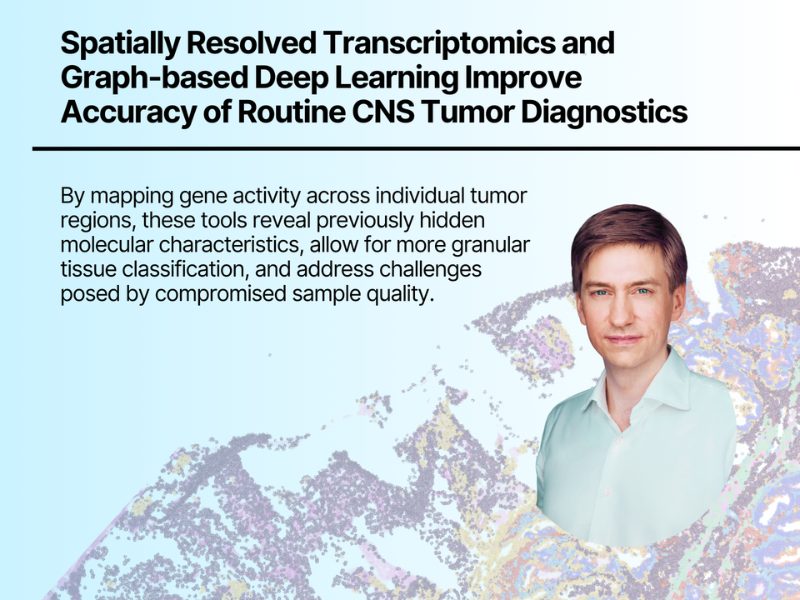
Spatially resolved transcriptomics and graph-based deep learning are transforming how researchers approach and understand central nervous system (CNS) tumors. In this webinar we will deep dive into a publication that highlights how the NePSTA (neuropathology spatial transcriptomic analysis) framework combines advanced RNA sequencing technologies with neural network analyses to uncover detailed gene expression landscapes directly within tissue samples—even in complex or ambiguous cases. By mapping gene activity across individual tumor regions, these tools reveal previously hidden molecular characteristics, allow for more granular tissue classification, and address challenges posed by compromised sample quality.
Learning Objectives:
- Understand the challenges of conventional CNS tumor diagnostics and how spatial transcriptomics addresses them.
- Learn the basics of spatially resolved transcriptomics and how graph-based deep learning is applied in neuropathology.
- Compare spatial transcriptomics with traditional molecular techniques such as DNA methylation profiling and next-generation sequencing.
Speaker:

Prof. Felix Sahm
Prof. Dr. Dr. med. Felix Sahm, MBA is Vice-Chair of the Department of Neuropathology and Head of Molecular Neuropathology
University of Heidelberg
An internationally recognized expert in brain tumor diagnostics, he has authored over 500 publications, including landmark studies shaping the WHO classification of CNS tumors. His research focuses on integrating molecular and multi-omic approaches to improve precision diagnostics and patient care.
Share this article





Follow us
Get Pathology News Delivered to Your Inbox