Pathology News
admin

About admin@pathologynews.com

This author has not yet filled in any details.
So far admin@pathologynews.com has created 1089 blog entries.

June 2021

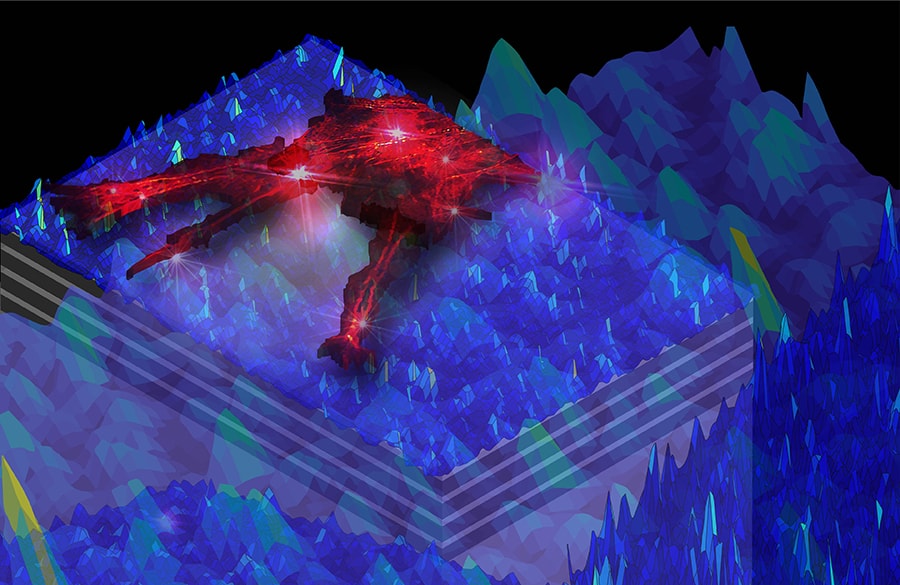
Astronomy meets pathology: Can sky-mapping algorithms be used to identify predictive biomarkers for cancer immunotherapy?

2021-06-10T19:01:16+00:00

Pairing sky-mapping algorithms with advanced immunofluorescence imaging of cancer biopsies, researchers at The Mark Foundation Center for Advanced Genomics and Imaging at Johns Hopkins University and the Bloomberg~Kimmel Institute for Cancer Immunotherapy developed a robust platform to guide immunotherapy by predicting which cancers will respond to specific therapies targeting the immune system.

Astronomy meets pathology: Can sky-mapping algorithms be used to identify predictive biomarkers for cancer immunotherapy?2021-06-10T19:01:16+00:00

Researchers create quantum microscope that can see the impossible

2021-06-09T15:55:32+00:00

In a major scientific leap, University of Queensland researchers have created a quantum microscope that can reveal biological structures that would otherwise be impossible to see. This paves the way for applications in biotechnology, and could extend far beyond this into areas ranging from navigation to medical imaging. The microscope is powered by the science of quantum entanglement, an effect Einstein described as "spooky interactions at a distance." Professor Warwick Bowen, from UQ's Quantum Optics Lab and the ARC Centre of Excellence for Engineered Quantum Systems (EQUS), said it was the first entanglement-based sensor with performance beyond the best possible existing technology. "This breakthrough will spark all sorts of new technologies -- from better navigation systems to better MRI machines, you name it," Professor Bowen said. "Entanglement is thought to lie at the heart of a quantum revolution.

Researchers create quantum microscope that can see the impossible2021-06-09T15:55:32+00:00

A joining of digital pathology forces in the fight against COVID-19

2021-06-08T12:15:19+00:00

The challenges imposed on healthcare systems are unprecedented, and medical operations worldwide are crippled. Nevertheless, the need for remote pathological evaluation and disease diagnosis amidst the COVID-19 pandemic has brought digital pathology into the spotlight, and the speed of clinical adoption of digital pathology technologies is increasing at an unprecedented rate.

A joining of digital pathology forces in the fight against COVID-192021-06-08T12:15:19+00:00

Mass spectrometry-based tissue imaging: a new era in pathology

2025-11-24T16:12:46+00:00

Recently, mass spectrometry-based assays have gained increasing popularity amongst clinical diagnostic laboratories and emerged as a promising tool for modern pathology owing to their multiplexing abilities and exceptional analytical performance.

Mass spectrometry-based tissue imaging: a new era in pathology2025-11-24T16:12:46+00:00

AI models that rely on ‘shortcuts’ could lead to misdiagnosis, a cautionary tale for AI in medical imaging

2021-06-03T05:00:01+00:00

From diagnosing disease, to personalizing treatment, to predicting complications from surgery, AI could become as integral to patient care in the future as imaging and laboratory tests are today. But as University of Washington researchers discovered, AI models — like humans — have a tendency to look for shortcuts. In the case of AI-assisted disease detection, these shortcuts could lead to diagnostic errors if deployed in clinical settings.

AI models that rely on ‘shortcuts’ could lead to misdiagnosis, a cautionary tale for AI in medical imaging2021-06-03T05:00:01+00:00

Light-Shrinking Material Lets Ordinary Microscope See in Super Resolution

2021-06-01T14:07:29+00:00

Electrical engineers at the University of California San Diego developed a technology that improves the resolution of an ordinary light microscope so that it can be used to directly observe finer structures and details in living cells.

Light-Shrinking Material Lets Ordinary Microscope See in Super Resolution2021-06-01T14:07:29+00:00

Two new algorithms for breast cancer diagnosis

2021-06-01T11:31:03+00:00

In January this year, Roche launched two new digital pathology algorithms aimed at improving the diagnosis of breast cancer. These automated algorithms, uPath HER2 (4B5) and uPath Dual ISH, expand Roche’s digital pathology portfolio and provide further tools to assist in determining the most appropriate personalized treatment strategy for individual breast cancer patients. Why breast cancer? Globally [...]

Two new algorithms for breast cancer diagnosis2021-06-01T11:31:03+00:00

May 2021

Quest Diagnostics and Paige Form Collaboration to Advance AI-generated Pathology Insights to Improve Cancer Diagnosis and Care

2021-05-27T10:19:42+00:00

Goal to develop regulatory-approved software products and services based on AI-generated insights from Quest's digital pathology diagnostic data

Quest Diagnostics and Paige Form Collaboration to Advance AI-generated Pathology Insights to Improve Cancer Diagnosis and Care2021-05-27T10:19:42+00:00

New “swarm learning” technology could be used to facilitate AI collaborations with medical imaging data

2021-05-26T17:21:26+00:00

An international research team has trained artificial intelligence algorithms to detect blood cancer, lung diseases and COVID-19 in molecular and image data stored in a decentralized fashion using "swarm learning." This approach has advantage over conventional methods since it inherently provides privacy preservation technologies, which facilitates cross-site analysis of scientific and medical data.

New “swarm learning” technology could be used to facilitate AI collaborations with medical imaging data2021-05-26T17:21:26+00:00
Go to Top