Pathology News
admin

About admin@pathologynews.com

This author has not yet filled in any details.
So far admin@pathologynews.com has created 1089 blog entries.

March 2021

Identifying Immunotherapy Responders Using Digital Pathology Methods

2021-03-29T11:56:00+00:00

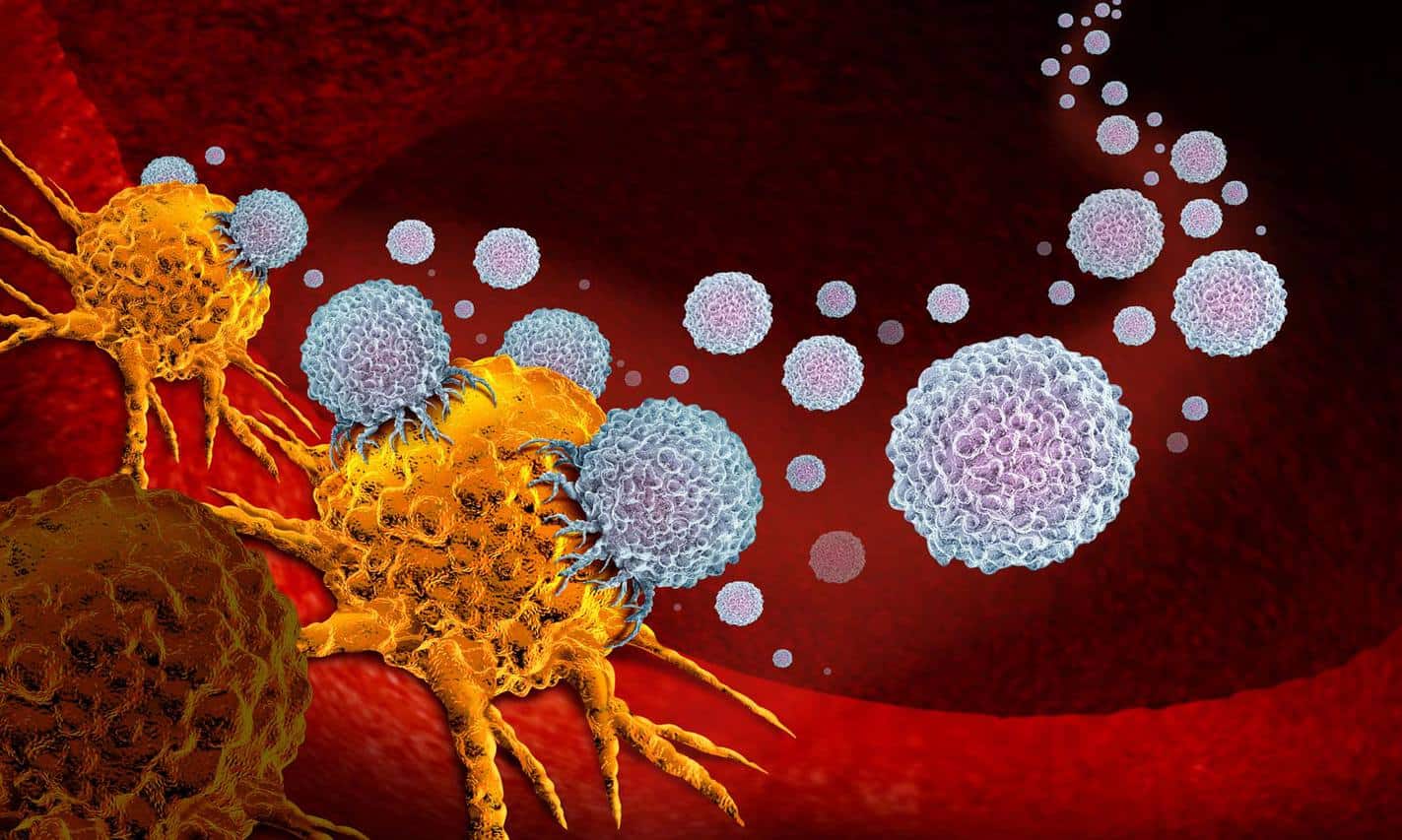
Have you ever considered how the TNM (tumor-nodes-metastases) staging system doesn’t take the immune system into account? Still widely used in the day-to-day practise of most oncologists, this classification of a patient’s cancer stage has not kept up with the rapid developments in immuno-oncology and immunotherapy. Today, immune evasion is even one of the updated hallmarks of [...]

Identifying Immunotherapy Responders Using Digital Pathology Methods2021-03-29T11:56:00+00:00

“Protein fingerprint” rapidly identifies Covid-19 biomarkers

2021-03-27T06:54:01+00:00

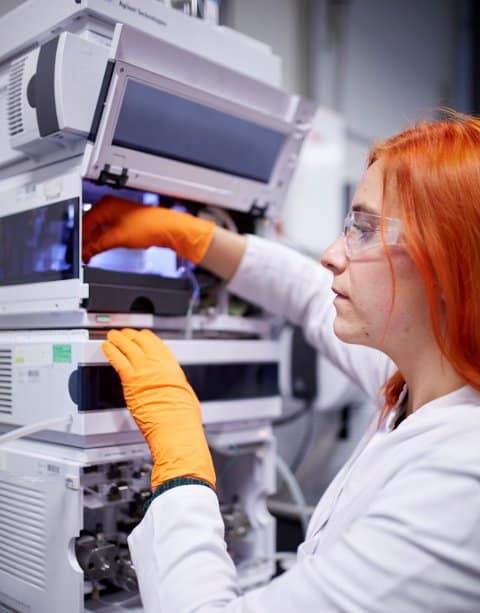
The new Scanning SWATH technology renders mass spectrometry significantly more time- and cost-effective than beforePhoto: Arne Sattler/Charité It is faster and cheaper than a conventional blood count. To demonstrate the technique’s potential, the researchers used blood plasma collected from Covid-19 patients. Using the new technology, they identified eleven previously unknown proteins which are markers of disease severity. The work has been published in Nature Biotechnology. Thousands of proteins are active inside the human body at any given time, providing its structure and enabling reactions which are essential to life. The body raises and lowers the activity levels of specific proteins as required, including when responding to external factors such as pathogens and drugs. The detailed patterns of the proteins found inside cells, tissues and blood samples can therefore help researchers to better understand diseases or make diagnoses and prognoses. In order to obtain this ‘protein fingerprint’, researchers use mass spectrometry, a technology known to be both time-consuming and cost-intensive. ‘Scanning SWATH’, a new mass-spectrometry-based technology, promises to change this. Developed under the leadership of Prof. Dr. Markus Ralser, Director of Charité’s Institute of Biochemistry, this technology, which is much faster and cost-effective than previous methods, enables researchers to measure several hundred samples per day. “In order to speed up this technology, we changed the mass spectrometer’s electric fields. The data produced are of such extreme complexity that humans can no longer analyze them,” explains Einstein Professor Prof. Ralser, who is also a Group Leader at the Francis Crick Institute in London. He adds: “We therefore developed computer algorithms that are based on neural networks and which use these data to extract the relevant biological information. This enables us to identify thousands of proteins in parallel and greatly reduces measuring timescales. Fortunately, this method is also more precise.”
“Protein fingerprint” rapidly identifies Covid-19 biomarkers2021-03-27T06:54:01+00:00

Grundium Press Release: 1000th Microscope Scanner

2021-03-26T09:02:08+00:00

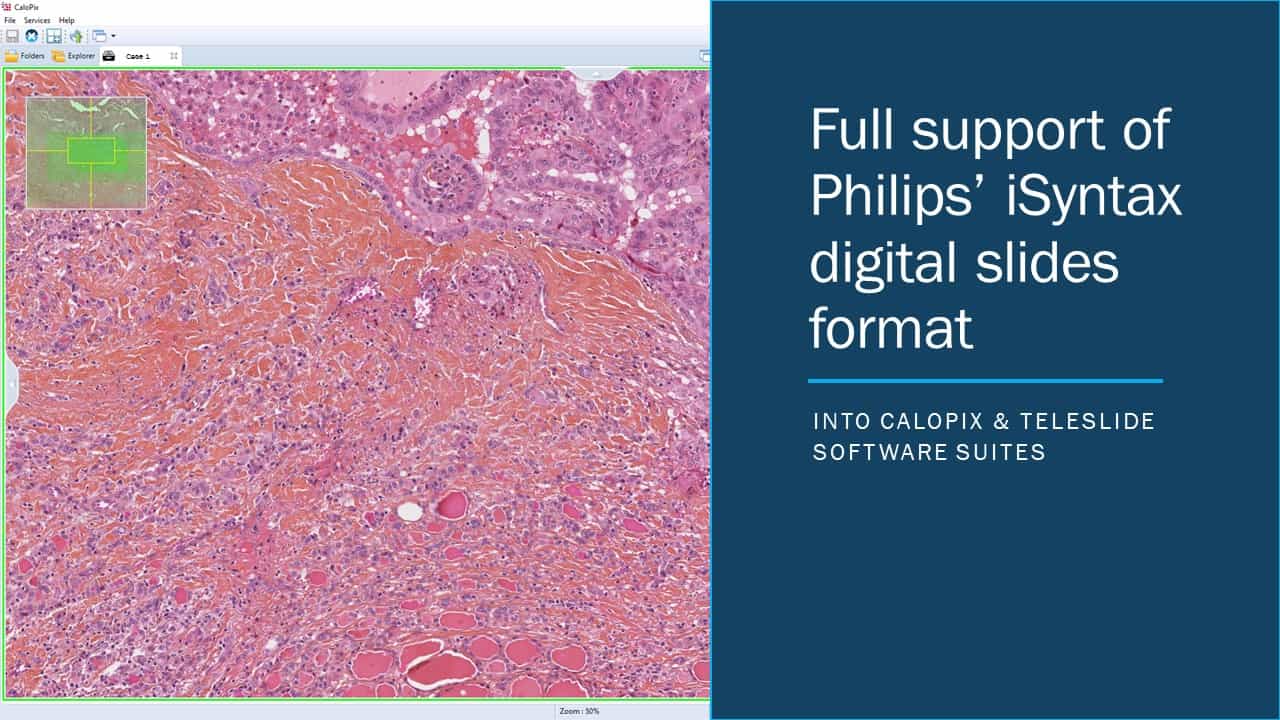
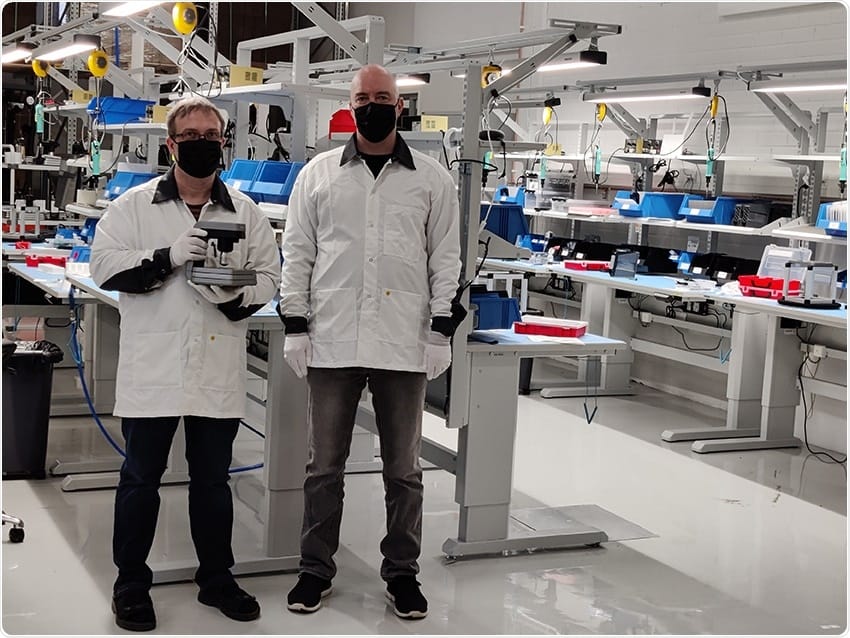
On March 24th, 2021 Grundium manufactured its 1000th microscope scanner. Grundium has fast become a serious player in digital pathology, providing a small footprint, high-precision, and easy-to-use imaging component fitting any workflow at a competitive cost. The Finnish company delivered its first digital microscope scanner in 2019. With demand and sales growing the 2000th scanner is expected to be delivered still this year. Related StoriesImage Credit: Grundium Marko Tuuri, Factory Operations Manager at Grundium has an extensive background in ramping up mobile phone production. “We have brought in the best methods from mobile phone manufacturing and applied them in making high-precision imaging instruments. The Ocus scanners require an even more delicate process and handling than phones, there’s no room for error” Tuuri says. A global leader in advanced imaging technology, Grundium makes digital pathology and best professional diagnosis available for all life – whether human, animal, plant, or other. This is achieved by doing something that nobody else can: applying state-of-the-art mobile technology in digital pathology. We’re working with excellent partners and customers. Making a big impact in human and animal healthcare feels amazing”, Grundium CEO Mika Kuisma Established in 2015 by ex-Nokia engineers, the Tampere-based company is democratizing digital pathology with the Ocus® microscope scanners. The cutting-edge imaging solutions are based on over 20 years of experience in optics, sensors, and beautiful high-precision devices. Grundium serves various industries and businesses enhancing quality and processes, protecting human life, and safeguarding a clean environment.

Grundium Press Release: 1000th Microscope Scanner2021-03-26T09:02:08+00:00

Gender pay gap could widen post pandemic if companies don’t invest in pay equity now

2021-03-24T15:19:00+00:00

New survey data from PayScale reveals how organizations perceive pay equity and what they are doing around diversity, equity, and inclusion (DEI).

Gender pay gap could widen post pandemic if companies don’t invest in pay equity now2021-03-24T15:19:00+00:00

Epredia And Paige Announce Global Commercial Distribution Agreement For Digital Pathology Software

2021-03-17T15:54:24+00:00

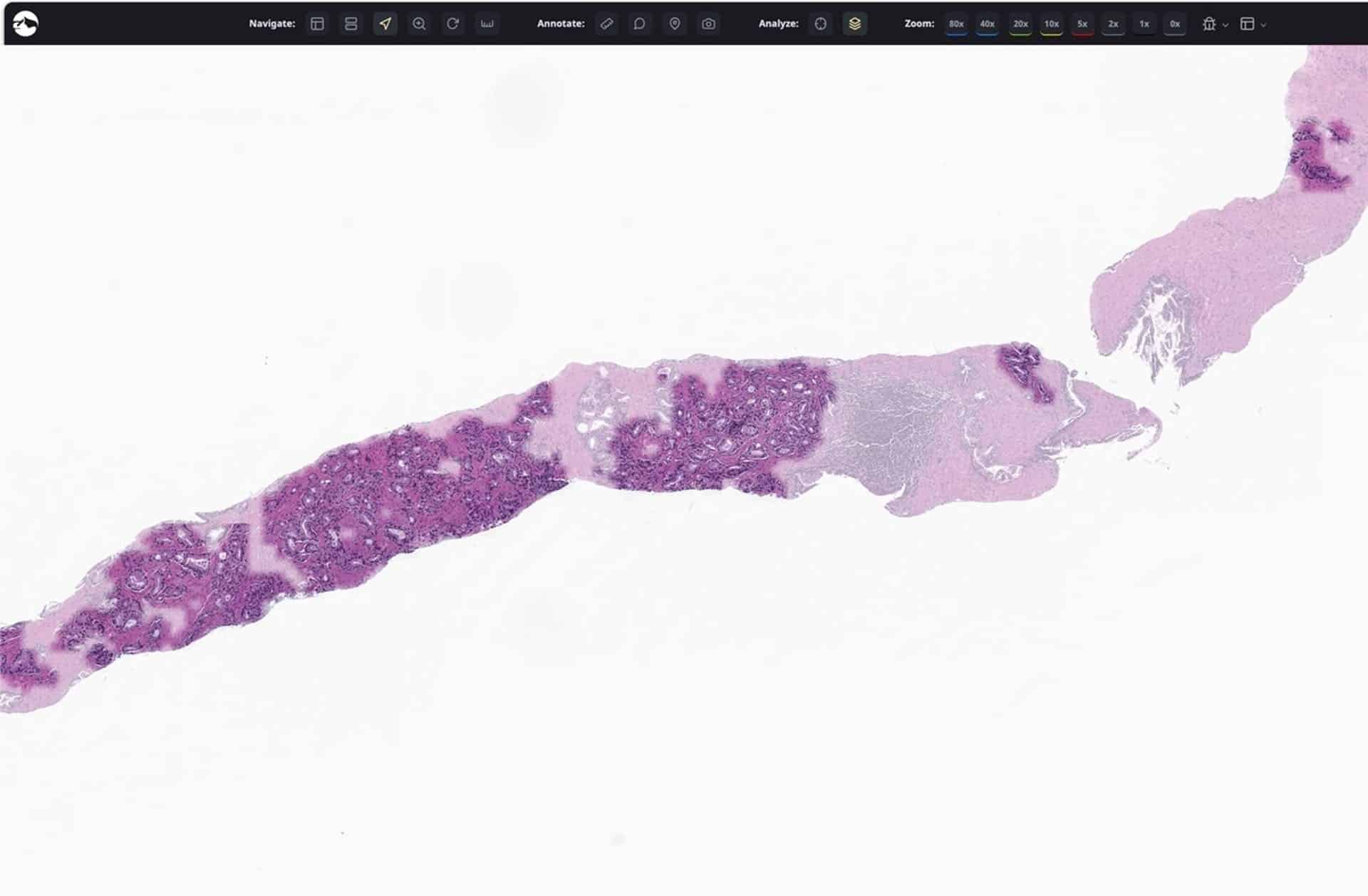
PORTSMOUTH, N.H., March 17, 2021 /PRNewswire/ -- Epredia, a global leader in precision cancer diagnostics, and Paige, a global leader in AI-based diagnostic software in pathology, have announced today that they have entered into a commercial distribution agreement for Paige's comprehensive portfolio of diagnostic software solutions. Paige Prostate indicating areas suspicious for cancer on FullFocus (PRNewsfoto/Epredia) Under the terms of [...]

Epredia And Paige Announce Global Commercial Distribution Agreement For Digital Pathology Software2021-03-17T15:54:24+00:00

Impact of multiplexing technologies on immuno-oncology research

2025-11-24T16:11:27+00:00

  During the last few decades, cancer research has made great strides forward with the development of cancer immunotherapy being hailed as a specific breakthrough for cancer treatment. Immunotherapy is based on enhancing the capability of immune cells to eliminate tumour cells. However, malignant cells can develop the ability to evade immune responses by avoiding immune recognition, [...]

Impact of multiplexing technologies on immuno-oncology research2025-11-24T16:11:27+00:00

Precision Onco-immunology: When Digital Pathology meets Tumor Immunology

2021-03-04T23:03:28+00:00

The development of cancer immunotherapies and of immune checkpoint inhibitors (ICIs), in particular, has revolutionized the treatment landscape of various solid malignancies and significantly improved the long-term survival outcomes of patients with aggressive tumors. However, innate and acquired resistance to immunotherapy limits the benefit of ICIs to a small portion of patients. As such, many patients are [...]

Precision Onco-immunology: When Digital Pathology meets Tumor Immunology2021-03-04T23:03:28+00:00
Go to Top