Pathology News
admin

About admin@pathologynews.com

This author has not yet filled in any details.
So far admin@pathologynews.com has created 1089 blog entries.

March 2025

Prov-GigaPath: Microsoft’s AI Model Analyzes Gigapixel Pathology Slides

2025-06-26T15:57:40+00:00

In a recent study, researchers from Microsoft Research, Providence Health System, and the University of Washington presented Prov-GigaPath, an artificial intelligence (AI) model that can analyze entire gigapixel pathology slides, paving the way for faster and more accurate diagnosis based on whole-slide images. By leveraging over 1.3 billion pathology image tiles from more than 170,000 whole slides, Prov-GigaPath demonstrates high accuracy in tasks such as cancer subtyping and mutation prediction.

Prov-GigaPath: Microsoft’s AI Model Analyzes Gigapixel Pathology Slides2025-06-26T15:57:40+00:00

New Graph-Based Analysis Reveals Distinct Patterns in Rapid versus Classic Alzheimer’s Disease

2025-03-03T09:49:04+00:00

Gabriel Jiménez, PhD, of the Paris Brain Institute, presented their research that leverages whole slide imaging (WSI) and graph neural networks to analyze the spatial organization of Alzheimer’s disease pathology.[1] The study identified topographical patterns of tau aggregates that distinguish between classic and rapid progressive forms of the disease, offering novel insights into disease progression and heterogeneity.

New Graph-Based Analysis Reveals Distinct Patterns in Rapid versus Classic Alzheimer’s Disease2025-03-03T09:49:04+00:00

Case of the Month | March 2025 | Salivary Gland Lipomatosis in an 8-year-old Female Jackapoo

2025-07-28T09:27:55+00:00

This is a case of an 8-year-old female Jackapoo dog that presented with an enlarged, multilobular salivary gland. The submitted samples consisted of multiple lobulated pieces of adipose tissue.

Case of the Month | March 2025 | Salivary Gland Lipomatosis in an 8-year-old Female Jackapoo2025-07-28T09:27:55+00:00

February 2025

SPIE 2025: Biomarkers for Alzheimer’s Disease: The Role of Computational Tools in Identification and Assessment

2025-02-28T15:18:09+00:00

A keynote presentation at SPIE 2025 highlighted how computational methods and multimodal biomarkers are reshaping our understanding of Alzheimer’s disease, revealing that the underlying pathological interactions are more complex than previously recognized. In her presentation, Duygu Tosun-Turgut, PhD, of the University of California, San Francisco, noted that, although Alzheimer’s disease is traditionally characterized by amyloid and tau pathologies, the reality is far more complex.

SPIE 2025: Biomarkers for Alzheimer’s Disease: The Role of Computational Tools in Identification and Assessment2025-02-28T15:18:09+00:00

Highlights from SPIE 2025: Introduction

2025-02-28T14:48:04+00:00

The SPIE Medical Imaging 2025 meeting, held on February 16–20 at the Town and Country Resort in San Diego, California, brought together researchers, clinicians, and industry experts in what has become the internationally recognized forum for cutting-edge developments in medical imaging and digital pathology. This year’s meeting featured 768 presentations, including 400 poster presentations, highlighting the breadth and depth of recent progress in the field.

Highlights from SPIE 2025: Introduction2025-02-28T14:48:04+00:00

Highlights from SPIE 2025 Digital and Computational Pathology Conference: A New Series

2025-02-28T11:30:41+00:00

Welcome to Pathology News' latest conference report. We were delighted to have our fantastic medical writer, Christos Evangelou, report from sunny San Diego, bringing us key insights from the SPIE Digital and Computational Pathology Conference 2025.

Highlights from SPIE 2025 Digital and Computational Pathology Conference: A New Series2025-02-28T11:30:41+00:00

Seamless AI Integration of AIRA Matrix’s Tools On HistoWiz’ PathologyMap™ Platform

2026-05-22T14:44:06+00:00

Join us for an exclusive webinar showcasing the latest advancements in digital pathology through the integration of AIRA Matrix’s preclinical liver analysis tools on HistoWiz's PathologyMap™ platform. This partnership leverages cutting-edge AI to enhance preclinical research in liver disease, providing researchers with unparalleled accuracy and efficiency. Learn how these tools can revolutionize your workflow and accelerate insights in liver pathology research.

Seamless AI Integration of AIRA Matrix’s Tools On HistoWiz’ PathologyMap™ Platform2026-05-22T14:44:06+00:00

From Microscope to Monitor: A Visionary’s Journey to Unprecedented Growth

2025-02-27T10:02:08+00:00

Westley (Wes) J. Bernhardt is a driven, entrepreneurial senior operations executive with a proven track record of transforming organizational performance, enhancing efficiencies, and driving profitability across diverse industries. In his current role as Managing Partner of OnePath Diagnostics, Wes leads with a focus on operational excellence and strategic growth. He applies his extensive expertise to create highly efficient organizations, build loyal and collaborative teams, and foster positive, results-driven cultures.

From Microscope to Monitor: A Visionary’s Journey to Unprecedented Growth2025-02-27T10:02:08+00:00

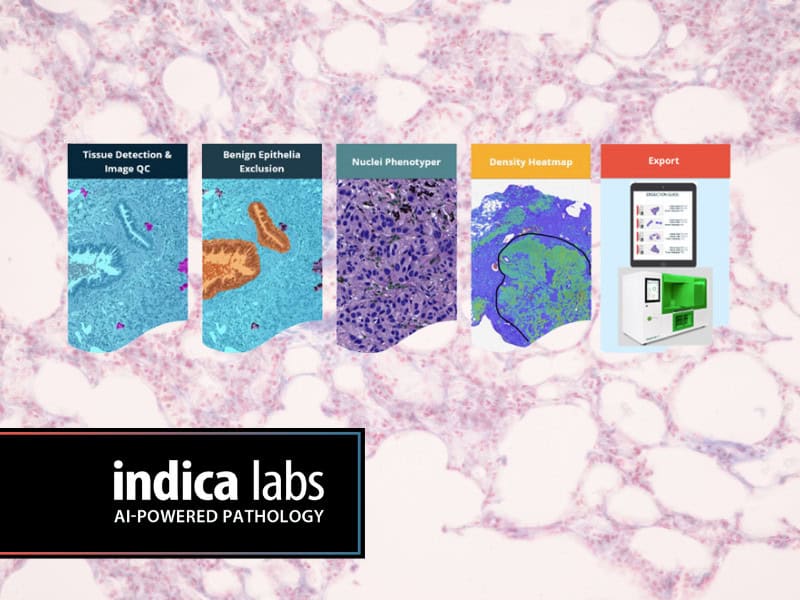
HALO Macrodissection Solutions: Enhancing the Accuracy of Personalized Oncology Through AI-Powered Slide Macrodissection

2025-02-24T15:59:49+00:00

Analyzing the genetic content of cancer is an important step for accurate prognostication and treatment of affected patients. Tumor genetic testing is becoming increasingly more commonplace as the number of cancer cases increase year over year and the number of therapies targeting genetic mutations increase1,2. However, formalin-fixed, paraffin-embedded (FFPE) specimens usually contain a mixture of both neoplastic and non-neoplastic tissue throughout, and the fixation process can have a deleterious effect on the genetic content to be analyzed. Removing background non-neoplastic tissue, including stroma and other cells, helps achieve the high concentration of tumor content needed for accurate and precise genetic evaluation.

HALO Macrodissection Solutions: Enhancing the Accuracy of Personalized Oncology Through AI-Powered Slide Macrodissection2025-02-24T15:59:49+00:00

How Digital Pathology Can Impact a Histopathology Department

2025-02-24T12:30:15+00:00

A histopathology department harbors the responsibility of providing a reliable diagnosis to patients. This is undertaken through applying microscopy to tissue samples to understand if a condition or disease is present or, if already diagnosed, whether it has changed. Every year, within the UK, the amount of histopathology slides analysed totals to roughly 20 million. Therefore, it is crucial the practices employed by a histopathology department are robust to keep up with demand and to ensure the highest quality of sample processing. Utilising the capabilities of digital pathology within a histopathology department offers the opportunity to improve current practices, speed up patient diagnostic results, and lower the chance of misinterpreting different slides.

How Digital Pathology Can Impact a Histopathology Department2025-02-24T12:30:15+00:00
Go to Top