Enhancing Interpretability A Novel Approach for Accurate Breast Cancer Diagnosis in Digital Pathology
by Christos Evangelou, MSc, PhD – Medical Writer and Editor
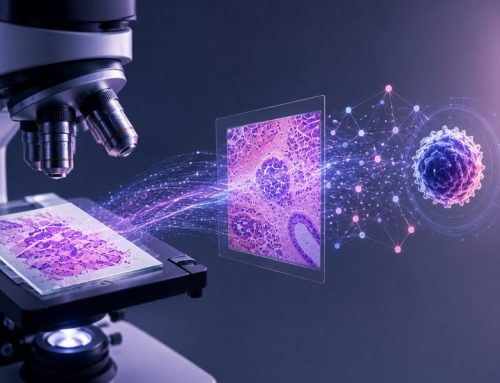
Although AI models have demonstrated immense potential for analyzing complex data, their ‘black box’ nature often raises concerns, particularly when AI tools are used for cancer diagnosis and clinical decision making. However, a recent study conducted by researchers at Urmia University and Carleton University may have found a solution that bridges the gap between the analytical capabilities and the limited interpretability of AI tools.
The authors proposed a new method called Pseudo-Class Part Prototype Networks (PCPPN) to improve the interpretability and accuracy of the ProtoPNet model for breast cancer classification using histopathology images. The report was published in Scientific Reports.
Rationale: Enhancing AI Interpretability
Breast cancer, one of the most prevalent and deadly cancers among women worldwide, has been widely used in proof-of-concept studies using AI tools for diagnosis, grading, and risk stratification. In these studies, large datasets of histopathological images obtained through microscopic examination of biopsied tissue samples have been used to train and validate AI-assisted diagnostic tools. 1
“We have done much research in the field of histopathological image classification since 2021. Classification of pathological images by expert pathologists is a very time-consuming and tedious task, and there is a high risk of misdiagnosis by human experts. Therefore, machine learning can help improve the accuracy of diagnosis,”
said Morteza Valizadeh, PhD, and the corresponding author of the study.
Although AI models have shown promise in accurately classifying these images into benign or malignant categories, they fail to provide transparent reasoning for their predictions, hindering their adoption in the clinic.
ProtoPNet: An Interpretable Solution
“Black box machine learning algorithms are not appropriate for medical diagnosis application, and interpretable machine learning algorithms have gained attention in this field,”
noted Dr. Valizadeh.
One machine learning algorithm that has garnered attention is ProtoPNet, an inherently interpretable deep learning model that classifies images based on learned prototypes — visual representations of image regions characteristic of a particular class. By linking its predictions to these prototypes, ProtoPNet offers a glimpse into its decision-making process, making it an attractive candidate for AI-assisted diagnosis.1
However, in their study, the researchers identified a critical flaw in the application of ProtoPNet to breast cancer histopathology. The model exhibited a tendency to rely on irrelevant background information, rather than medically significant regions, for making predictions — a phenomenon known as confounding.
A Novel Solution: Pseudo-Class Part Prototype Networks
To address the confounding issue and enhance the interpretability of the algorithm, the researchers developed a modified version of the original ProtoPNet prototype network by increasing the number of classes — they termed this method Pseudo-Class Part Prototype Network (PCPPN). The key innovation lies in leveraging the concept of clustering to implicitly increase the number of classes in the training dataset, thereby forcing the model to learn more medically relevant prototypes.
The PCPPN approach consists of three main steps: clustering, part prototype network, and re-mapping. In the first step, the training samples within each class (benign or malignant) are divided into subgroups or ‘pseudo-classes’ using a clustering algorithm. Subsequently, ProtoPNet is trained on these pseudo-classes, learning prototypes specific to each subgroup. During inference, the predicted pseudo-class is re-mapped to its associated original class (benign or malignant).
By introducing these pseudo-classes, PCPPN effectively increases the complexity of the classification task, compelling the model to focus on more nuanced and medically relevant features.
“Increasing the number of classes and pseudo-classes by clustering makes part prototype networks appropriate for medical image analysis,”
said Dr. Valizadeh.
Evaluating Interpretability: A Human-Centric Approach
To evaluate the performance of their approach, the researchers devised a novel metric, termed ‘relevancy’, based on the assessments of a team of experienced pathologists. Each learned prototype was visualized and presented to the pathologists, who then rated the relevance of the highlighted image regions on a scale from 0 (not relevant at all) to 3 (completely relevant).
The researchers also considered factors such as the disagreement between pathologists’ ratings, the repeatability of the model’s performance across different training runs, and its reproducibility across different backbone architectures.
To evaluate the performance of their method, the researchers used PCPPN to analyze and classify images in the BreakHis dataset, which is a widely used collection of breast histopathological images. Compared with the original ProtoPNet, PCPPN achieved an 8% improvement in classification accuracy and an 18% increase in interpretability, as measured by the relevancy metric.
“The key finding is that the part prototype networks are not appropriate for medical applications where the number of classes is small; in this case, the number of classes can be increased by clustering algorithms, which improves the results significantly. Since the classification result of the proposed method is consistent with those from expert pathologists, and the model is interpretable, it is more likely to be acceptable for clinical use by pathologists,”
noted Dr. Valizadeh.
Looking Ahead
This study demonstrates a significant advancement in the use of AI for breast cancer diagnosis, highlighting the importance of interpretability in clinical AI applications. By addressing the confounding issue and providing more transparent and medically relevant reasoning, PCPPN may help accelerate the adoption of AI tools for breast cancer diagnosis.
Nevertheless, the researchers note that obtaining pixel-level annotations of medically relevant regions in histopathology images is a challenging and time-consuming task. PCPPN’s ability to learn relevant prototypes without relying on such fine-grained data is a significant advantage, but it may also introduce some uncertainty in the evaluation process.
In addition, this study focused solely on the binary classification of benign and malignant breast tumors. Future research could explore the applicability of PCPPN to more complex classification tasks involving multiple cancer types or subtypes.
Moving forward, researchers plan to investigate the potential of PCPPN in other medical imaging domains where interpretability is crucial. Furthermore, they aim to refine the relevancy metric and incorporate additional input from medical professionals to ensure a more comprehensive evaluation of interpretability.
“A key question we would like to address is if using some deep clustering with better loss function could increase the quality of the algorithm and result in better interpretability,”
said Dr. Valizadeh
References
1. Choukali MA, Amirani MC, Valizadeh M, Abbasi A, Komeili M. Pseudo-class part prototype networks for interpretable breast cancer classification. Sci Rep. 2024;14(1):10341. Published 2024 May 6. doi:10.1038/s41598-024-60743-x
No audio available for this article yet.
No quiz available for this article yet.