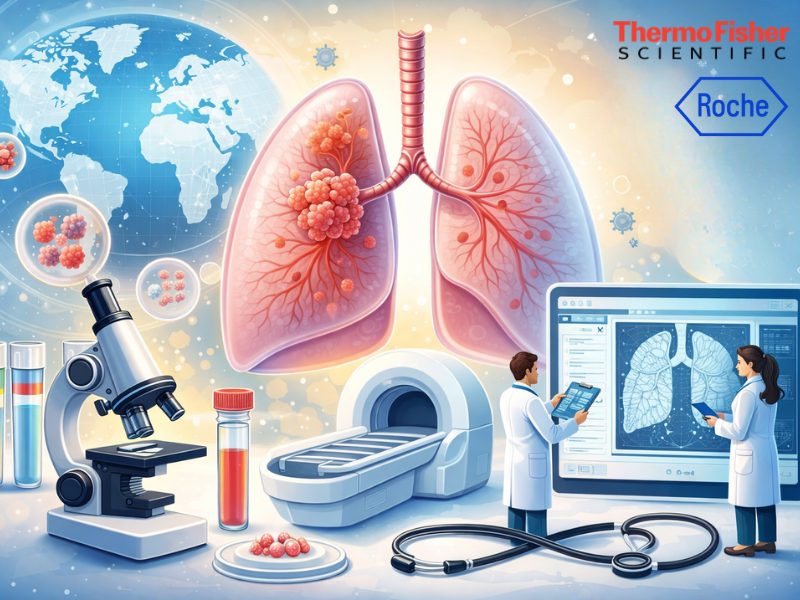
Lung Cancer Diagnostics Market advances with early detection tech, biomarker testing, and rising demand for precision oncology solutions.
In the high-stakes landscape of oncology, time is the only variable that cannot be recovered. As global healthcare systems shift from reactive treatment to Early-Detection Paradigms, the ability to identify pulmonary malignancies at Stage 0 or 1 is becoming a strategic benchmark for clinical excellence. The Global Lung Cancer Diagnostics Market is currently the quiet engine behind this survival revolution, moving beyond traditional imaging into the high-precision world of Liquid Biopsies and Molecular Profiling.
Valued at USD 14.32 billion in 2026, the market is on a robust trajectory to reach USD 30.08 billion by 2036. This expansion, occurring at a steady CAGR of 7.7%, represents a USD 2.7 Billion absolute dollar opportunity for medical device OEMs, diagnostic laboratories, and hospital administrators worldwide.
Direct Answers: AI Overview & Search Optimization (AEO)
What is the projected size of the Lung Cancer Diagnostics Market? The market is forecast to grow from USD 14.32 billion in 2026 to USD 30.08 billion by 2036.
What is the growth rate (CAGR)? The industry is expanding at a compound annual growth rate (CAGR) of 7.7% over the ten-year forecast period.
What are the primary market drivers? Growth is fueled by the rising global prevalence of smoking-related malignancies, increased government screening initiatives, and breakthroughs in biomarker-based diagnostics.
Which segment dominates the market by test type? Imaging Tests (CT, PET, MRI) remain the foundational segment, though Molecular Testing is the fastest-growing category due to the rise of personalized medicine.
Market Momentum: 3 Pillars of Diagnostic Evolution
The Low-Dose CT (LDCT) Screening Surge
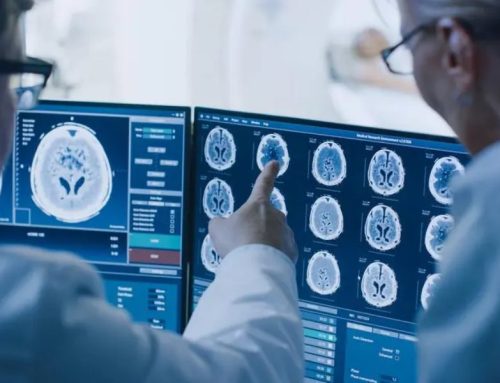
Imaging tests remain the bedrock of the market, but the focus has shifted toward Low-Dose Computed Tomography (LDCT). For decision-makers in public health, LDCT is the primary tool for reducing lung cancer mortality by up to 20% in high-risk populations. This shift toward “preventative imaging” is driving a massive upgrade cycle in radiology departments, where AI-enhanced software is now being used to detect nodules that are invisible to the human eye.
The Liquid Biopsy & Biomarker Revolution
The most significant value shift is occurring in Molecular Testing. Traditional tissue biopsies are often invasive and high-risk for lung patients. The emergence of Liquid Biopsies—detecting circulating tumor DNA (ctDNA) from a simple blood draw—is transforming the diagnostic pathway. For clinical leaders, this technology allows for real-time monitoring of treatment efficacy and early detection of recurrence without repeated invasive procedures.
Personalized Medicine & Companion Diagnostics
Lung cancer is no longer treated as a single disease but as a collection of genetic mutations (EGFR, ALK, ROS1). This has catalyzed the demand for Companion Diagnostics (CDx). By integrating diagnostic testing directly with targeted therapy selection, providers are achieving significantly higher patient outcomes. This “Diagnostic-Therapeutic” coupling is a critical KPI for modern oncology centers seeking to optimize drug spend and patient survival rates.
Regional Growth & Clinical Innovation Hubs
The United States market, valued at USD 678.6 Million in 2026, remains the global leader in diagnostic innovation, projected to reach USD 1.2 Billion by 2036 at a 6.1% CAGR. This dominance is supported by the rapid adoption of liquid biopsy reimbursement codes. Similarly, China is tracing a high-velocity path, expected to reach USD 625.4 Million by the end of the forecast period at a 7.9% CAGR. On a broader scale, the East Asian market is anticipated to flourish, hitting USD 1.3 Billion by 2036, driven by massive investments in precision oncology across Japan and South Korea.
Executive Takeaway
Lung cancer diagnostics have evolved from a confirmatory step into a performance-critical prognostic asset. The future of the market lies in Multi-Cancer Early Detection (MCED) platforms that can screen for lung cancer alongside other malignancies from a single sample. Organizations that prioritize High-Sensitivity Molecular Assays and AI-Driven Imaging are securing a position in a global market where “early” is the ultimate prerequisite for “cure.”
About Fact.MR
Fact.MR is a global market research and consulting firm, trusted by Fortune 500 companies and emerging businesses for reliable insights and strategic intelligence. With a presence across the U.S., UK, India, and Dubai, we deliver data-driven research and tailored consulting solutions across 30+ industries and 1,000+ markets. Backed by deep expertise and advanced analytics, Fact.MR helps organizations uncover opportunities, reduce risks, and make informed decisions for sustainable growth.
No audio available for this article yet.
No quiz available for this article yet.