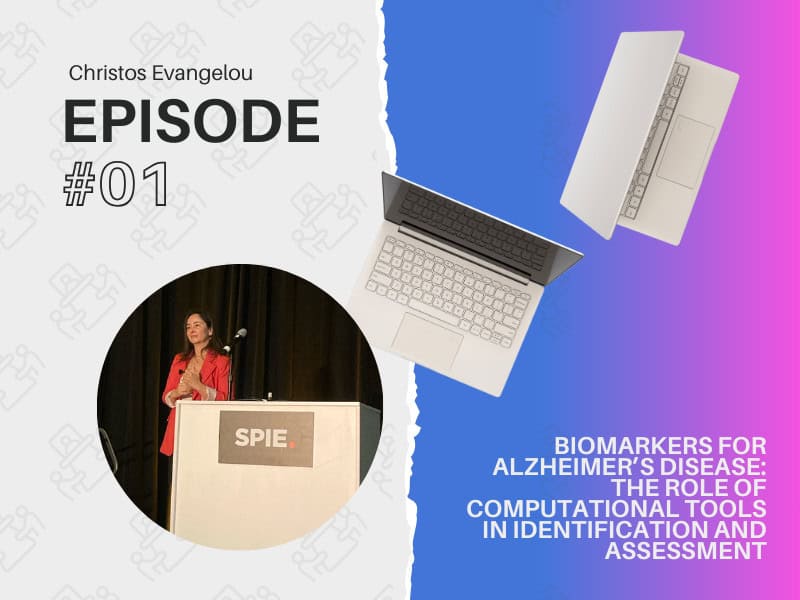
A keynote presentation at SPIE 2025 highlighted how computational methods and multimodal biomarkers are reshaping our understanding of Alzheimer’s disease, revealing that the underlying pathological interactions are more complex than previously recognized. In her presentation, Duygu Tosun-Turgut, PhD, of the University of California, San Francisco, noted that, although Alzheimer’s disease is traditionally characterized by amyloid and tau pathologies, the reality is far more complex.[1]
“When we look at the post-mortem brains of individuals diagnosed with Alzheimer’s disease at autopsy, they present with various co-pathologies, including several vascular pathologies, TDP-43, cerebral amyloid angiopathy, and many other age-related co-pathologies in the brain,” she said.
According to Tosun-Turgut, more than 94% of patients with Alzheimer’s disease at autopsy show at least one co-pathology, with over 200 different combinations possible. The two most frequently observed co-pathologies are alpha-synuclein and TDP-43, which influence the presentation of clinical symptoms and progression of Alzheimer’s disease.
The high prevalence of co-pathologies in patients with Alzheimer’s disease has implications for clinical trials and treatment efficacy, as they can dilute the effectiveness of treatments targeting amyloid plaques and tau tangles. Understanding the complex relationships between Alzheimer’s disease and co-pathologies is essential for developing disease-modifying therapies that can slow symptom progression by targeting pathological changes in the brain.
Tosun-Turgut presented data showing that Alzheimer’s disease-related biomarkers and cardiovascular lesions together explain only 50%–60% of the variance in clinical and cognitive measures. “If the treatment is targeting amyloid plaques, tau tangles, or their downstream effects, they are only going to be partially effective in slowing down cognitive decline since there’s all this unexplained variance due to something else we don’t yet know,” she noted.
Tosun-Turgut also discussed the role of computational approaches in addressing the challenge of identifying co-pathologies in patients with Alzheimer’s disease. Although biomarkers for many co-pathologies are still lacking, her team has developed computational models that leverage autopsy data and ante-mortem imaging datasets to predict the presence of various pathologies. These computational tools have shown promising results, explaining an additional 13%–21% of variance in clinical and cognitive symptoms. “From a clinical trials perspective, if we can account for that variance, we can reduce their sample size by about 28% to achieve a particular efficacy target,” Tosun-Turgut explained.
Studies have also identified temporal relationships between pathologies. Although Alzheimer’s disease is conceptualized as an amyloid-first disease, approximately 15% of patients develop tau pathology before amyloid accumulation. This pattern shows gender specificity, as it is more common in women than in men. “Women tend to have a shorter interval between the time they have amyloid versus tau pathology,” Tosun-Turgut added.
Age at diagnosis influences pathological presentation. Patients with early-onset Alzheimer’s disease typically show “pure” Alzheimer’s disease pathology, whereas later-onset cases more frequently present with mixed pathologies. This finding has implications for biomarker interpretation and treatment approaches across different age groups.
Tosun-Turgut also discussed the concept of biological versus chronological age in disease progression. By developing methods to estimate the “biological clocks” for different neurodegenerative pathologies, researchers can better predict disease trajectories and identify the best timing of interventions for enhanced treatment efficacy. This approach has shown that individuals with co-pathologies often present symptoms 5–10 years earlier than those with pure Alzheimer’s disease pathology.
Recent clinical trials reflect the complexities of pathological interactions in patients with Alzheimer’s disease and co-pathologies. The efficacy of treatments targeting amyloid plaques or tau tangles varies across demographic groups, with some therapies showing better results in men than in women and different outcomes based on APOE4 status and racial or ethnic background.
The research presented by Tosun-Turgut emphasizes the importance of considering multiple pathologies when evaluating Alzheimer’s disease cases and suggests that computational approaches may help bridge the gap between traditional pathological observations and in vivo biomarker measurements. Tosun-Turgut concluded her presentation by outlining areas for future research, including the need for better biomarkers to fully explain cognitive and clinical symptoms and an improved understanding of pathology interactions.Duygu Tosun-Turgut, PhD, professor of radiology and biomedical imaging at the University of California, San Francisco, USA.
[1] Duygu Tosun-Turgut, Integrating computational approaches to unravel Alzheimer’s disease and co-pathologies: a biomarker-driven approach to precision medicine (Keynote Presentation). Presented at SPIE 2025 Digital and Computational Pathology conference, February 18, 2025; San Diego, CA.
No audio available for this article yet.
No quiz available for this article yet.