The following abstract is drawn from a recently published paper in Journal of Pathology Informatics | ScienceDirect.com by Elsevier. We invite you to read the full paper and join the conversation, become a member of the Pathology News community to share your thoughts, ask questions, and engage with others around this work.
Authors: Joona Pohjonena, Oussama Batouchea,b, Janne Kantolac,d,e, Antti Rannikkoe,f, Kevin Sandemang, Andrew Ericksona,e, Esa Pitkänenc,d,e, Tuomas Mirttie,h,i
Abstract
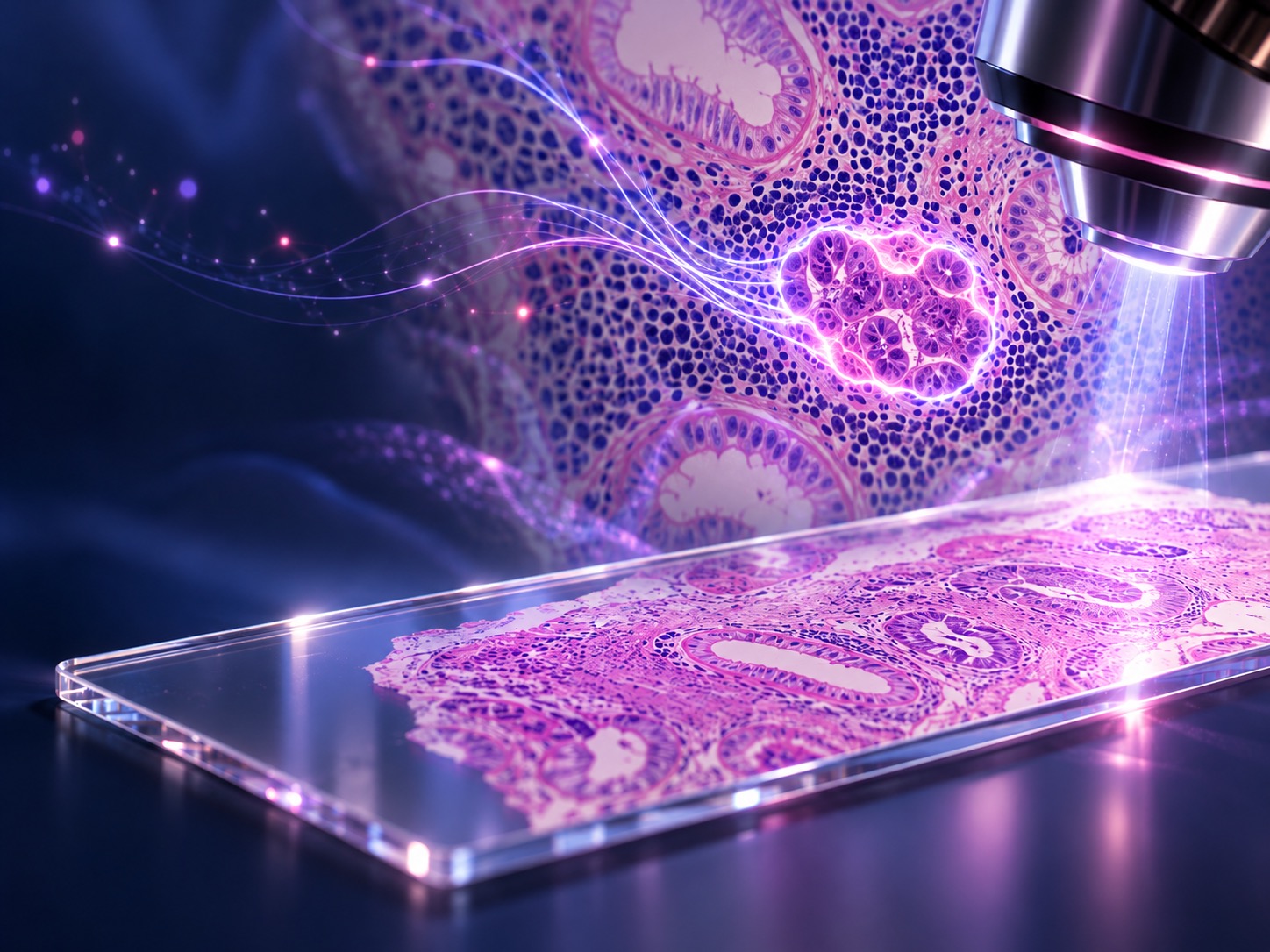
Foundation models are trained on massive amounts of data to capture complex patterns in images. Subsequently, a wide range of downstream tasks can be adopted with minimal computational resources. We have developed HistoEncoder, a foundation model for prostate cancer digital pathology by pre-training on 48 million prostate tissue tile images. HistoEncoder allows automated extraction of histological features highly predictive of Gleason patterns achieving comparable performance with substantially larger pan-cancer foundation models while being much more efficient. By fine-tuning the model with a small amount of data and computational resources, we describe two clinical use cases for HistoEncoder. First, HistoEncoder can be used to automatically annotate large-scale datasets with high accuracy. Second, we show that HistoEncoder-derived histology clusters contain prognostic information of a similar magnitude to Gleason grading in internal cross-validation. Lightweight foundation models such as HistoEncoder allow organizations to build effective clinical software tools without the need for extensive datasets and heavy computing.
Read the full article: HistoEncoder: A digital pathology foundation model for prostate cancer – ScienceDirect
- aResearch Program in Systemic Oncology (ONCOSYS), Faculty of Medicine, University of Helsinki, Helsinki, Finland
- bDoctoral Program in Computer Science, Faculty of Science, University of Helsinki, Helsinki, Finland
- cInstitute for Molecular Medicine Finland (FIMM), HiLIFE, University of Helsinki, Helsinki, Finland
- dResearch Program in Applied Tumour Genomics, Faculty of Medicine, University of Helsinki, Helsinki, Finland
- eiCAN Digital Precision Cancer Medicine Flagship, Helsinki, Finland
- fDepartment of Urology, Helsinki University Hospital, Helsinki, Finland
- gDepartment of Pathology, Division of Laboratory Medicine, Skåne University Hospital, Malmö, Sweden
- hDepartment of Pathology, Helsinki University Hospital, Helsinki, Finland
- iFinnish Cancer Institute, Helsinki, Finland