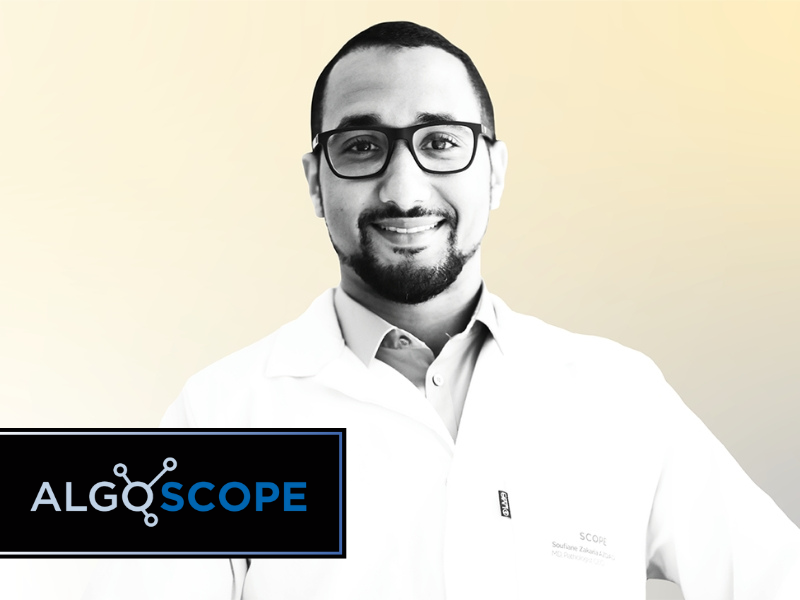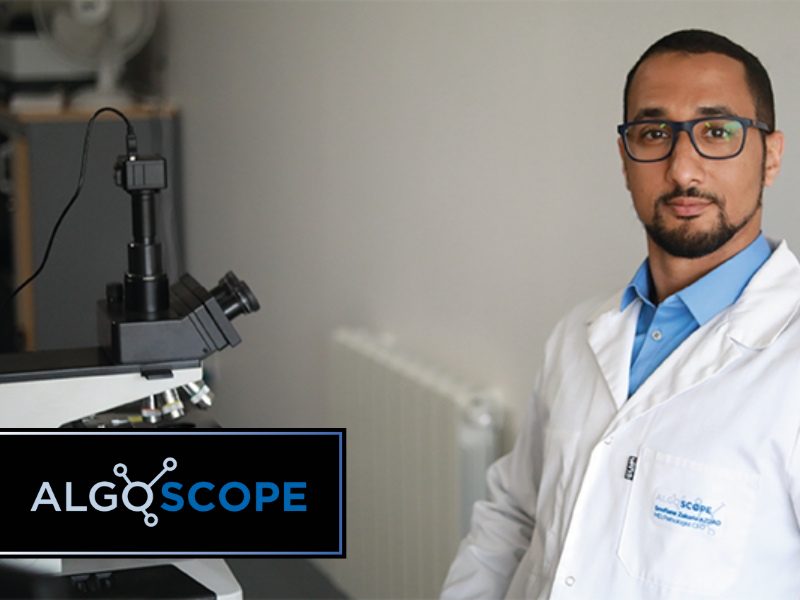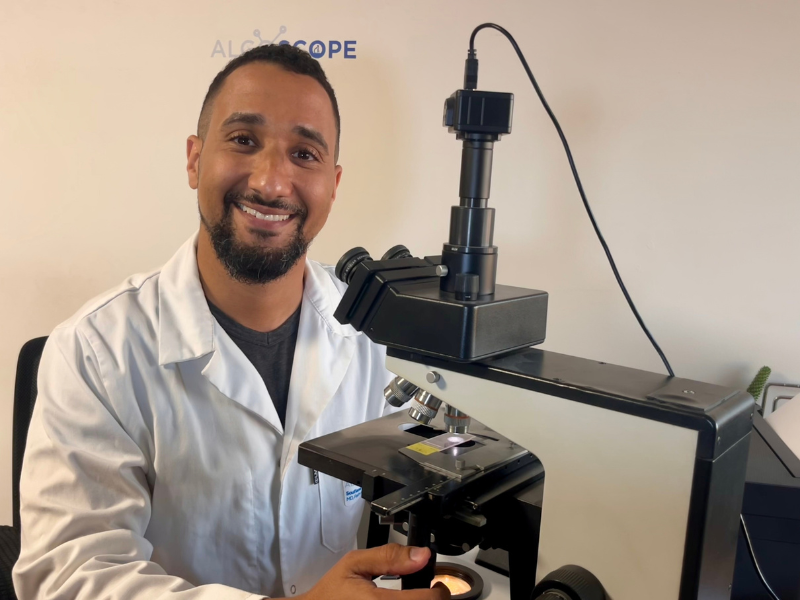
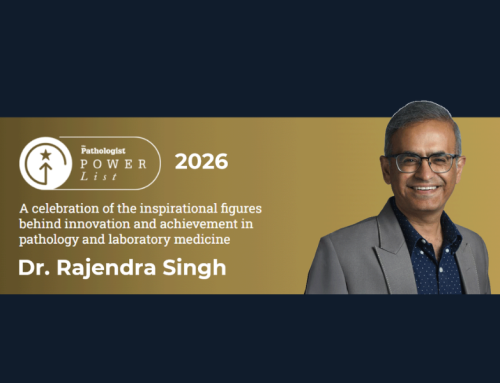
DrDr Soufiane Zakaria Azdad, M.D., CEO and co-founder of Algoscope, has been named to The Pathologist’s Power List for the third time, joining its Leading Voices of 2026.
This recognition reflects a longstanding commitment to an area of pathology that often receives less attention than diagnosis: the preanalytical phase. That focus on ensuring the right specimen, correctly identified and traceable, reaches the pathologist ultimately led to the creation of Algoscope.
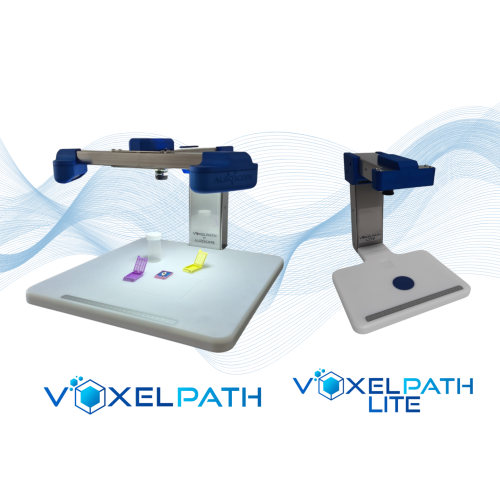
Today, Algoscope develops CE-marked solutions designed and manufactured in France, with its technology deployed in laboratories across several countries. The company’s work centres on bringing greater standardisation, traceability and digital support to processes that remain heavily dependent on manual workflows.
For Azdad, this represents an important foundation for the wider adoption of artificial intelligence in pathology. Rather than beginning with increasingly sophisticated diagnostic tools, he argues that laboratories first need to address the processes responsible for generating and handling the specimens and data on which those technologies depend.
As part of his selection for The Pathologist’s Leading Voices of 2026, Azdad shared his perspective on the gaps in technology, training and processes that concern him most, and how he is addressing them through innovation.
His full essay reads:
What gaps in technology/training/processes concern you most, and how are you addressing them via innovation?
The past 18 months have been eventful in the pharmaceutical industry, which has invested significantly in AI through high-profile, costly acquisitions. This has focused almost entirely on diagnostics and hidden patterns. It’s exciting, but it will take years of regulation, clinical validation, and building trust before it reaches its full potential without human supervision, ultimately fulfilling a promise we’ve been hearing for nearly 10 years.
This news highlights a structural problem and a matter of priorities.
In the laboratory, in addition to this unequal distribution of technology and capital, there is pressure on staff, a global shortage of technical and medical personnel that makes any bottleneck problematic. Yet our workflow contains several of them, especially in the preanalytical phase.
What needs to change is the order in which our industry is moving forward. We are trying to automate the most complex and critical decision – the diagnosis – before we have automated the simplest step, which is nonetheless the most error-prone: ensuring that the correct specimen, properly identified and traceable, is transported from the patient to the pathologist.
We cannot entrust the most difficult decision to a “black box” when the data feeding it still comes from a manual, inconsistent, and inadequately documented process.
We need to reverse this approach: first standardize and digitize the workflow, then build layers of intelligence on a solid, reliable, and trustworthy foundation.
Because even with the best scanner on the market and the best foundation models with billions of parameters, they’re useless if a specimen is reversed, lost, or contaminated. And we’ll still spend hours trying to “correct errors” that are sometimes irreversible.
The practical benefit of AI and digital technology should be to reduce errors and improve the traceability and reproducibility of procedures.
For a procedure as important as the macroscopic examination of surgical specimens, we should no longer be left to rely solely on (as the old-timers used to say): a ruler, a scalpel, our dexterity, our general knowledge, and our intuition.
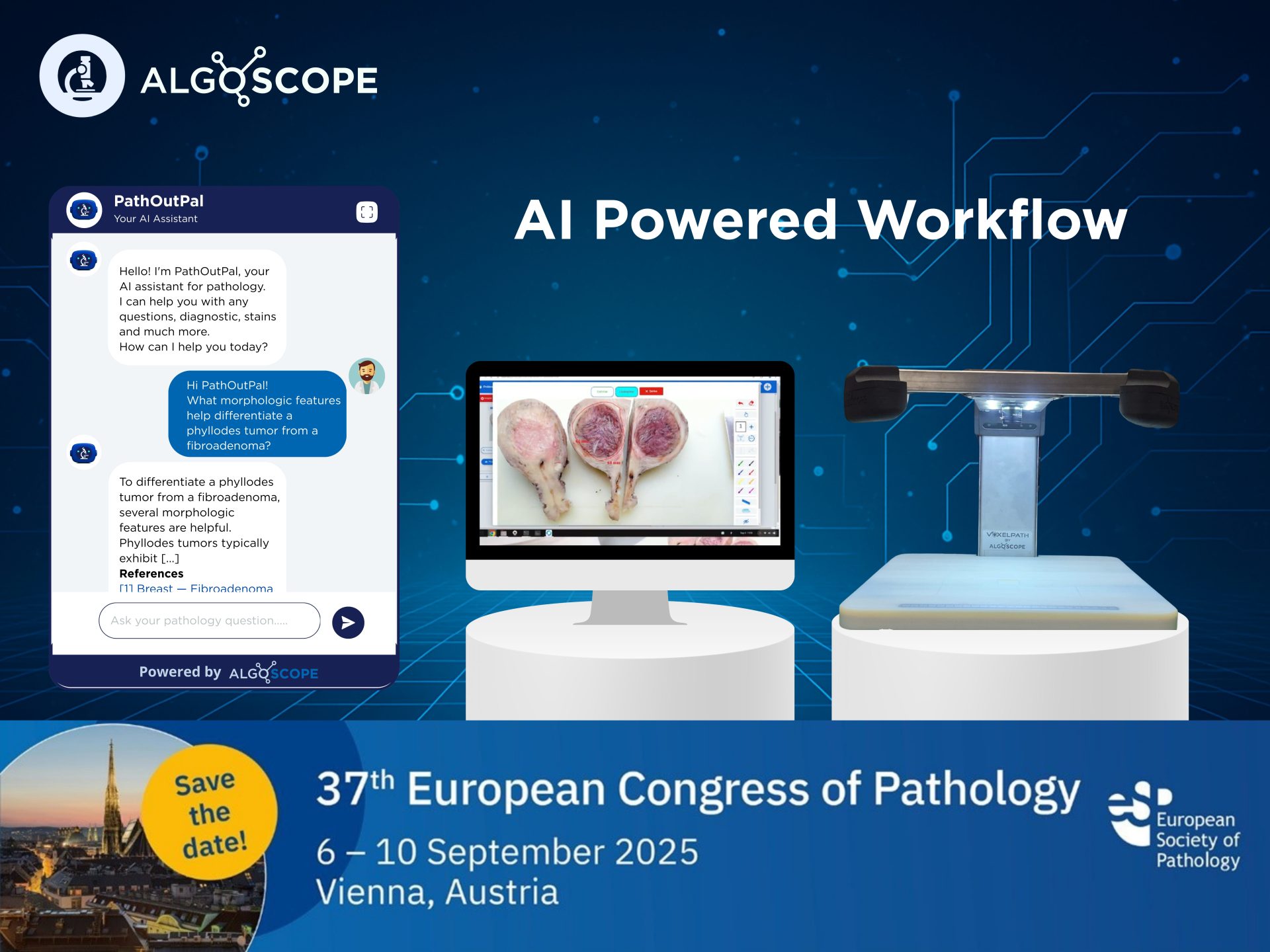
AI can already provide immediate and measurable benefits by finally helping humans catch their breath and having it verify numbers and names on their behalf, automate visual documentation and the description of manual dissection procedures, and, in a sense, “enhance their hands” by guiding them to the location of lesions and the precise measurement of margins.
As a pathologist, I drive this change forward not through rhetoric, but through evidence. The preanalytical solution envisioned by the dreamy resident I once was has come to life – now CE-marked and deployed in several countries – demonstrating that it delivers immediate value without waiting for years of regulatory validation. My approach is to demonstrate concretely that this method works in the real world, until it naturally establishes itself as the new standard. The resulting improvement in quality has a positive ripple effect on the quality of tissue samples and diagnoses, as well as on working conditions.
Share this article
Follow us
Get Pathology News Delivered to Your Inbox