The Tissue Image Analytics (TIA) Centre, based in the Department of Computer Science at the University of Warwick, is a leading hub for computational pathology. By uniting expertise from computer science, medicine, and engineering, the Centre is tackling some of the most pressing challenges in cancer diagnostics and treatment.
Founded by Professor Nasir Rajpoot, the group began as the TIA Lab in 2012 and became the TIA Centre in 2021, marking a new chapter in its development and signalling its growing role in computational pathology research. From the outset, the Centre’s vision has been to transform how we understand and diagnose complex diseases. Its research focuses on developing cutting-edge artificial intelligence (AI) and machine learning algorithms to analyse histological patterns and biological data from tissue samples. These are tools designed to support early detection, personalised treatment, and deeper insights into cancer biology.
At the heart of the Centre’s success is its collaborative ethos. The TIA Centre works closely with NHS hospitals, academic institutions, and industry partners to ensure that its research has real-world impact. The Centre was a core partner in PathLAKE and PathLake Plus – UK government-funded initiatives with a combined value of approximately £40 million – established to create a national centre of excellence in AI for pathology. The TIA Centre led the computational arm of PathLAKE, developing the consortium’s data lake and analytics engine to support AI-driven diagnostics. (Don’t worry, pathologists – we still need you!)
In 2024, the University of Warwick signed a spinout agreement with Histofy Ltd, a company commercialising the Centre’s AI technologies, and born out of PathLAKE, to accelerate cancer diagnosis – even in the absence of a pathologist. This marks a significant step in translating academic research into clinical practice.
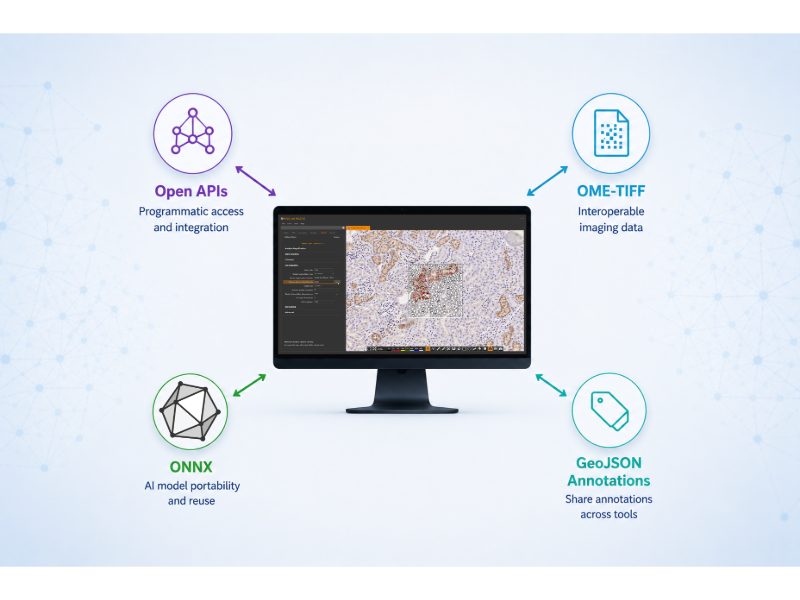
Beyond research, the Centre fosters a vibrant academic community through regular seminars, workshops, and training events. The TIA Centre Seminar Series features global leaders in artificial intelligence, computational pathology and related areas, making all talks openly available on YouTube, a perfect way to spend your lunchtime learning, or procrastination with a purpose. Further, the Centre’s open-source TIA Toolbox provides researchers worldwide with robust tools for digital pathology analysis.
As the Centre continues to grow, it remains committed to interdisciplinary collaboration, impactful research, and the development of tools that empower clinicians and researchers alike. With a strong foundation and a bold vision, the TIA Centre is poised to shape the future of pathology. (And maybe even help give pathologists back their lunch breaks.)
Flagship Projects: From Colorectal Cancer to Oral Epithelial Dysplasia
The TIA Centre’s research portfolio includes several high-impact, multi-institutional projects that are shaping the future of AI in pathology.
One of the Centre’s most ambitious initiatives is COBIx, a large-scale, NIHR-funded validation study of an AI tool for triaging colon and rectal endoscopic biopsies. Developed during the PathLAKE programme, the COBI algorithm was trained on thousands of digital biopsy images to distinguish normal from abnormal tissue, including cancer. COBIx is now being tested across a number of NHS Trusts to ensure the algorithm performs robustly across different lab settings. The goal is to fast-track abnormal cases for urgent review while safely automating the reporting of normal biopsies – potentially saving thousands of hours of pathologist time.
In parallel, the BRACE project is a PathLAKE exemplar project led by the University of Nottingham and the TIA Centre. Using a large cohort of over 2,500 breast cancer cases, BRACE aimed to develop an AI tool that can stratify patients with indeterminate risk into more precise treatment groups – particularly identifying who may or may not benefit from chemotherapy. The algorithm incorporates tumour grade, morphology, mitotic activity, and spatial relationships between tumour and stromal cells, showing promising prognostic performance.
Another flagship project is ANTICIPATE, a Cancer Research UK-funded collaboration with the University of Sheffield focused on oral epithelial dysplasia (OED). Led by Professors Nasir Rajpoot and Ali Khurram, the project developed AI tools that could predict malignant progression better than a pathologist whilst discovering novel biomarkers.
Other active projects include Bigpicture (a European Commission-funded initiative to build the world’s largest pathology image repository), HistoMaps (MRC), PRISM (Cancer Research UK), and INSPIRE (British Council), each pushing the boundaries of AI in pathology in their own right, and highlighting the value of international partnerships. Together, these projects exemplify the Centre’s commitment to building clinically useful, generalisable AI tools that can be deployed at scale.
To learn more about the TIA Centre, please visit the website or contact the following email: ti*@********ac.uk
By Adam Shephard, Assistant Professor, Department of Computer Science, University of Warwick
No audio available for this article yet.
No quiz available for this article yet.