What is Digital Pathology?
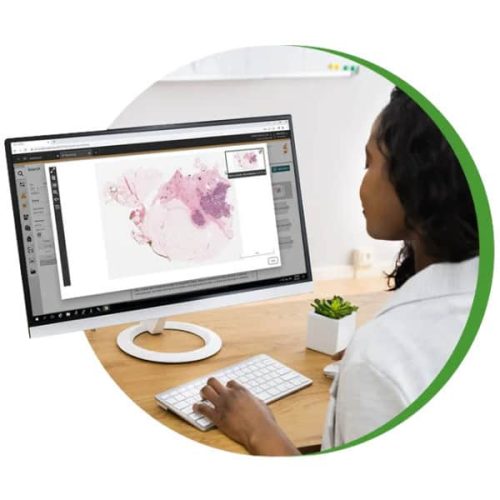
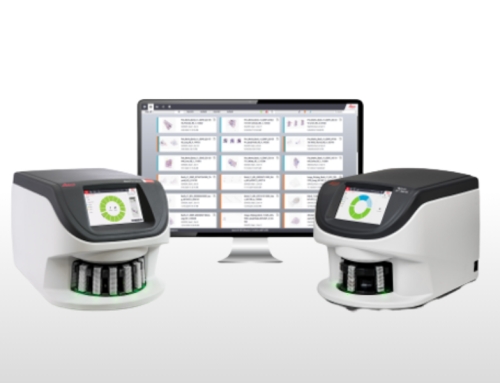
Digital Pathology is the process of scanning traditional glass slides in a Whole Slide Image (WSI) scanner, creating a digitised version of that slide, and storing it in an online system, to potentially be shared around laboratories across the globe. It allows pathologists to look at scans in a digitised format on a computer screen, rather than via a microscope in the lab.
The digitisation of slides facilitates collaboration between pathologists, transcending geographical barriers and allowing world experts to come to conclusions faster and expediting the rate of diagnosis for patients.
It also then means that we have an improved overall understanding of particular diseases and their treatment, as experts have access to each other to diagnose and monitor treatments across the world.
Where did Digital Pathology come from and how has it evolved?
The concept of sharing pathological information between specialists around the world has been around for quite some time before developing into the digital pathology which we know and recognise today.
The first ‘telemedicine’, Digital Pathology’s predecessor, was conducted in the 1960s, wherein a series of black and white photos of blood smears were sent from Boston Logan airport to the Massachusetts Hospital. This was done via a connection between the airport and the hospital through two microwave dishes, which allowed the clinician to view samples via television. This thinking, wherein a clinician could view and give input from a separate location, paved the way for the Digital Pathology technology which was yet to come.
Some 30 years later, in 1994, the first Whole Slide Image (WSI) viewer was brought to market by James Bacus, named the BLISS (Bacus Laboratories Inc. Slide Scanner). Shortly after, a research team at the University of Maryland, headed up by by Joel Saltz, released software to support Bacus’ ‘virtual microscope’ for whole-slide imaging. However, this technology was novice in comparison to that of today. Bacus’ scanner cost around $300,000 USD to set up, and it took more than 24 hours to scan only one whole slide, whereas today a single slide can be scanned in seconds and is much more commonly done in batches, which can be processed extremely quickly.
In 2013, the Royal College of Pathologists created and published their first telepathology guidelines, pertaining to any pathological images which were transmitted from one location to another for interpretation or diagnosis. Since then, the widespread use of digital pathological images has only accelerated in popularity across the globe.
The COVID pandemic also had its effects on the use of Digital Pathology. With increased instances of remote working and less opportunity for in-person collaborative work amongst pathologists, the exchange of digital images skyrocketed. In the US, the FDA enforced a new digital pathology policy, increasing the availability of whole slide imaging devices for remote diagnosis of slides. Digital pathology then became increasingly common, customisable, and less expensive to implement and use. This trend carried around the world, with many hospitals and private labs now using Digital Pathology every day.
What does the future of Digital Pathology look like?
Now in 2025, we can look towards the future of Digital Pathology. Like many industries, lots of leading experts are wondering how AI will affect the discipline.
There are currently many instances of AI being used within histopathology. For example, in breast, uropathology and gastrointestinal histopathology, algorithms for tumour detection, quantification and grading are already being used commonly around the world to aid pathologists in their diagnosis process. Currently, the algorithms used cover many functionalities, including heat mapping, cell counting, cell classification or tumour detection.
The future implications of AI in pathology are vast. With the number of pathologists in the world steadily on the decrease, and the number of cases to be diagnosed showing no signs of slowing down, AI will have to be harnessed to help the existing workforce manage the huge workload coming their way.
AI must act as the partner of the pathologist, rather than their replacement, to help the clinician make diagnoses much more quickly than with current processes without faltering on accuracy. Ultimately, the goal is to make the diagnosis of patients faster and more accurate in a world with fewer pathologists than ever before.
In embracing AI as a collaborative ally, we can reimagine the future of pathology as one where technology and expertise combine to overcome challenges, and deliver better outcomes for patients worldwide.
Author: Bronagh McStravick
Share this article



Follow us
Get Pathology News Delivered to Your Inbox