by Christos Evangelou, MSc, PhD – Medical Writer and Editor
In a recent study, Chen et al. validated Canada’s first nationwide digital pediatric pathology consultation network. The Canadian Digital Paediatric Pathology Network (CDPPN) connects 14 pediatric pathologists across nine hospitals in seven provinces, enabling rapid, secure digital consultations that eliminate the delays associated with traditional glass slide shipping. According to the authors, the network establishes a model for overcoming geographic barriers to specialized healthcare.
The report was published in Pediatric and Developmental Pathology.
The Need for Specialized Pediatric Cancer Diagnosis
With approximately 880 Canadian children under 15 diagnosed with cancer annually, accurate pathological diagnosis is crucial for treatment planning. However, Canada’s vast geography creates substantial barriers when expertise is scattered across different provinces.
The traditional consultation process involves packaging and mailing glass slides between institutions, a method that is time-consuming and expensive. This process can delay diagnosis by days or weeks, potentially impacting treatment decisions and outcomes. Digital pathology eliminates these concerns while providing immediate access to subspecialty expertise regardless of geographic location.
Since January 2021, pediatric pathologists from nine hospitals across Canada have been collaborating to form the CDPPN. This network spans coast to coast, covering most of the pediatric population in Canada, and represents the first nationwide digital pediatric pathology consultation network of its kind.
Validation of the Digital Consultation Network
The validation study was designed according to the College of American Pathologists (CAP) guidelines, which recommend that digital pathology systems be validated before clinical use. The CAP guidelines include three strong recommendations: using at least 60 cases for validation, achieving an overall intra-observer concordance of at least 95%, and implementing a washout period of at least two weeks between viewing glass slides and digital slides.
The CDPPN validation process involved all 14 pathologists in the network across all nine participating hospitals. This approach closely mimicked real-world clinical scenarios.
Coordinating such an extensive validation effort across multiple institutions presented significant challenges, according to the study’s first author Haiying Chen, MD.
“This is a very large network, and it was very challenging to get everyone to complete the assigned tasks within a short time; it took a lot of coordination and email reminders,” noted Dr. Chen.
In the first part of the validation study, 30 pediatric cancer cases from the initiating hospital were selected, including both common and rare pediatric cancers. These cases were anonymized, and one representative paraffin block was chosen from each case. Serial sectioning produced at least nine hematoxylin and eosin (H&E) stained glass slides per case, one for each participating hospital. Nine sets of glass slides were prepared, with each set including all 30 cases.
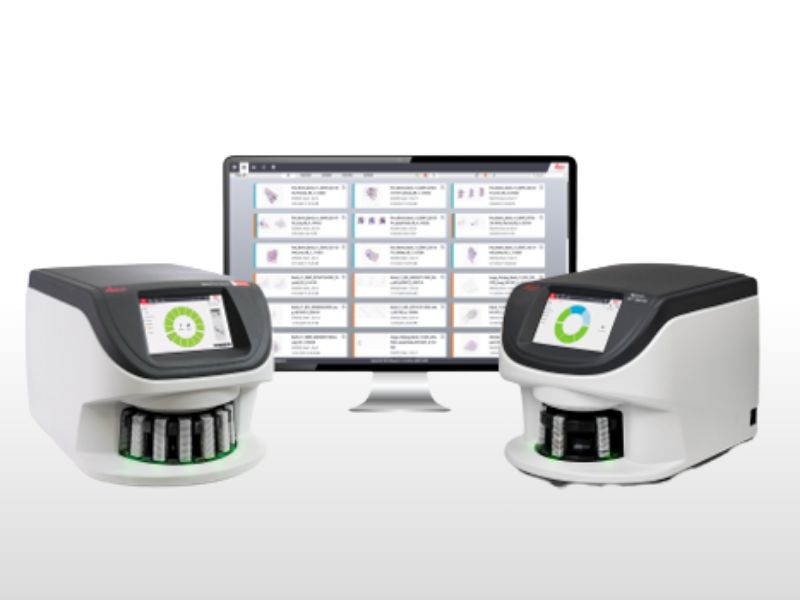
Eight sets of glass slides were mailed to the partner hospitals along with brief clinical histories, creating 240 glass slide test cases. The ninth set was scanned into whole slide imaging files at the initiating hospital, creating 30 digital cases. After a washout period of at least two weeks, the digital cases were sent to all eight partner hospitals via the CDPPN website, creating 240 digital test cases. The same pathologists who reviewed the glass slides then reviewed the digital cases.
In the second part of the validation, 30 additional cases were contributed by all participating hospitals, with each hospital contributing three to four cases. These included mostly pediatric cancer cases but also non-cancer cases such as placenta pathology and fetal autopsy specimens. The glass slides were scanned at the originating hospitals and uploaded to the CDPPN platform. Two pathologists at the initiating hospital reviewed both the digital and glass slide versions of these cases, with a minimum two-week washout period between reviews.
Validation Results
The study generated 269 valid diagnostic data points. Of these, 257 (95.5%) were concordant, 9 (3.3%) showed minor discrepancy, and 3 (1.1%) showed major discrepancy. The study also included 149 immunohistochemistry (IHC) data points from 24 cases, all of which were concordant (100% concordance). The concordance rate exceeded the 95% threshold recommended by CAP, thus successfully validating the digital system for clinical use.
The authors further analyzed the 12 discrepant data points, eight of which involved two cancer types: differentiating neuroblastoma (5 data points) and rhabdomyosarcoma (3 data points). Dr. Chen explained that these cancer types are challenging to diagnose, even for expert pediatric pathologists.
“Differentiating neuroblastoma needs a lot of counting to reach >5% differentiating neuroblasts and <50% Schwannian stroma,” Dr. Chen said. “Most of the diagnostic discrepancies of differentiating neuroblastoma are due to inadequate counting by pathologists. Counting is tedious for humans and is a perfect application for AI.”
Dr. Chen added that the histomorphology (embryonal type vs alveolar type) of rhabdomyosarcoma has traditionally been very important in risk stratification, but recent advancements in molecular pathology have fundamentally changed risk stratification in this population.
“Now we need to do a molecular study to decide if it is a fusion-positive rhabdomyosarcoma or fusion-negative rhabdomyosarcoma, which will dictate the clinical management. ARMS vs ERMS is not very important now,” Dr. Chen said. “We called these cases minor discrepancies as they are not likely to affect clinical treatment.”
Implications and Future Work
The CDPPN is particularly valuable in the Canadian context, where the population is relatively small and distributed across a vast geographic area. Large pediatric academic centers and subspecialty expertise are scattered throughout the country, making traditional consultations logistically challenging. The digital network eliminates these geographic barriers, allowing any participating pathologist to obtain expert opinions quickly and securely.
CDPPN is now in full clinical use, serving children across Canada. Dr. Chen reveals that the network’s applications are expanding:
“So far, the network has been for second-opinion pathology diagnoses only. We are now trying to use the network also for primary pathology diagnosis of rare tumors.”
References
- Chen H, Putra J, Nagy A, et al. Validation of A Nationwide Digital Pediatric Pathology Consultation Network. Pediatr Dev Pathol. 2025;28(3):164-171. doi:10.1177/10935266251316782
No audio available for this article yet.
No quiz available for this article yet.