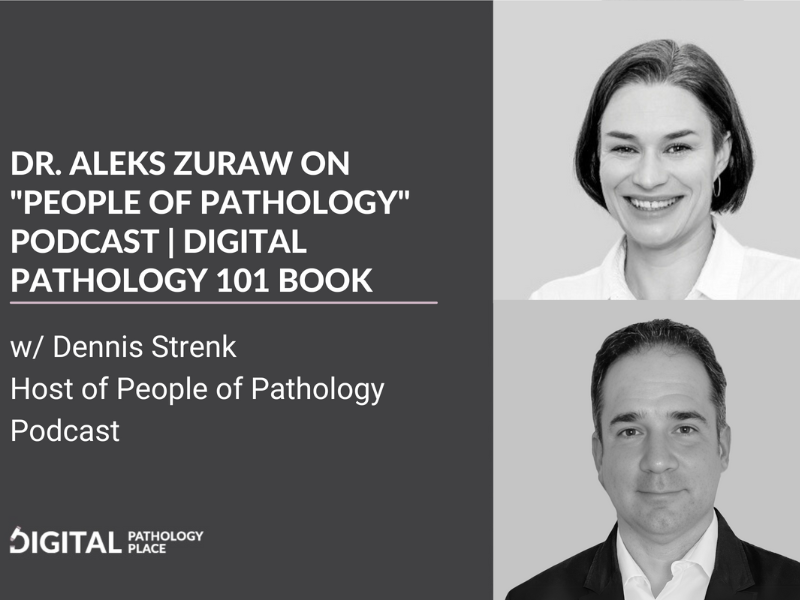
In my recent podcast appearance in the The People of Pathology Podcast by Dennis Strenk, we the importance of digital pathology, its advancements, and the cultural shifts necessary for its widespread adoption. We also discussed how my book “Digital Pathology 101 – all you need to know to start and continue your digital pathology journey” can help increase digital pathology awareness and adoption.
Introduction to Learning Mentality
Thriving in digital pathology requires a learning mentality. Regardless of your experience level, keeping an open mind is crucial. This field is evolving rapidly, and even experienced digital pathology users and experts must reassess the best tools and methods. Understanding how different tools and fit together to meet specific needs is key to advancing patient care and pushing the field forward.
Why was Dr. Aleks Zuraw a guest on The Paople of Pathology Podcast for the 3rd time?
It’s been an honor to be invited onto the podcast for the third time. One of the main reasons for my return was the publication of my book, “Digital Pathology 101: All You Need to Know to Start and Continue Your Digital Pathology Journey.” The book is read chapter by chapter on the Digital Pathology Podcast, making it accessible to those who prefer listening to reading.
The Journey of Writing Digital Pathology 101
Writing the book was a seven-month journey filled with challenges and insights. Compiling my experiences and knowledge into a coherent framework required a lot of heavy lifting, but it was a rewarding process. The book aims to serve three types of readers: absolute beginners, intermediate learners, and those looking to teach digital pathology. The goal is to provide a structured resource that helps readers quickly grasp the essentials of digital pathology and apply them effectively.
Balancing Content for Different Readers
“Digital Pathology 101” was designed to cater to various levels of expertise. Absolute beginners, people with intermediate knowledge who already know about some aspects of digital pathology, and those who want to teach the subject will all find value in it. Each group can benefit from the book’s comprehensive overview, enabling them to contribute meaningfully to their respective areas of the digital pathology field.
Digital Pathology Milestones and Surprises
The history of digital pathology is both fascinating and surprising. The field can be traced back to the 1980s, with significant milestones that have shaped its evolution. One of the most notable was the CLIA 88 regulation, which initially set the field back by decades due to a scandal involving remote slide reviews. However, the pandemic provided an opportunity for a significant shift. The Centers for Medicare Services (CMS) temporarily allowed remote sign-outs, paving the way for more permanent changes. Now, digital slides can be used for remote sign-outs, bridging the gap that had existed for years. This is a testament to how advancements in technology, if carefully monitored and applied, can drive fundamental changes in the field.
Interoperability in Digital Pathology
Interoperability remains a critical issue in digital pathology. Few labs start from scratch; most have existing systems that any new tools must integrate with seamlessly. Ensuring that different software and hardware can work together is crucial for creating a non-disruptive diagnostic workflow. The goal is to enhance diagnostic accuracy and efficiency through seamless integration and not to complicate existing processes.
Collaborating with Vendors
While interoperability is essential, so is collaborating with vendors to improve their systems. Initially, my role involved helping vendors understand the digital pathology workflow to create better tools. Over time, this relationship has evolved. These days, successful vendor collaborations also involve taking their insights seriously, as they have often worked with multiple labs and have a wealth of knowledge about what works and what doesn’t. This symbiotic relationship helps both parties: vendors can create more user-friendly tools, and pathologists can more effectively integrate these tools into their workflows.
The Cultural Shift in Digital Pathology
A significant cultural shift is necessary for the widespread adoption of digital pathology. This shift involves a learning mentality—not just for pathologists, but also for IT experts, computer scientists, lab directors, and other stakeholders. These highly specialized experts must be open to learning from one another and adapting to new methodologies and tools. This interdisciplinary approach will help ensure that we stay current with rapid advancements in the field.
AI in Pathology: Narrow vs. General AI
Artificial Intelligence (AI) is another game-changer in digital pathology, although it’s essential to understand the distinction between narrow AI and general AI. Narrow AI focuses on specific tasks and is heavily utilized in digital pathology for things like image analysis and natural language processing. This type of AI is not about replacing pathologists but enhancing their capabilities. For example, tools that assist in identifying cancerous regions in tissue samples help pathologists make more accurate diagnoses.
Companion Diagnostics and Personalized Medicine
Companion diagnostics is a growing field that ties directly into the broader objectives of personalized medicine. These are tests that provide essential information to ensure the safe and effective use of a corresponding drug. In digital pathology, companion diagnostics often involve biomarker evaluations from pathology images, leading to more effective and personalized treatment plans for patients. The ability to predict molecular properties from images is another promising area of research that could significantly impact patient care.
The Role of Toxicologic Pathology
While often overlooked, toxicologic pathology plays a crucial role in drug development. Veterinary pathologists evaluate the safety and efficacy of new drugs through preclinical testing, which involves examining animal tissues. Understanding the toxicologic profile of a substance is critical before it moves on to human trials. Though not directly linked to digital pathology, this field underscores the interdisciplinary nature of research and development in medicine.
Conclusion and Final Thoughts
Digital pathology is at an exciting juncture, filled with rapid advancements and opportunities for innovation. My book, “Digital Pathology 101: All You Need to Know to Start and Continue Your Digital Pathology Journey,” aims to provide a comprehensive resource for anyone involved in this field. Whether you’re a beginner, an intermediate learner, or someone looking to teach digital pathology, the book offers valuable insights and practical advice.
For those interested, the book is available in multiple formats, including a free PDF, Kindle, Audible, and physical copies via Amazon. Your feedback, particularly in the form of reviews, is invaluable and helps other potential readers gauge the book’s usefulness.
Thank you for taking the time to explore these topics with me. The journey of learning and adapting never ends, and together we can continue to advance the field of digital pathology.
The Episodes Resources
- Digital Pathology 101 .
- Digital Pathology Place’ Newsletter
- Original Episode Podcast episode of The People of Pathology
No audio available for this article yet.
No quiz available for this article yet.