The following abstract is drawn from a recently published paper in the British Medical Journal. We invite you to read the full paper and join the conversation, become a member of the Radiology News community to share your thoughts, ask questions, and engage with others around this work.
Authors: Bernard Rachet, professor of cancer epidemiology1,Ajay Aggarwal, professor of cancer services and systems research1,Martin McKee, professor of European public health1
The 2026 national cancer plan for England sets out an ambitious programme to improve cancer outcomes through earlier diagnosis, personalised care, and faster access to the most innovative treatments.1 Although presented as a health reform strategy, the plan reads more convincingly as an industrial strategy. The plan frames cancer services as a national platform for research, innovation, and commercial growth, with improvements to health outcomes almost secondary in its purpose.
This is the latest in a long series of plans aimed at improving cancer care.234 None have successfully shifted England’s position as a laggard in achieving the survival rates seen in comparable countries, nor reduced deep and persistent socioeconomic inequalities.5 What differentiates the current plan from previous ones is not the novelty of its health ambition, but the relative clarity and coherence of its commercial focus.
The plan argues, as others have repeatedly,67 that the current cancer care model is often slow, unresponsive, and is no longer fit for purpose. The plan calls for a “full modernisation” towards pre-emptive, data driven cancer care, capitalising on advances in genomics, artificial intelligence, digital diagnostics, and personalised treatment pathways.
The plan pays notably less attention to the realities of care delivery. It includes little information on how we can deliver a personalised service to manage some 200 types of cancer, and an increasing pipeline of treatments with a stagnant workforce and patients living precariously with more comorbidities.8910 The plan does not define in sufficient detail how it will approach some of the most pressing problems for the NHS, such as improving specialist commissioning, tackling poor performance, and designing increasingly complex cancer services to enable equitable access to high quality specialised care.11 These limitations are particularly concerning given the NHS’s longstanding weaknesses resulting from years of underinvestment,12 a situation exacerbated by current widespread recruitment freezes that affect cancer centres.13
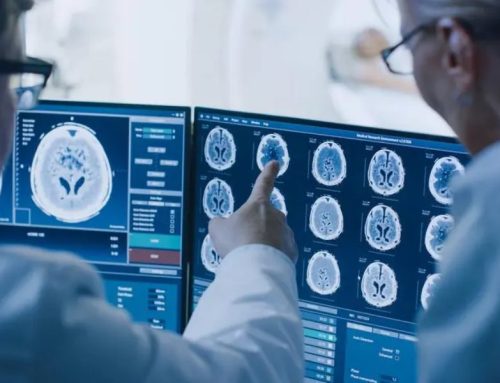
The plan itself describes the NHS as being in a “critical condition,” failing on core performance measures and unable to meet public expectations for timely care. Diagnostic bottlenecks are particularly acute: workforce shortages in radiology and histopathology directly threaten the plan’s early diagnosis ambitions. For example, the plan reports that only 68% of histopathology tests currently meet the 10 day turnaround standard, far below the target of 98%. The pressures are intensified by a loss of internal NHS expertise to design and implement change after repeated outsourcing of IT, procurement, service redesign, and training.14 Meeting cancer waiting time targets by 2029 will require sustained and unprecedented increases in capacity and learning systems.9
The plan depends on rapid upgrades to diagnostic and digital infrastructure, adding 9.5 million tests by 2029, ensuring full utilisation of over 170 community diagnostic centres, and scaling the federated data platform,15 robotics, and AI across diverse providers. Productivity gains are possible, but will require consistent political commitment,16 sustained investment,17 and empowered clinical leadership at all levels.18 Clinicians have long been frustrated by slow, poorly designed IT systems and will likely be sceptical after observing recurrent procurement failures that have hindered rapid digital transformation.
The plan’s delivery model also raises concerns. Although it highlights persistent variation in cancer care, with some trusts consistently underperforming, it essentially devolves improvement to NHS cancer alliances and the seven distinct NHS regions. But the plan lacks clarity on what additional resources and leadership capacity will be required to achieve this and omits details of the chain of governance and accountability between alliances, integrated care boards, and trusts necessary to deliver change.
The most developed and coherent element of the plan is its industrial component. It clearly outlines the UK’s competitive advantages, global leadership in genomics, population scale NHS datasets, and the strength of the life sciences ecosystem. It also details concrete mechanisms to accelerate discovery and commercialisation, including the Cancer Vaccine Launch Pad,19 the National HealthTech Access Programme,20 streamlined regulation, expanded clinical trials, and preparation for multi-cancer early detection.21 Here, the NHS is cast as a global testbed, offering unparalleled opportunities for companies to trial and scale new technologies, thereby boosting the UK’s investment appeal.
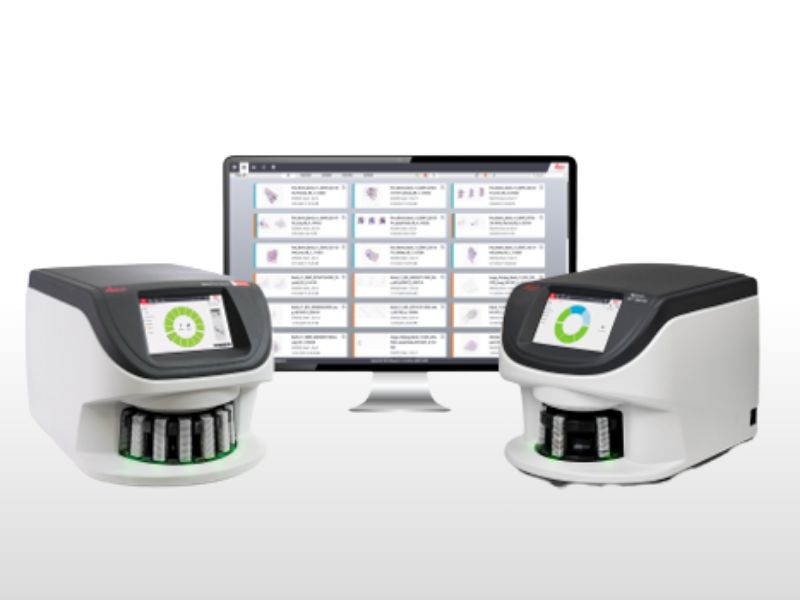
Premature adoption of technologies before evidence is mature will risk locking the NHS into costly commitments with uncertain benefits and could have unintended consequences for service design.2122 Heavy reliance on industry might favour commercially attractive innovations over unmet needs, such as rare cancers or integration of complex care. Substantial capital investments in robotics, digital pathology, and AI might fail to achieve predicted clinical gains. There is little evidence to support that these technologies, particularly AI, deliver better, more cost effective, and patient centred services.23
Crucially, the plan’s industrial ambitions depend on an NHS capable of functioning as a stable, high performing innovation actor. Yet the plan itself admits fragility across workforce capacity, digital infrastructure, and operational performance. Failing to confront these structural weaknesses limits the UK’s ability to achieve its ambitions in cancer research and innovation.
England’s national cancer plan sets out a coherent industrial strategy, accompanied by a less developed strategy for cancer system reform. Its success will ultimately depend more on a sustained investment in staff, equipment, management, and the health system than on technological breakthroughs. The plan entirely ignores health services research and implementation science that should be used to inform the delivery of high quality, equitable cancer care. Without this, the plan risks repeating a familiar pattern: ambitious cancer policy serving economic objectives more effectively than population health.
Source: England’s national cancer plan is more of a commercial strategy than a health policy | The BMJ
No audio available for this article yet.
No quiz available for this article yet.