Author: Sidney Ocanagil-Tunstall, Editorial Lead & Marketing Director at Pathology News
A Window into the Future of UK Healthcare
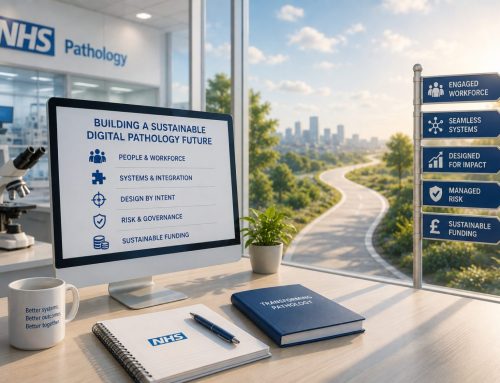
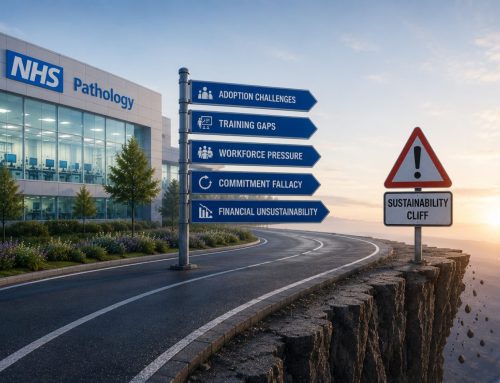
The UK healthcare system currently stands at an inflection point. Interpreting and juggling the demands of the NHS 10-year plan, absorbing the stark realities presented in the Darzi report, and closer to home for our audience: the realities for digital pathology adoption in the UK, laid out by David Clark in his four-part series, How NHS Digital Pathology obeyed the Iron Law of megaprojects. Have the stakes even been higher?
Against this backdrop, the NPIC (Northern Pathology Imaging Co-operative) Summit 2026 offered a rare and exclusive look inside the room where the solutions to these massive challenges are actually being built.
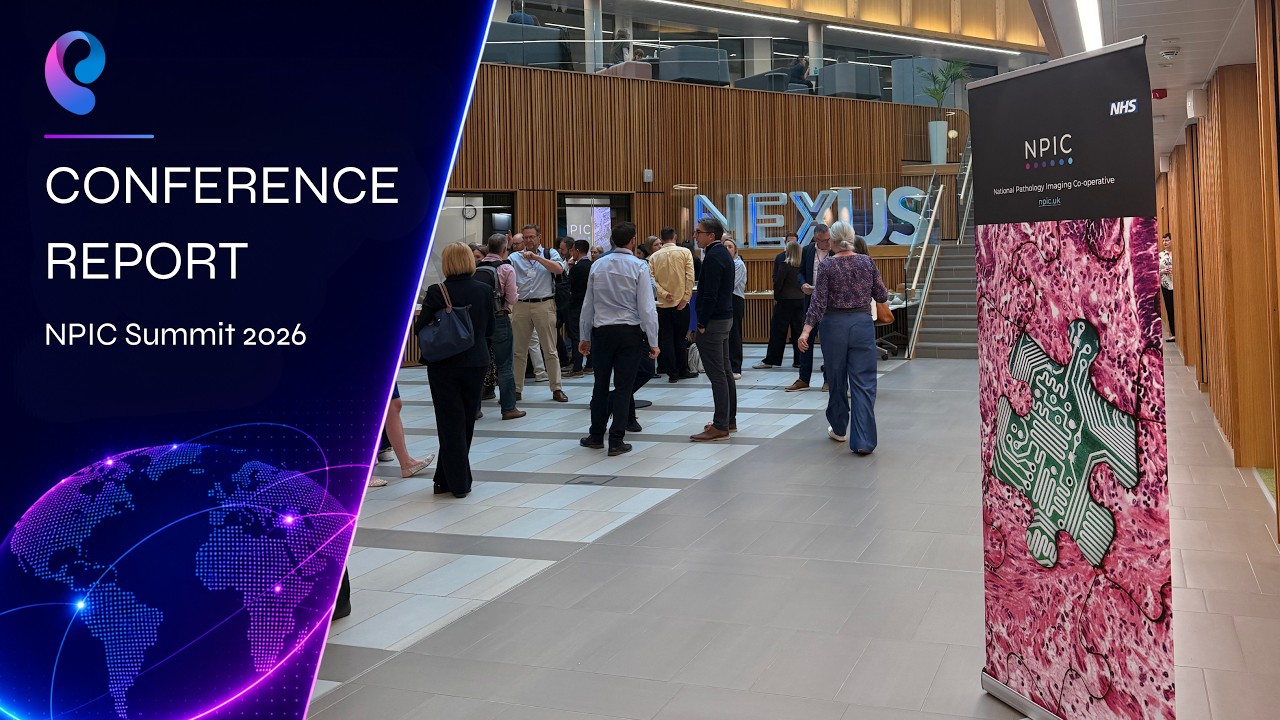
This event in theory happens once a year, with those invited to attend hoping they’d return for its third year in 2027. This year’s one day event brought together a concentrated powerhouse of over 120 key decision-makers, spanning NHS clinical leadership, government officials, and life sciences industry executives. The formal Welcome, delivered jointly by Dr. Bethany Williams, NPIC Knowledge and Skills Lead, Mr. Antony Kildare, Chair of the Leeds Teaching Hospitals NHS Trust, and Dr. Colin Wilson, Deputy Director of Research Infrastructure for the Office for Life Sciences. Set an urgent, action-oriented tone for the day.
Untangling the Health Data Web
The first major theme of the day tackled the UK’s fragmented digital landscape. In her keynote, Creating a vision for a new UK Health Data Research Service, Dr. Melanie Ivarsson OBE, CEO of the Health Data Research Service, outlined an ambitious mandate. By 2030, the HDRS aims to establish a “Single Front Door” for health data, replacing the current maze of regional systems and allowing approved researchers seamless, secure access to vital information.
This need for a unified approach was heavily echoed during the NPIC Director’s View. The session featuring rapid-fire updates from the leadership team: Prof. Darren Treanor, Dr. Daljeet Bansal, Mr. Bash Hussain, Prof. David Brettle, and Dr. Bethany Williams. The panel highlighted a staggering achievement: the NPIC network is now scanning 160,000 slides a month, not just cementing its status as a global leader in digital pathology but also proving NPIC was still on top of its aims. The leadership team followed up by stressing that a unified national system is the only way to avoid wasting NHS funds on siloed regional IT projects.
Prof. Treanor summarized the absolute necessity of this infrastructure: “The real benefit of a national system is when you want to roll things out, [for example] when you want to deploy artificial intelligence… you’ve got only to do it one single place and [then] rollout to trusts.”
The Future of Health Data & The Value of Information
Following a morning’s break the audience reunited for a panel discussion on the Future of Health Data. Chaired by Mr. Sidney Ocanagil-Tunstall, the panel featured leading experts: Dr. Ros Blackwood, Dr. James Duboff, Ms. Louise Knowles, and Dr. Michael Chapman. In the short 45-minute discussion period the group navigated a discussion built on three essential pillars:
- The Value of Data: establishing that NHS data is no longer merely a byproduct of clinical care, but a high-value asset essential for predictive analytics, and the key to the future of personalized medicine.
- Life Sciences Growth: exploring how unlocking this data is the key to drawing international investment, boosting clinical trials, and accelerating patient access for innovative therapies.
- Trusted Infrastructure: realizing that growth for healthcare in the UK hinges entirely on Secure Data Environments (SDEs) and Trusted Research Platforms. Building infrastructure that allows rapid access for researchers while fiercely protecting patient privacy, and the public licence, a non-negotiable prerequisite.
Clinical Realities, Quality, and Patient Advocacy
Following Lunch, the summit shifted its focus to the realities of the clinic. The afternoon keynote, Pushing the Boundaries with Digital Pathology in Clinical Care, was introduced by Dr. Yvette Oade CBE and delivered by Prof. Sarah Coupland, President Elect at the Royal College of Pathologists.
Grounding her highly technical talk in deep personal stakes, Prof. Coupland shared how her father’s legacy in pathology and her own family’s history of cancer drive her relentless advocacy for the field, recently cycling across France to raise funds for Cancer Research UK. Following up with a call to action regarding the Darzi report and noting her intense frustration that pathology was largely omitted from the government’s 10-year plan despite being central to patient care from “cradle to grave.”
“We really have to stand on the top of this building… and shout out how important pathology is for each of these different three shifts.”
Her address functioned as a bold, forward-looking manifesto for the future of RCPath:
- Navigating the AI Frontier: Highlighting RCPath’s commitment to acting as a trusted central navigator for clinical AI, spotlighting the launch of a live registry on the RCPath website tracking CE-marked and FDA-approved AI algorithms to guide safe trust adoption.
- Futureproofing the Workforce: Likening traditional glass-slide pathology to a rotary phone in an iPhone era, she emphasized RCPath’s focus on upskilling pathologists and biomedical scientists through tools like the Pathology Portal, alongside strategic partnerships with the IBMS and the Royal College of Radiologists.
- Closing the Implementation Gap & Ensuring UK Equity: Pointing to her success in Liverpool building a Trust Research Environment with 30,000 linked ocular images, she challenged the NHS to digitize whole cases alongside whole-genome sequencing. Crucially, she declared that RCPath will champion national equity, ensuring patients at small District General Hospitals access the exact same cutting-edge, AI-assisted diagnostics as those at major teaching hospitals.
This call for real-world integration flowed directly into the next presentation: Collaborating for Quality in Digital and Computational Pathology: An NPIC Industrial Sponsor Showcase. Introduced by Mr. Ed Whiting OBE, the showcase featured quick-fire insights from industry leaders Dr. Olga Colgan, Mr. Ian Mason, Dr. Richard Oswald, Mr. Lee Welch, Mr. Chris Scarisbrick, Dr. Monika Lamba Saini, and Mr. Christopher Parry.
The final group looked to the bring the conversation full circle, The Path Forward: Digital and Computational Pathology in the Real World. Chaired by Dr. Bethany Williams, and featuring Prof. Jo Martin CBE, Mr. Graham Prestwich (Patient Group Representative), Dr. Alyn Cratchley, and Dr. Matthew Clarke. The discussion really grounded the excitement with a reminder that AI relies entirely on standardized input, Prof. David Brettle’s earlier warning served as a guiding principle for this transition:
“Big data doesn’t always solve a problem because that data represents a function of tissue. And if we’re not reporting that correctly, then we’re not getting the right data.”
Dr. Matthew Clarke spoke to new spatial biology innovations, already used at large in research settings, and the potential they could have in a clinical diagnostic environment. But it was Graham Prestwich’s additions as a lead for the patient advocacy group that brought the whole room back to the reality that ultimately histopathologists were positioned to support the patient and change their lives for the better. Graham expressed the importance of trust between the patient and clinician and the care in which clinicians must take while sharing diagnostic updates in a consultation.
A Unified Vision for the Future
The day concluded with a forward-looking Closing Session featuring Prof. Darren Treanor and Mayor Tracy Brabin. The overarching takeaway from the NPIC Summit 2026 was loud and clear: true progress in digital pathology and AI cannot happen in silos. It requires deep, uncompromising collaboration between academia, industry, and the NHS.
Energized by a day of transparent debate and shared vision, attendees took these vital conversations into the final Networking Drinks Reception, ready to turn the summit’s insights into tomorrow’s healthcare reality.