By Melissa Gillone
Mika Kuisma, CEO of Grundium, has been named in The Pathologist’s 2026 Power List, recognizing his commitment to making digital pathology more accessible.
This recognition reflects Kuisma’s ambition to broaden access to digital pathology by helping laboratories overcome obstacles to adoption. Under his leadership, Grundium has focused on practical technology that supports laboratories as they introduce new ways of working.
That ambition also underpins Grundium’s work with Visiopharm, helping bring scanning, image analysis and AI within reach of a wider range of laboratories worldwide. The goal is to support progress in pathology that ultimately benefits patients.
Read his full statement:
What gaps in technology/training/processes concern you most, and how are you addressing them via innovation?
The gap that concerns me most is how difficult and expensive it can be for a laboratory to get started with digital pathology. Enterprise-level systems often require a long procurement process, major infrastructure decisions, and extensive change management before the lab sees its first results. That delays the impact digital pathology and AI can have on patient care. It also makes adoption much harder in underserved regions, where the need may be greatest.
When we started Grundium, our goal was to make pathology accessible to more people around the world. The lack of timely and reliable diagnosis remains a major problem, and I do not believe it can be solved using conventional methods alone.
We also had the advantage of not knowing too much about digital pathology. We did not know how scanners were “supposed” to look or how laboratories were “supposed” to adopt them. That gave us the freedom to think differently. We decided the technology had to be extremely easy to use, versatile enough for different sample types, and scalable for different needs.
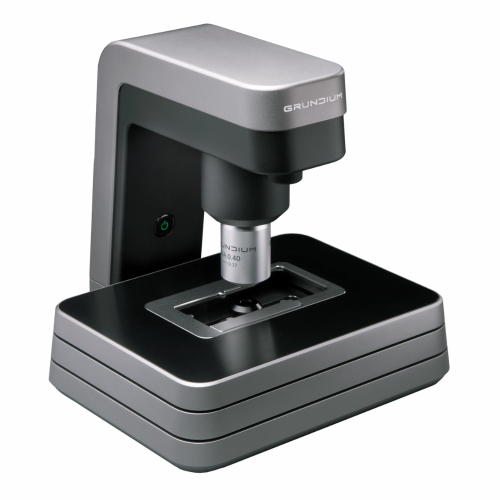
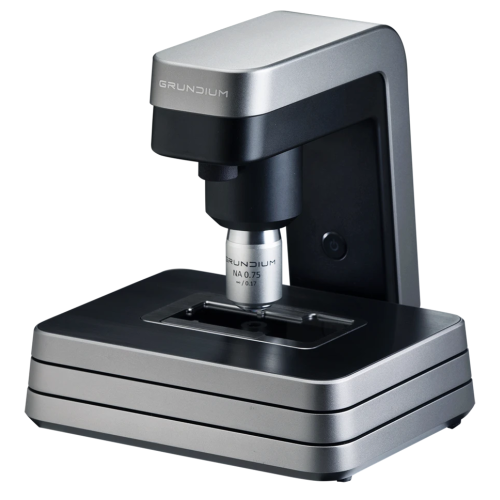
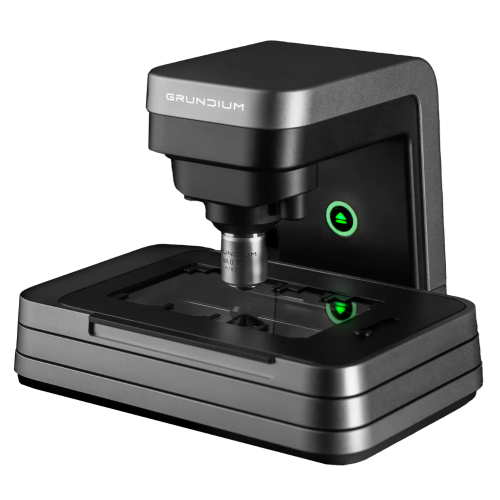
We did not simply take existing components and put them into a smaller box. Our team developed the full technology stack, including the image sensor, image-processing algorithms, compact mechanical design, connectivity, and web-based viewing technology. Everything was developed with the same goal: lowering the barrier to entry so a laboratory could solve a meaningful problem without first digitizing its entire operation.
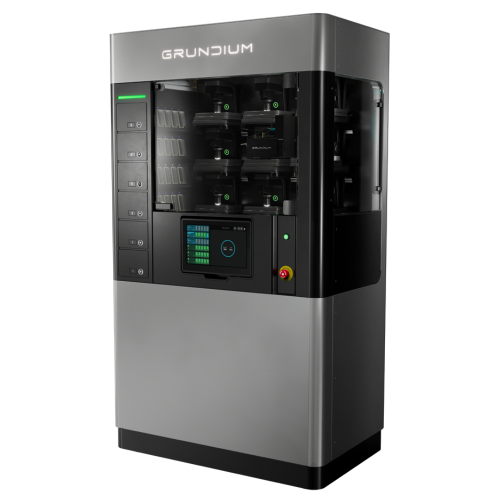
Intermountain Health is one example. In 2021, it began using Ocus to improve access to frozen-section interpretation across Utah without disrupting the turnaround time required during surgery. By placing scanners near the frozen-section bench, pathologists could begin reviewing the first slide while additional levels were still being prepared and scanned. Intermountain has since expanded this approach across more of its network.
The combination of Grundium and Visiopharm now gives us an opportunity to apply the same thinking to image analysis. Our vision is to make biomarker quantification, including HER2 and PD-L1, much easier to deploy. A laboratory should be able to begin onboarding in the morning and analyze its first slides by lunch.
I am proud of the technology, but even more proud of the team that has turned this idea into something laboratories can use in their daily work. For me, innovation is valuable when it helps more laboratories begin sooner and brings better pathology closer to the patients who need it.
Join Grundium for its upcoming webinar. Register now to secure your place.
Share this article

Follow us
Get Pathology News Delivered to Your Inbox