A novel computational pipeline that bridges the gap between AI-derived features and traditional pathological markers could make artificial intelligence more trustworthy for predicting end-stage kidney disease (ESKD) in patients with diabetic nephropathy, according to research presented by Harishwar Reddy Kasireddy, a doctoral researcher at the University of Florida.[1]
“When you feed data into a black box model, and it makes a prediction, clinicians aren’t sure what relevant features are being learned by the model,” Kasireddy explained during his presentation. His team’s solution combines the power of foundation models with traditional handcrafted features that pathologists have relied on for decades.
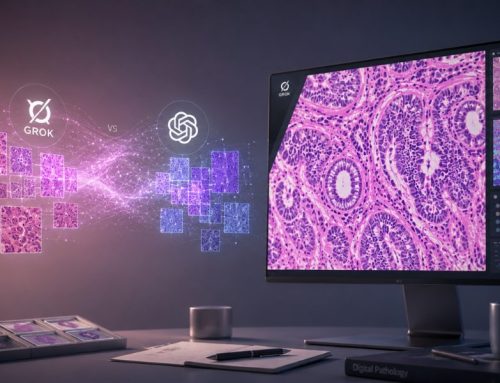
The researchers developed a hybrid approach that correlates feature embeddings from two common pathology foundation models, Prov-Gigapath and UNI, with domain-specific handcrafted features. These handcrafted features include measurements that pathologists regularly use to assess kidney tissue, such as luminal space area, periodic acid-Schiff (PAS)-positive area ratios, and membrane thickness measurements.
“Traditional handcrafted features rely on domain expertise and are often designed based on prior knowledge of histological structures,” Kasireddy noted in a post-presentation interview. “This understanding often rests on the combined experience of the community of nephropathologists. Foundation models, on the other hand, can learn complex, abstract patterns from large-scale histopathology datasets, providing deep feature representations that go beyond handcrafted features.”
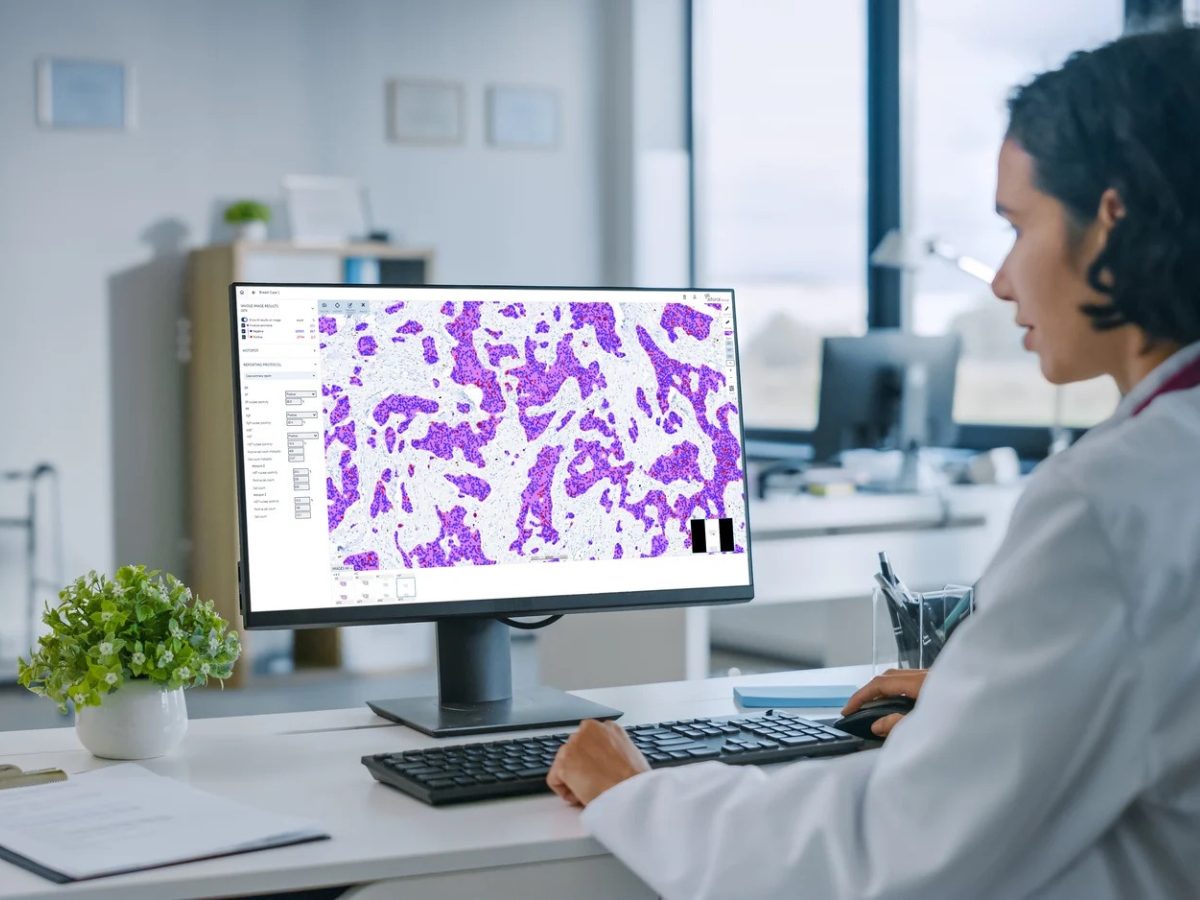
The team used 56 diabetic nephropathy WSIs to predict the risk of ESKD two years post-biopsy. The pipeline first segments different functional tissue units, including arteries, tubules, and glomeruli, and then extracts both AI-derived and handcrafted features. By identifying correlations between these feature sets, the researchers created interpretable feature maps that “help explain what the AI models are seeing.”
Significant correlations were found between the foundation model features and traditional markers, such as PAS-positive area ratios (indicating membrane thickness), energy in arterial luminal spaces (suggesting blood flow characteristics), and chromatin contrast in glomeruli. These correlations provide pathologists with familiar reference points to understand the model’s decision-making process.
In addition, the combined approach showed improved performance metrics compared to using either feature set alone. The Prov-Gigapath model showed superior specificity, whereas the UNI model demonstrated superior precision-recall performance. “The foundation models, Prov-Gigapath and UNI, were trained on different datasets, which may lead to variations in the features they capture for diabetic nephropathy,” Kasireddy explained. “This difference may explain their varying performance, with Prov-Gigapath potentially emphasizing different morphological features than UNI.”
Kasireddy noted that feature explainability maps offer a glimpse into how AI models make decisions, potentially enhancing pathologists’ understanding of disease processes. “Feature explainability maps provide a direct link between feature embeddings of foundation models with known pathological structures in the handcrafted features through correlation, making the feature embeddings from these foundation models more interpretable for clinicians,” he explained.
However, several challenges remain before widespread clinical implementation. The sample size of 56 cases from a single institution in the current study needs to be expanded. “Incorporating data from other institutions can provide a more robust understanding of the features learned by foundation models,” Kasireddy noted.
The research team is currently working to extend their approach to other kidney diseases, including membranous nephropathy and lupus nephritis. This expansion will require the development of disease-specific handcrafted features for each condition and their correlation with foundation model embeddings. The team is also focused on developing user-friendly visualization tools to help pathologists better understand and interact with the findings of the model.Harishwar Reddy Kasireddy, doctoral researcher at the University of Florida, USA.
[1] Harishwar Reddy Kasireddy, Explainable feature embeddings from histopathology foundation models: A case study for end-stage kidney-disease risk analysis in diabetic nephropathy patients. Presented at SPIE 2025 Digital and Computational Pathology conference, February 19, 2025; San Diego, CA.
No audio available for this article yet.
No quiz available for this article yet.