
Tiffany Chen
In the world of clinical diagnostics, innovation often moves faster than regulation, but in New York State, the bar for lab-developed tests (LDTs) is set high. Unlike most states, New York requires separate, rigorous approval before any LDT can be used on patient samples originating from within its borders.
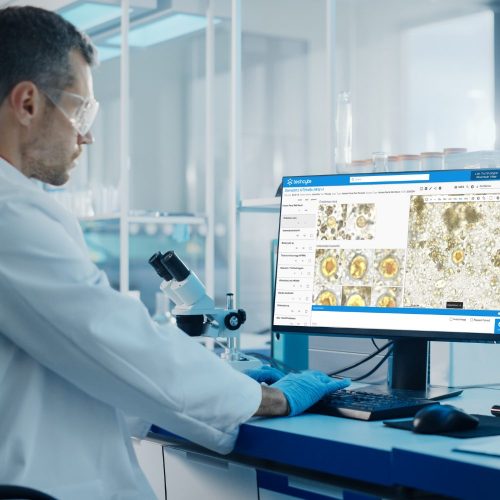
Recently, Quest Diagnostics’ parasitology lab in Clifton, NJ, received New York State approval for its laboratory-developed test that uses Techcyte’s digital trichrome solution — a significant milestone that brings the benefits of digital parasitology to even more patients. But what exactly does NYS approval mean, and why is it so important?
What is New York State approval for LDTs?
In most of the U.S., labs that develop and validate their own tests do so under CLIA (the Clinical Laboratory Improvement Amendments) regulations, overseen by the Centers for Medicare & Medicaid Services (CMS). New York State, however, operates independently through the Wadsworth Center, part of the New York State Department of Health.
“Only laboratories that hold a New York State clinical laboratory permit are authorized to perform testing on specimens originating from New York.” — Wadsworth Center
If a laboratory wants to test New York patient samples using an LDT, it must first obtain a NYS clinical laboratory permit and then submit its test for approval by the Clinical Laboratory Evaluation Program (CLEP). This evaluation covers everything from performance characteristics to procedures and documentation.

Why is NYS approval necessary?
New York State’s review process is widely regarded as one of the most comprehensive in the country. While that makes it more demanding for labs to gain approval, it also ensures a high degree of clinical quality and transparency.
“If a laboratory intends to use their LDT to test specimens originating in NYS, the laboratory must meet all CLEP permitting requirements, which includes having their LDT reviewed and approved.” — Wadsworth Center
For laboratories, NYS approval doesn’t just open access to a key patient population—it signals credibility and a commitment to high standards. For patients, it guarantees that the test they receive has passed a rigorous state-level review.
What it means for labs and patients
For labs:
- Approval enables labs to consolidate workflows, eliminating the need to handle New York samples separately.
- It allows labs to fully implement their chosen technology—like digital or AI-powered platforms—across all patients.
Standardizing processes can reduce errors, improve training, and increase throughput.
For patients:
- Patients in New York can now benefit from the same innovations already in use in other parts of the country.
- Consistent workflows lead to faster and more reliable reporting, regardless of geography.
Approval fosters greater confidence in the accuracy and reproducibility of results
How labs earn NYS approval
Getting NYS approval for an LDT involves several key steps:
- Obtain a NYS clinical laboratory permit
This is a prerequisite for any LDT submission. - Submit a validation package
Labs must provide detailed performance data, including sensitivity, specificity, and precision, and describe the methods used to generate these results. - Include Standard Operating Procedures (SOPs)
Complete documentation of test workflows, controls, and result interpretation is required.
Respond to requests or site reviews
The Wadsworth Center may request additional data or conduct an inspection before granting final approval.
“Review of laboratory-developed tests (LDT) begins after the clinical laboratory permit application has been submitted.” — Wadsworth Center
The process can take several months, depending on the complexity of the test and the completeness of the submission.
Is New York the only state that requires this?
Yes—New York is unique in its requirement for state-level LDT approval. While some states (like California or Pennsylvania) require lab licensing or registration, they do not require the same level of individual test review. For most other states, CLIA compliance is sufficient.
Why this matters for innovation
Modern labs are increasingly adopting digital workflows, AI-assisted tools, and image-based diagnostics to improve accuracy, consistency, and efficiency. Gaining NYS approval is a critical step in ensuring that patients everywhere have access to these advancements.
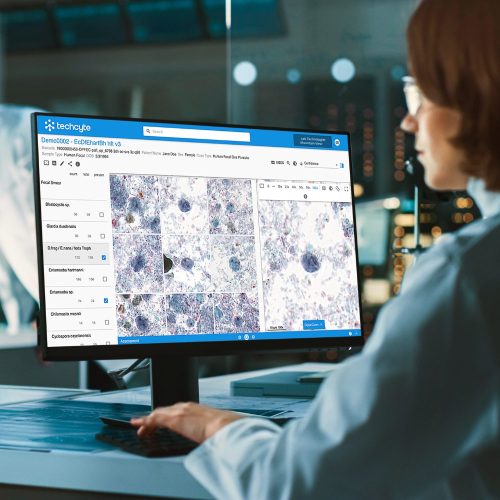
For technologies like Techcyte’s Parasitology Suite trichrome solution, NYS approval allows labs to apply their digital workflow to every parasitology case, regardless of the patient’s location. This reduces workflow fragmentation and helps ensure equitable access to modern diagnostics.
A thank you to Quest Diagnostics
We would like to extend a heartfelt thanks to the Parasitology team at Quest Diagnostics in Clifton, NJ, for their ongoing commitment to diagnostic excellence. With their recent New York State approval, they can now apply Techcyte’s digital trichrome solution across all parasitology cases, including those from New York-based patients.
This milestone marks an important step in expanding access to digital diagnostics and unified workflows, and we’re proud to support their efforts as they continue to modernize parasitology testing for the benefit of both patients and providers.
Share this article

Follow us
Get Pathology News Delivered to Your Inbox