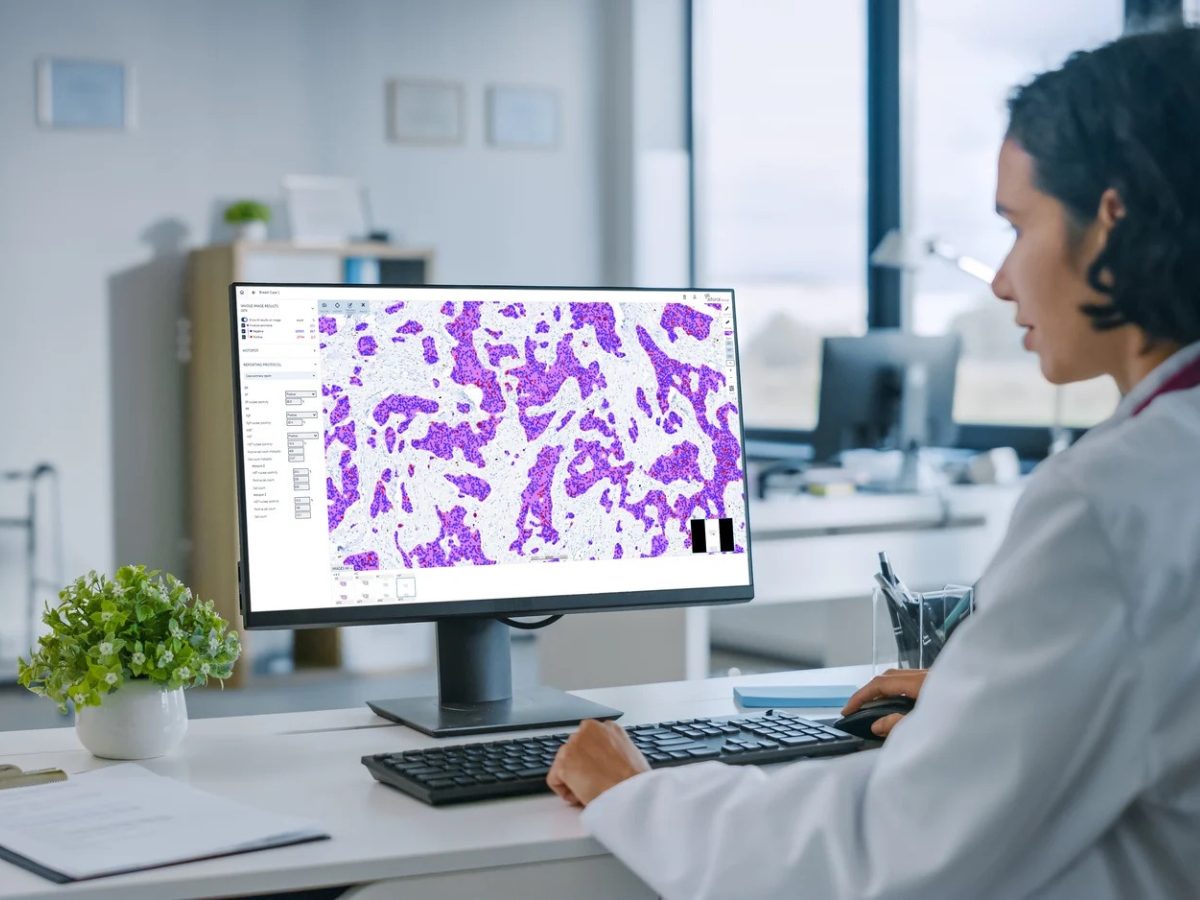
Need help understanding medical jargon? AI chatbot Osler is the guy for you. And he can do more—for free!—on MyPathologyReport.com.
When Martin Uthe, 67, a real estate agent from Chicago, opened his pathology report in a hospital online portal, he was stunned. The report, prepared by a pathologist—a specialist who analyzes blood and tissue samples to determine diagnoses and possible treatments—announced he had “prostatic adenocarcinoma.”
Uthe knew that meant he had the big C, but he couldn’t interpret the rest. He faced an onslaught of other terms that are familiar to doctors but not patients. And he’s not alone. A University of Michigan study showed that only 39% of patients with prostate cancer understood the basics of their pathology reports.
Uthe had undergone a needle biopsy because of a rising PSA (prostate-specific antigen) level, a marker for prostate cancer. His report said he had a tumor stage of “at least pT1cNxMx,” a Gleason score of 4+3 and a Grade Group of 3. It added that the cores—slices of prostate tissue examined by the pathologist—showed no signs of perineural, lymphovascular or extraprostatic invasion.
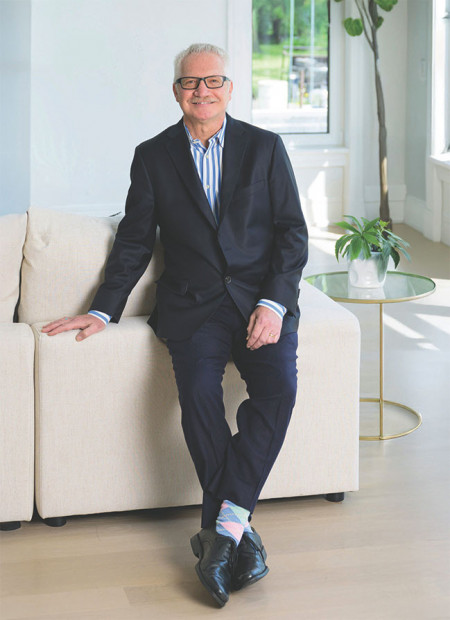
Martin Uthe. Courtesy of Martin Uthe
Say what? It was gobbledygook to Uthe. The report might as well have been in Sanskrit or Klingon.
Was this good news, or did he have to get his affairs in order?
Uthe brought his story to a virtual support group I cofounded seven years ago through AnCan, a peer-to-peer support organization formerly known as Answer Cancer. This particular group focuses on active surveillance, an approach to managing low‑risk prostate cancer with close monitoring as a way to avoid surgery or radiation and their side effects, such as erectile dysfunction and incontinence.
I sat up straight when I heard Uthe had Gleason 4+3, a form of prostate cancer that typically is treated aggressively (Gleason scores range from 2 to 10; numbers adding to 6 and above indicate cancer). Uthe didn’t get into the weeds of his pathology report. Most men who attend the support group have low-risk cancers.
I met with him one‑on‑one via Zoom a few days later. I told him he was unlikely to go on active surveillance—but it was possible—and that, above all, he needed a second opinion. Jonathan Epstein, MD, the dean of second opinions for prostate cancer and a uropathology specialist, has told me he ends up changing the Gleason score and related Grade Group (measures of how aggressive the cancer is) in about 20% of cases he reviews.
In this case, Uthe allowed me to try something new. I shared his pathology report—not his name—with MyPathologyReport.com, a website that offers a dictionary, searchable resources and a Pathology 101 step-by-step guide to help patients understand their reports. The site also has expert pathologists who translate pathology reports into plain English. The site is a registered nonprofit, and its services are free.
Since November, the site has featured an AI chatbot pathologist named Osler after the Canadian internist Sir William Osler, known for his patient‑friendly approach.
Trained on the site’s archives, Osler has been so accurate that Jason Wasserman, MD, a pathologist based in Ottawa who founded the site in 2018 after his father‑in‑law couldn’t decipher a pathology report, now urges patients to first try Osler before following up with a live pathologist. Wasserman specializes in head and neck cancer at The Ottawa Hospital and has a team of expert pathologists in other areas to back him up.
MyPathologyReport covers a wide range of diseases, with an emphasis on cancers and precancers, including breast, gastrointestinal, gynecologic, skin, blood and lymphoid diseases.
Decoding a pathology report, line by line
When I pasted Uthe’s report into Osler, it responded like a thoughtful support‑group moderator.
The AI report delivered some good news about the biopsy sample: There were no signs of the cancer growing into nearby nerves or blood/lymph vessels, and no cancer was seen extending outside the prostate. He would need further tests to confirm that. Osler also delivered the bad news: His cancer was a potentially more aggressive Gleason 4, Grade Group 3. What’s more, Osler explained that the pT1cNxMx shorthand meant Uthe’s tumor was not felt on a physical exam and was found through a needle biopsy, and there was no information yet on lymph node involvement or distant metastases.
Osler put the results in context. It explained that 4+3 cancers are considered intermediate risk and routinely lead to treatment discussions, noting that decisions depend on more than the Gleason score alone. PSA level and density, MRI findings, clinical stage, age and overall health all matter. It said that active surveillance might still be possible but that he needed to consult with a urologist.
Osler offered a list of questions for Uthe’s urologist:
- Is active surveillance still possible?
- Should he repeat the MRI or the biopsy?
- Are there genomic tests that could refine his risk?
Osler also echoed my message: Get a second opinion on the pathology from a highly experienced uropathologist. There was a chance Uthe’s Gleason score could be downgraded; I’ve seen that regularly.
Gleason grading, it noted, can be subjective—especially in the 3+4 versus 4+3 range. Rather than burying him in statistics, Osler suggested that Uthe ask his urologist how often reclassification changes outcomes in cases like his and what a reclassification might mean for treatment choice.
I shared the report with a consulting pathologist from MyPathologyReport’s Ask a Pathologist service—usually, it’s Wasserman. This person confirmed Osler’s findings and shared a glossary of terms related to Uthe’s diagnosis.
The pathologist also answered a question that was weighing on Uthe’s mind: Can someone with Gleason 4+3 go on active surveillance?
“It depends on several factors. Active surveillance is most clearly used for very low‑risk cancer (Gleason 6 or 3+3) and for some very favorable, low‑volume cases of Gleason 7,” the pathologist wrote.
“A 4+3 pattern is considered more aggressive than 3+4,” the pathologist continued, “so many clinicians would not offer active surveillance as the default option for a Gleason 4+3. However, if the disease is truly low volume (as in this case) and other factors are very favorable, some doctors may consider close monitoring with frequent PSA tests, examinations and periodic reevaluation with imaging or repeat biopsy. The decision depends on your age, overall health, PSA level and PSA density, MRI findings, the number of positive cores, how much of each core is involved and whether there are features like perineural invasion.”
Later, Dr. Epstein reviewed Uthe’s case. He found Uthe had low-volume Gleason 4+3, that the original pathology report had missed a second low‑volume Gleason 4+3 cancer and that Uthe was not a candidate for active surveillance. He recommended that Uthe consult a radiation oncologist. Uthe’s urologic oncologist, Abhinav Sidana, MD, MPH, of the University of Chicago, suggests that Uthe go slow and undergo follow-up testing before plunging into treatment. Emergencies are rare in prostate cancer.
Uthe said he had already experimented with using popular general‑purpose AI to better understand his pathology reports. Osler, he said, “felt more tailored to the questions asked than regular AI, though general AI was good for comparing treatments and side effects.”
Bridging the gap between access and understanding
Behind Osler lies a distinctly Oslerian ecosystem focused on patient education, says Wasserman. MyPathologyReport hosts about 500 diagnostic articles and 400 glossary entries explaining pathology terms in plain language. Pathologists write the content, and patient advocates review it for clarity. Its Ask a Pathologist service lets patients pose questions—like “My bladder cytology shows cytologic atypia; what does that mean?”—and receive detailed expert answers with links to relevant articles. Many questions involve breast, colon and prostate disease; others concern benign findings with alarming names.
“Normal antral and body‑type gastric mucosa with mild regenerative changes” sounds dire until explained as, essentially: “Your stomach looks normal.”
The website also patches a gap that contemporary law has inadvertently created. U.S. regulations now give patients immediate electronic access to test results—often before their clinician contacts them. Many patients appreciate transparency, but in practice, as my support‑group experience suggests, dense language about glands, margins and mitoses can provoke fear.
The MyPathologyReport site offers a reference library to decode terminology and provide expert interpretation. Osler goes further by analyzing whole reports and explaining their meaning. It decodes what a pathology report means, clarifies general queries and helps patients prepare focused questions for their care team.
Reviving Osler’s wisdom for the digital age
Sir William Osler worked in an era of bedside rounds and handwritten notes. His enduring advice—to treat the patient, not the disease—has become medical lore. Witnessing a chatbot bearing his name translate a dense prostate pathology report for a frightened patient puts a new spin on the Oslerian ideal of being informative and patient‑friendly.
To paraphrase the master: “A good website explains disease. A great one helps the person living with it.” Increasingly, technology like Osler does both, helping patients walk into the clinic informed, calmer and ready to ask the right questions.
As for Uthe, he was impressed with Osler and the discussion it sparked. But he still plans to rely on the sharpest diagnostician in his house, his wife, who accompanies him to all his visits.
“Karen’s questions are better,” he said. “She really zeroes in on things.”
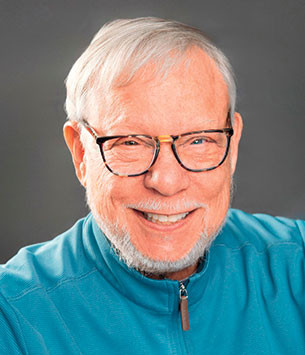
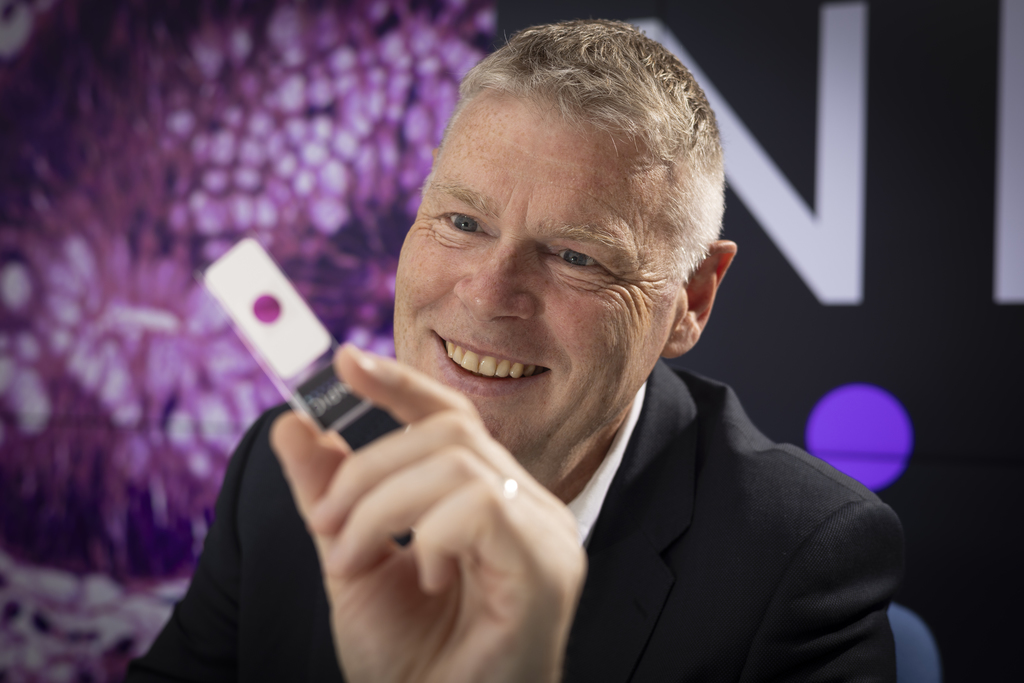
Howard Wolinsky. Courtesy of Howard Wolinsky/Jean Lachat Photography
Howard Wolinsky is a Chicago-based medical journalist and has been on active surveillance for prostate cancer for 15 years. He founded several support groups on active surveillance for men, including groups via AnCan.org and Active Surveillance Patients International (AsPatients.org). He ghostwrote a book on the future of pathology for the College of American Pathologists. In 2025, the Cancer Health 25 honored him as a top patient advocate.
No audio available for this article yet.
No quiz available for this article yet.