The following abstract is drawn from a recently published paper in Journal of Pathology Informatics. We invite you to read the full paper and join the conversation, become a member of the Pathology News community to share your thoughts, ask questions, and engage with others around this work.
Authors: Daiki Taniyamaa,b,d, Kazuya Kuraokac,d, Akihisa Saitoc,d, Aya Kidoc,d, Ayaka Shiraic,d, Rie Yamamotoc,d, Masayuki Manoe, Norihiro Teramotof, Shiro Miurag, Morihisa Akagih, Norihiko Katayamai, Tomonori Kawasakij, Chika Nakajimak, Susumu Kikuchik, Kiyomi Taniyamac,d
Abstract
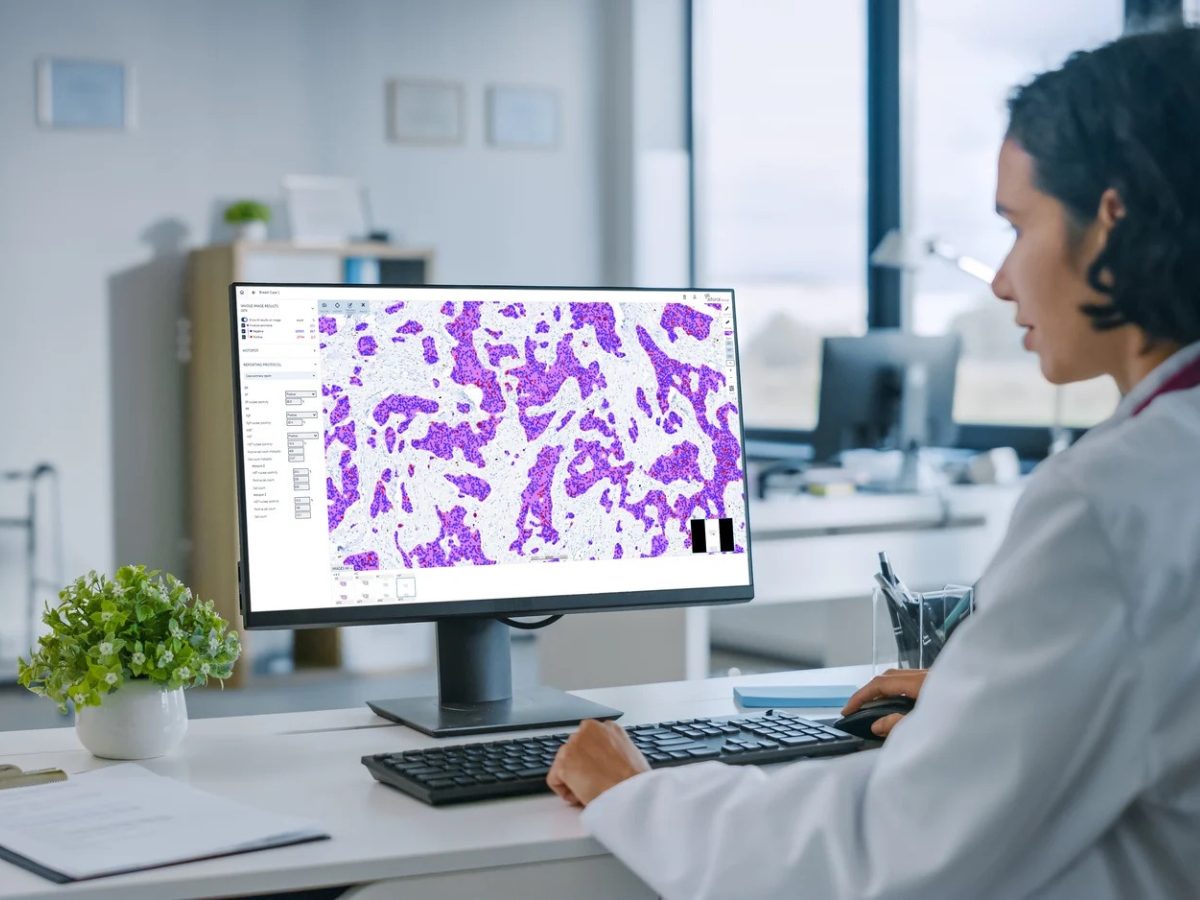
To reflect real-world pathology practice, we developed an artificial intelligence-based pathological computer-aided detection system, trained on diverse epithelial and non-epithelial tumors for gastric biopsy specimens. A multicenter cohort comprising samples from six institutions was used for training and validated with an independent dataset from a seventh institution. We applied two distinct algorithms and three operational validity levels with optimized parameters to address the complexity of pathological diagnosis, reflecting routine diagnostic practice. Our system enabled the detection of malignant regions at low-magnification observation, aligning with the practical workflow of pathologists. In a reader study involving a limited number of test samples, the use of system assistance was associated with an improvement in diagnostic sensitivity. Further analysis revealed that samples with small and dispersed malignant foci had a higher rate of false-negative diagnoses, underscoring the potential of our system to improve diagnostic sensitivity. This study highlights the promise of integrating our system into real-world practice to aid pathologists in the routine diagnosis of gastric biopsy specimens.
Read the full article: Development of an artificial intelligence-based computer-aided detection system for routine gastric biopsy diagnosis – ScienceDirect
- aDevelopmental Therapeutics Branch, Laboratory of Molecular Pharmacology, Center for Cancer Research, National Cancer Institute, National Institutes of Health, Bethesda, MD, USA
- bDepartment of Molecular Pathology, Graduate School of Biomedical and Health Sciences, Hiroshima University, Hiroshima, Japan
- cDepartment of Diagnostic Pathology, National Hospital Organization Kure Medical Center and Chugoku Cancer Center, Kure, Japan
- dInstitute for Clinical Research, National Hospital Organization Kure Medical Center and Chugoku Cancer Center, Kure, Japan
- eDepartment of Clinical Laboratory and Surgical Pathology, National Hospital Organization Osaka National Hospital, Osaka, Japan
- fDepartment of Pathology, National Hospital Organization Shikoku Cancer Center, Matsuyama, Japan
- gDepartment of Diagnostic Pathology, National Hospital Organization Nagasaki Medical Center, Omura, Japan
- hDepartment of Internal Medicine, Hiroshima Memorial Hospital, Hiroshima, Japan
- iDepartment of Internal Medicine, Kure Medical Association Hospital, Kure, Japan
- jDepartment of Pathology, Saitama Medical University International Medical Center, Hidaka, Japan
- kR&D Japan, Evident Corporation, Tokyo, Japan
No audio available for this article yet.
No quiz available for this article yet.