| Type of Solution |
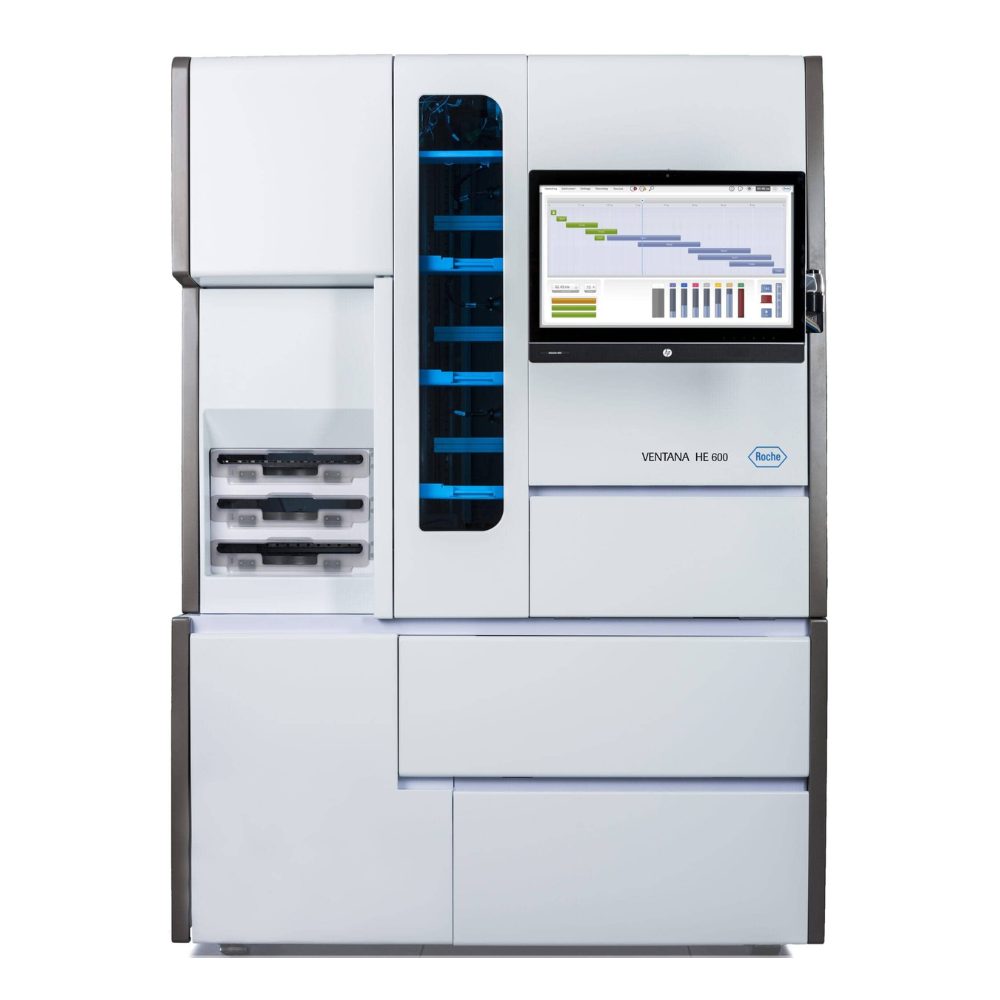
Automated block and slide movement, Coverslipping, Routine H&E and special staining
|
| Primary Laboratory Setting |
Clinical Histopathology, Reference or Central Laboratory
|
| Core Application |
Digital Pathology Readiness, Routine Diagnosis, Workflow Automation
|
| Tissue Compatibility |
Bone or Calcified Tissue, Delicate or Fragmented Tissue, Fatty Tissue, Large Resections, Small Biopsies, Whole-Mount Specimens
|
| Automation |
Robotic or Integrated Line
|
| Working Mode |
Continuous Loading
|
| Protocol Flexibility |
Adjustable protocol parameters, Automatic protocol selection, Controlled protocol editing, Specimen-specific protocols, Stored laboratory protocols, User-defined protocols
|
| Specimen & Derivative Tracking |
Barcode-assisted tracking, Location and workflow-status tracking, Positive identity verification, Slide identification, Time and operator audit trail
|
| Quality Control & Monitoring |
Alerts and exception handling, Automated output inspection, Endpoint assessment, Process logs and reports, QC review and release, Reagent and consumable traceability, Reagent-condition monitoring, Temperature monitoring, Time monitoring
|
| LIMS & System Integration |
Direct instrument integration, LIS/LIMS: bidirectional, Middleware-supported integration
|
| Downstream App. Compatibility |
Computational pathology and AI workflows, Routine H&E examination, Whole-slide imaging
|
| Reagent & Consumable Model |
Prefilled containers or cartridges, Proprietary consumables required, Proprietary reagents required, Ready-to-use reagents
|
| Lab Requirements & Safety |
Requirement: chemical handling and waste, Requirement: drain connection, Requirement: electrical supply, Requirement: external extraction, Requirement: network or internet, Requirement: water connection, Safety: enclosed reagent handling, Safety: integrated extraction or filtration, Safety: interlocks or emergency stop
|
| Service, Reliability & Support |
Remote condition monitoring, Remote technical support, Software and security maintenance
|
| Staining Capacity (Per Batch) |
1–20
|
| Slide Capacity |
121–250
|
| Staining Throughput (Per Hour) |
101–200
|
| Onboard Slide Capacity |
121–250
|
| Cover Throughput (Per Hour) |
101–200
|
| Completion (Per Slide Minutes) |
41–60
|










Reviews
There are no reviews yet.