The term “disruptive innovation” is used loosely in healthcare debates, but the idea has a precise meaning. In the 1990s, Harvard professor Clayton Christensen developed a theory explaining why entire industries collapse when incumbents double down on existing systems, just as cheaper, “good-enough” alternatives emerge.
Photography, retail, and telecommunications all followed this pattern: established players invested heavily in their traditional models while new entrants quietly built different ones. Once these alternative models reached the “good-enough” threshold, the old networks unravelled, disappearing with startling speed.
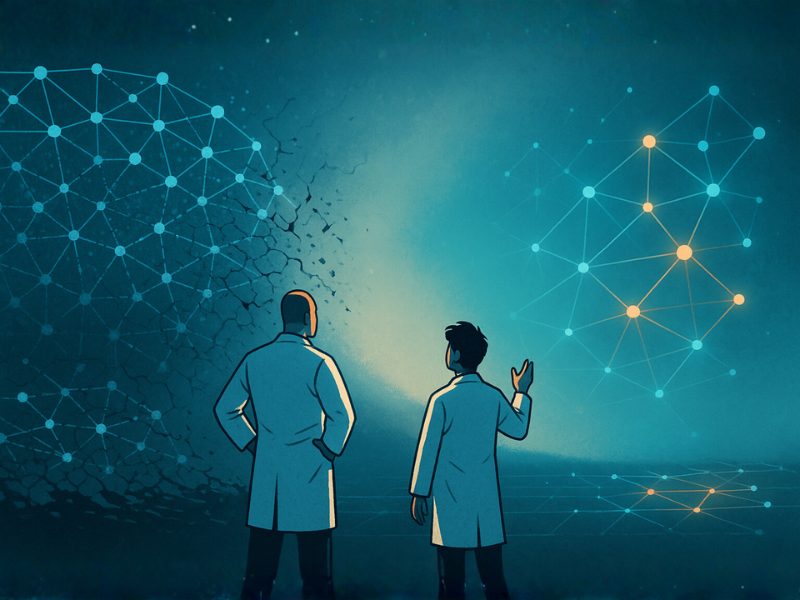
At this very moment, the NHS finds itself at a tipping point. By pouring millions of pounds into digital pathology, we may be witnessing an ultimately futile attempt to strengthen today’s fragile value network just as a different one begins to take shape around us, with the potential to make the current NHS Histopathology service model based on independent Hospital Trust based labs unsustainable.
Authors: Dr. Branko Perunovic and Dr. David Clark
Editor: Sidney Ocanagil-Tunstall
Understanding Christensen’s Framework in the Context of NHS Pathology
Christensen’s framework rests on four key concepts that explain why digital pathology is about more than just a procurement upgrade:
Jobs-to-be-Done
Customers don’t buy products; they “hire” them to do a job. In healthcare, clinicians use pathology tests to guide treatment decisions. In pathology more broadly, the goal is to provide accurate and timely diagnosis that supports patient care. The purpose hasn’t changed — but with digital pathology, how that job is accomplished could be revolutionised.
Value Networks
Pathology does not operate in isolation: laboratories, pathologists, biomedical scientists, suppliers, IT teams, managers, regulators and funders all form an interdependent ecosystem. These networks look stable until a new one emerges — at which point the old can collapse remarkably quickly.
Performance S-Curves
Technologies improve along predictable curves. Incumbent systems (such as traditional microscopy) exhibit rapid growth before plateauing. Disruptive entrants start below the incumbent’s performance, slowly improving until it reaches a tipping point when it accelerates rapidly and surpasses it on the dimensions that matter most to users. The crucial point is that clinicians and patients do not always need the “best” performance — they need results that are good enough, fast enough, and affordable.
The Resource Allocation Trap
Organisations fail to adopt disruptive technologies not through poor leadership, but because their management systems rationally direct resources to the immediate needs of existing customers. In the NHS, this means investment flows into sustaining innovations — such as faster turnaround times, larger automation platforms, and integration with existing systems — rather than into riskier, disruptive alternatives.
Taken together, these concepts demonstrate why digital pathology could reshape not only diagnostic technologies but also the entire value network in which NHS pathology operates.
Lessons from Other Industries
Christensen’s theory is not abstract — it has played out repeatedly across different sectors. In each case, disruption began with alternatives dismissed as clumsy or inferior, which then scaled into entirely new value networks.
Computing
Mainframes once dominated but were displaced by minicomputers that did “enough” for many jobs at a fraction of the cost. The cycle repeated with PCs, then laptops, then smartphones. At every stage, the incumbents who ruled one network vanished before the next, as the following generation took shape.
Kodak and Nokia
Kodak invented the digital camera but refused to develop it, fearing it would damage its film business. Nokia led global handset sales but failed to adapt to the smartphone ecosystem. In both cases, executives were not blind — they acted rationally to protect their existing value networks. Once alternatives became “good enough,” those networks collapsed almost overnight.
Blockbuster vs Netflix
Blockbuster perfected the video rental store while Netflix’s mail-order DVD service looked awkward and limited. Yet Netflix scaled, pivoted to streaming, and built an entirely new network around convenience and subscription. Blockbuster vanished.
Horse-to-Motor Transport
The horse-drawn transport system was itself a vast value network — breeders, blacksmiths, feed suppliers, stable owners — all interdependent. Within a generation, motor vehicles had dismantled the ecosystem entirely. Stables gave way to garages, hay to oil, blacksmiths to mechanics. Some players adapted; many did not.
In every case, disruption was not about swapping one technology for another; it was about restructuring the whole network of value creation. Dominant players both failed to recognise the danger before the new value network reached a performance tipping point and rejected the opportunity to disrupt their own business model until it was too late. That is the risk pathology now faces.
The NHS Digital Pathology Landscape
Seen through Christensen’s lens, NHS digital pathology shows the classic pattern of an incumbent industry investing heavily in sustaining innovations while missing disruptive threats.
Sustaining innovations
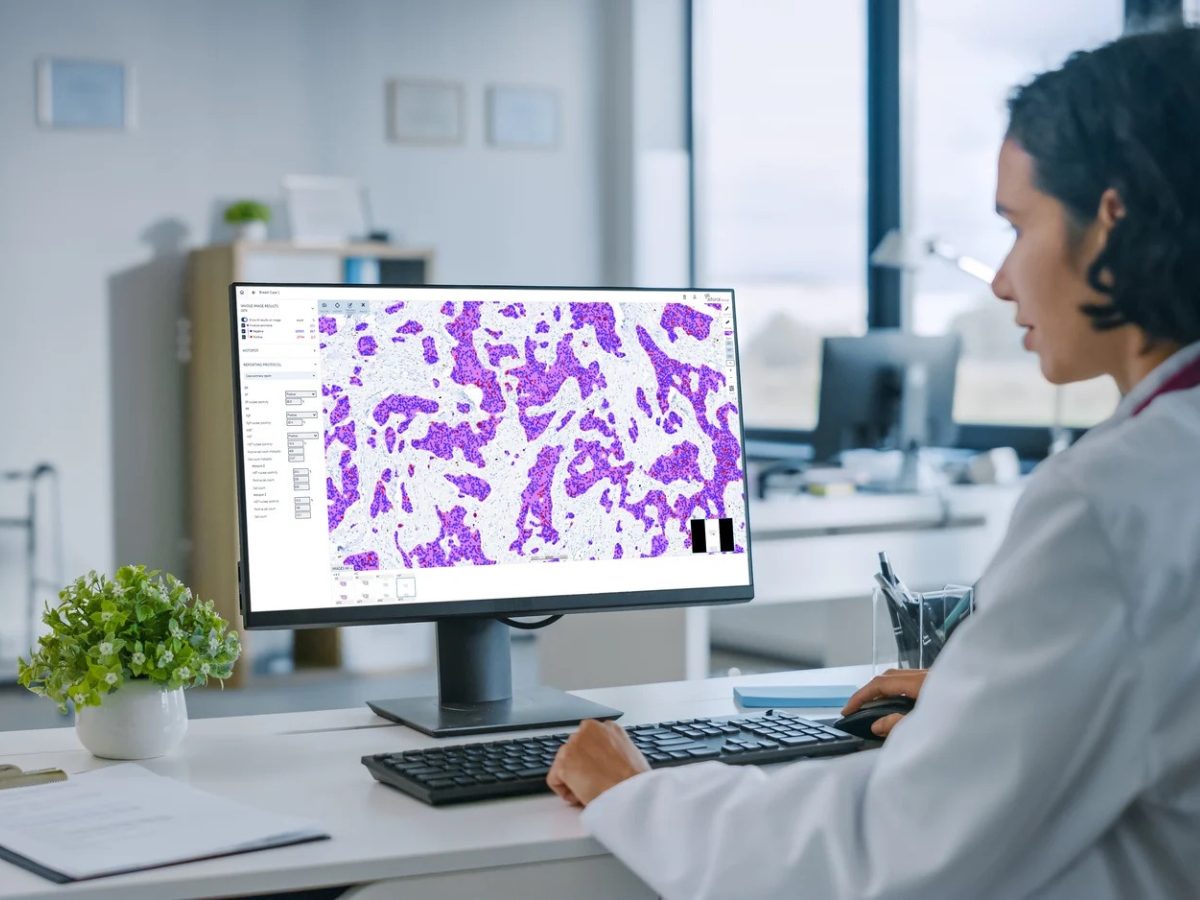
The NHS has committed significant capital to whole slide imaging (WSI), treating it as a natural extension of existing workflows. WSI enables remote reporting, improves quality, and facilitates consultation — but it preserves the underlying structure: specimens still require complex processing, diagnoses still depend on hospital-based pathologists, and the same interdependent value network remains intact. Yet for many smaller sites, the marginal benefits of digitisation can be limited.
Integration gaps
Rather than simplifying the value network, digital pathology projects often add complexity. They require integration not only with LIMS, PACS, and EPRs, but also with specimen tracking systems, AI platforms, and a patchwork of bespoke tools developed locally to address operational needs that mainstream software cannot meet. Each additional interface introduces dependencies and potential points of failure.
Skills deficit and asymmetric threat
The current workforce excels at traditional diagnostic skills but has limited depth in digital systems, AI, and data science. Training primarily focuses on utilising tools within existing workflows, rather than reimagining how diagnostics might be delivered differently. This leaves space for asymmetric threats: new entrants with strong expertise in data, platforms, and algorithms may be better positioned to capture opportunities than incumbent services.
Change management as sustaining innovation
Change programmes typically aim to help current stakeholders adapt, but they rarely ask whether those stakeholders will remain central once the value network is restructured. The assumption that pathology departments will simply digitise and carry on mirrors the belief that horse stables would adapt seamlessly to motor vehicles.
In short, NHS investment is improving the current network, not preparing for a different one. That is precisely the pattern Christensen identified in industries on the verge of disruption.
Warning Signs of Disruption
Christensen identified a set of signals that appear before a disruption accelerates. Pathology already shows several of them:
Performance Overshoot
Innovation keeps pushing for more speed and detail — faster turnaround times, ever-larger automation platforms, subspecialist reporting, advanced immunohistochemistry, and next-generation sequencing. Yet many clinical decisions do not require this level of sophistication. Once “good-enough” alternatives emerge that are cheaper and simpler, they can displace higher-performance incumbents.
Non-consumption
Disruption typically begins in areas incumbents cannot or will not serve. Globally, billions still lack access to even basic histopathology. Digital and AI-enabled platforms can bypass the heavy infrastructure of traditional laboratories, delivering scalable and low-cost solutions. Once these models prove themselves in underserved settings, they rarely remain confined there — they migrate upstream into advanced systems, including the NHS.
Modularity
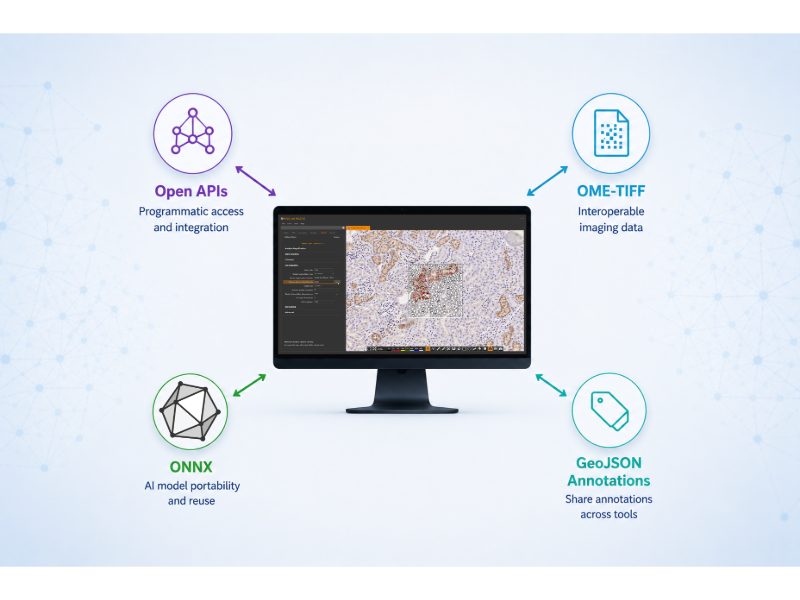
Digital Pathology workflows are increasingly separable into modules: specimen acquisition, slide digitisation, image storage, analysis, and reporting. Entrants can specialise in one module — for example, algorithmic triage of prostate biopsies — without replicating the entire service. Standard interfaces then allow them to expand further and reshape the network.
Asymmetric Business Models
New entrants work under very different economics. Cloud-based AI providers can scale globally with negligible marginal cost, often charging per slide or per case. NHS pathology, by contrast, is tied to estates, workforce, and block contracts. The rapid outsourcing of histopathology backlogs has already shown how quickly volumes can shift when other viable alternatives appear.
Taken together, these signals indicate that the field is entering the vulnerable phase where disruption can gather pace — even as current investments continue to improve today’s system.
The Resource Allocation Trap
The tendency of successful organisations to struggle with disruption is what Clayton Christensen termed the Resource Allocation Trap. Management systems are built to direct resources toward sustaining innovations that serve existing customers. In the NHS, digital pathology is therefore framed primarily as an efficiency project — improving turnaround times, productivity, and quality for hospital-based consultants and laboratories. These investments strengthen the current value network rather than challenge it.
This is not poor leadership. It is the predictable outcome of rational decision-making within conventional management systems: to prioritise existing customers and services. Pathologists want tools to enhance their practice, managers want integration with existing systems, and trusts want measurable ROI. All are rational demands — but together they risk accelerating disruption by optimising only for today.
Here, pathology encounters what has been described as “vetocracy“: a system with multiple veto points, too committed to its current network to reinvent itself, yet too rigid to let new entrants flourish until it is too late. NHS examples abound — LIMS procurements have stalled for years, AI pilots are unable to move beyond governance hurdles, and digital investments are fragmented across disconnected business cases. Each reflects a system protecting the present while neglecting the future.
Pattern Recognition in Pathology
When viewed through Clayton Christensen’s framework, the pattern is unmistakable. NHS pathology is investing heavily in sustaining innovations while showing the classic indicators of vulnerability: performance overshoot, non-consumption markets, emerging modularity, and asymmetric business models.
These investments are not misguided — they are rational responses to current stakeholder needs. But they may prove incomplete if alternative value networks continue to mature that can offer: simpler, cheaper, and more scalable ways to deliver core diagnostic jobs.
The horse-drawn era offers the most explicit warning. Horses did not suddenly become incapable of pulling loads; they were displaced because motor vehicles created a different and ultimately more attractive ecosystem. Similarly, digital pathology improvements may enhance today’s services but lose relevance if diagnostic work migrates to platforms that deliver “good-enough” answers at a lower cost and greater scale.
The NHS has already shown how disruption can unfold. Large volumes of histopathology have been commoditised through outsourcing when backlogs demanded it. Cloud-based AI platforms point to the same possibility on a wider scale. The question is no longer whether digital upgrades will improve today’s operations — they will. The real question is whether those operations will remain central once alternative ecosystems mature.
Part 1 has mapped NHS pathology against Christensen’s framework, highlighting the warning signs and structural barriers to adaptation. Part 2 will examine how alternative ecosystems are forming — and the leadership choices pathology must make: what to build, what to partner, and what to let go — before disruption dictates the terms.
No audio available for this article yet.
No quiz available for this article yet.