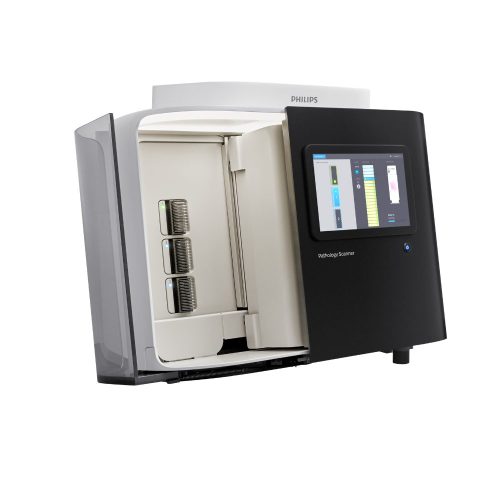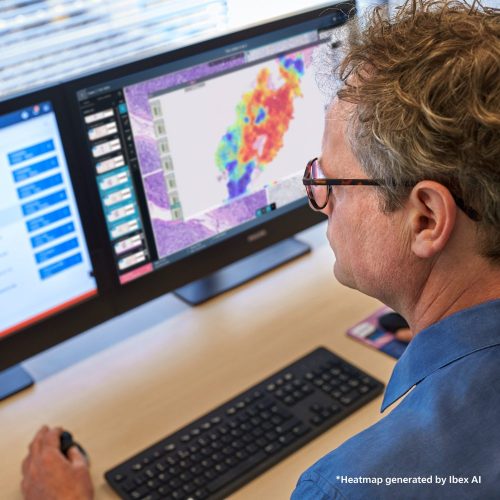
Digital pathology is transforming the way pathology laboratories operate, collaborate, and deliver diagnostic insights. While some laboratories adopt a hybrid approach, using digital pathology only for selected cases such as second opinions or tumor boards, this model often limits the true clinical and operational value of digital transformation1.
In hybrid laboratories, pathologists continue to divide their time between microscopes and digital workflows, creating inefficiencies and limiting standardization1. AI applications are also used inconsistently and often remain outside routine diagnostic workflows1. As a result, laboratories may struggle to fully realize the productivity, collaboration, and quality improvements that digital pathology can enable1.
By contrast, laboratories that go fully digital can integrate digital pathology into routine primary diagnosis, enabling more streamlined workflows, stronger multidisciplinary collaboration, and broader adoption of AI-powered tools for quality control, triage, and diagnostic support2. Fully digital environments also help laboratories maximize the return on their digital investments by improving operational efficiency, scalability, and diagnostic consistency.3,4
Philips strongly believes that the full potential of digital pathology is achieved only when laboratories fully embrace digital transformation. For this reason, Philips actively recognizes and celebrates pathology departments that successfully transition to fully digital workflows through the Philips Fully Digital Award initiative. The award highlights organizations that lead innovation in pathology and demonstrate meaningful progress toward fully digital diagnostic operations.
To date, Philips has recognized 62 pathology laboratories across 7 countries worldwide with the Philips Fully Digital Award, reinforcing Philips’ commitment to helping customers realize the full value and return on investment from their digital transformation journey.
To determine whether a laboratory qualifies as fully digital, Philips evaluates several key criteria:
- More than 80% of Formalin-Fixed, Paraffin-Embedded (FFPE) slides are digitally scanned
- Digital diagnosis is the default diagnostic workflow in the laboratory
- The majority of pathologists work digitally as part of their routine practice

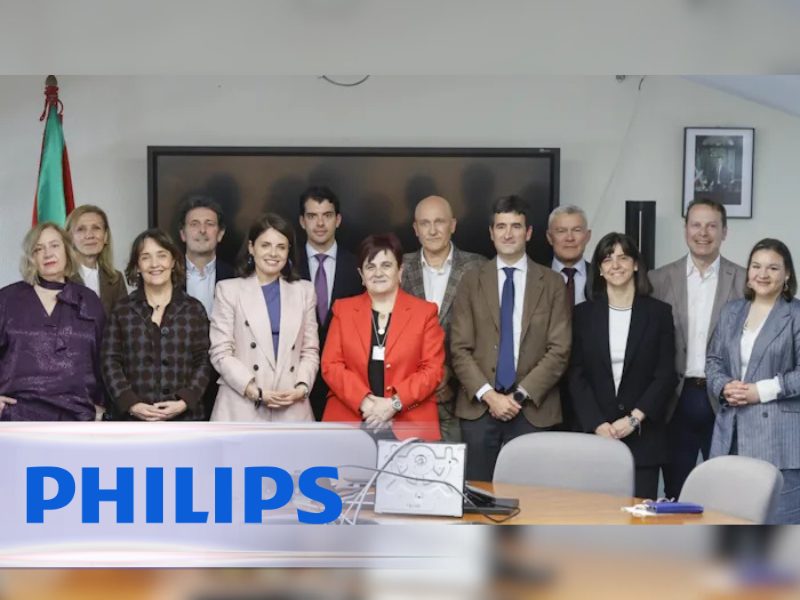
The most recent recipient of the Philips Fully Digital Award is Osakidetza, the Basque Health Service in Spain, recognized in May 2026 for its large-scale digital transformation in pathology. Philips acknowledged Osakidetza’s leadership in implementing fully digital pathology workflows across its healthcare network, supporting approximately 1.3 million pathology preparations annually. The initiative demonstrates how full digital adoption can strengthen collaboration, improve diagnostic efficiency, and prepare laboratories for the future integration of AI and data-driven pathology.
Results are specific to the institution where they were obtained and may not reflect the results achievable at other institutions.
References
- Eloy, C., Fraggetta, F., van Diest, P. J., Polónia, A., Curado, M., Temprana-Salvador, J., et al. (2025). Digital transformation of pathology – The European Society of Pathology expert opinion paper. Virchows Archiv, 487(5), 971–981. https://doi.org/10.1007/s00428-025-04090-w
- Matias-Guiu, X., Temprana-Salvador, J., Garcia Lopez, P., Kammerer-Jacquet, S.-F., Rioux-Leclercq, N., Clark, D., et al. (2025). Implementing digital pathology: Qualitative and financial insights from eight leading European laboratories. Virchows Archiv. Advance online publication. https://doi.org/10.1007/s00428-025-04064-y
- Fraggetta F, et al. Implementing digital pathology: qualitative and financial benefits. Virchows Archiv. 2025. doi:10.1007/s00428-025-04064-y
- Palviainen M. The impact of digital pathology in clinical pathology laboratories: a scoping review. Metropolia University of Applied Sciences; 2025. Palviainen_Miika.pdf
Share this article
Follow us
Get Pathology News Delivered to Your Inbox