When demand is outpacing capacity
Pathology is facing a capacity challenge that cannot be solved by recruitment alone.
Demand for diagnostic services continues to rise, and cancer cases are becoming more complex. At the same time, the pace of training new pathologists does not match population growth, which further exacerbates the already existing workforce shortages1. As Shez Partovi, MD, Chief Innovation Officer and Chief Business Leader Enterprise Informatics at Philips, has said:
“We cannot recruit our way out; we can only innovate our way out.”
Benefits of AI in digital pathology
Improve digital pathology workflow
Artificial Intelligence (AI) for image analysis in pathology augments the pathology workforce, which helps to address the pressure and challenges pathologists experience every day: growing caseloads, increasing complexity and time pressure.
Improve diagnostic efficiency and productivity
AI can, as a “digital assistant”, improve efficiency and productivity by supporting faster case prioritization, identifying areas of concern, assisting with grading and quantification, and helping pathologists focus their expertise on the most clinically meaningful decisions2. In turn, shorter turnaround times enable clinicians to come to a diagnosis and start of care sooner.
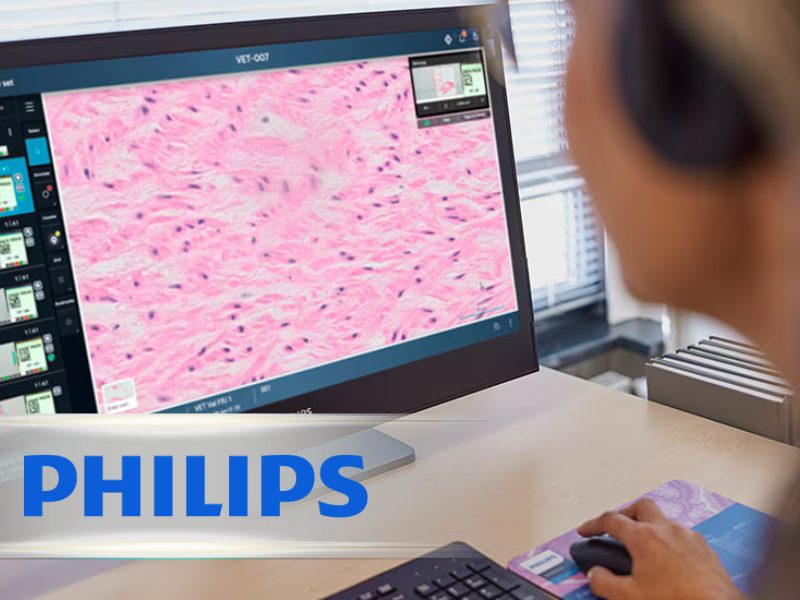
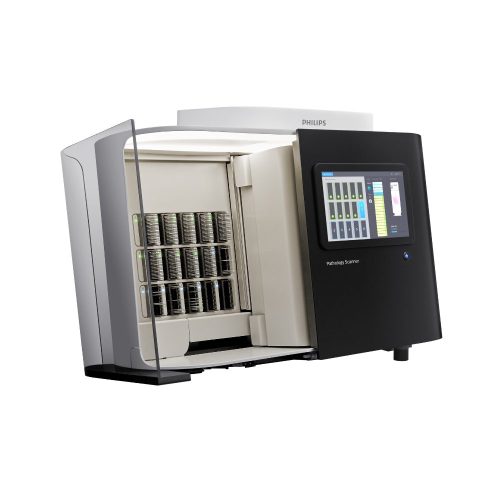
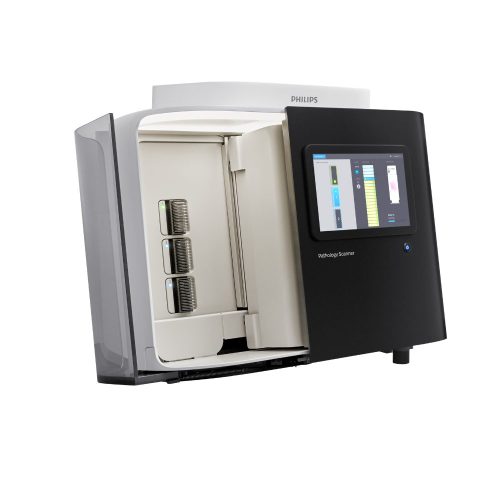
Digital pathology is the foundation that makes AI usage in pathology possible. Once glass slides are digitized into whole-slide images, AI can analyze tissue patterns at scale and help bring clinically relevant insights into the pathologist’s workflow.
Complement human expertise – a powerful assistant to support pathologists
While the role of AI will further increase and will be applied more consistently; specific cases and tasks will still require the expertise of a pathologist. This is why AI is a powerful assistant and tool for pathologists to stratify cases and have the pathologist focus on more complex tasks, which helps to reduce cognitive load, enhance patient care, and improve clinical outcomes2.
Real world example: using AI to improve laboratory workflows with Ibex
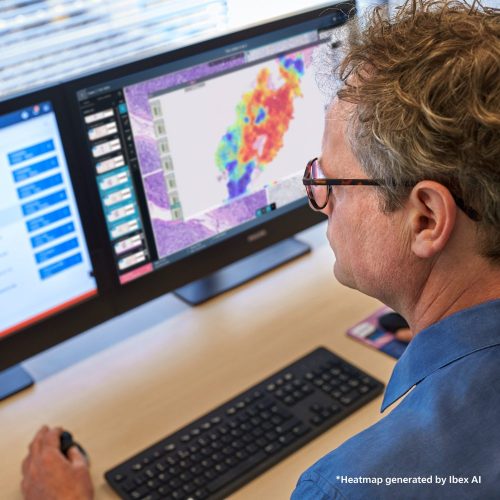
The partnership between Philips and Ibex Medical Analytics smartly leverages AI benefits in clinical settings and pathology labs, enhancing the clinical value of the digital workspace. Philips IntelliSite Pathology Solution (PIPS) serves as the foundation, providing the digital pathology infrastructure for the unified digital workflow pathologists need. Interoperability between the Image Management System of PIPS and Ibex’s AI platform enables AI-powered cancer diagnostics, case prioritization and decision support to be embedded directly into that workflow. Together, these technologies demonstrate how AI augments the pathologist’s expertise and can help pathology laboratories improve efficiency and shorten turnaround times3.
How this partnership supports improved patient outcomes
Real-world clinical use of Ibex AI with Philips IntelliSite Pathology Solution (PIPS) has demonstrated productivity improvements of up to 37%3, leading to a 27%-30% reduction in turnaround time3,4, while also optimizing resources through a 38% reduction in ancillary immunohistochemistry (IHC) stain usage4.
The future of pathology will be shaped by smarter, AI-enabled ways of working that help laboratories address workforce shortages, manage rising demand and continue to deliver confident and sustainable diagnoses.
- Royal College of Pathologists. The pathology workforce. 2026. https://www.rcpath.org/discover-pathology/public-affairs/the-pathology-workforce.html
- Bulten W, Balkenhol M, Belinga JJA, Brilhante A, Çakır A, Egevad L, et al. Artificial intelligence assistance significantly improves Gleason grading of prostate biopsies by pathologists. Modern Pathology. 2021;34:660–671. https://www.nature.com/articles/s41379-020-0640-y
- Information provided by Ibex AI: Raoux, et al. Modern Pathology (2021) 34 (suppl 2): 598-599. Ibex AI is RUO in the US. https://www.youtube.com/watch?v=9XuWK8PmUlw
- Udoh AI, Eyzaguirre E, Muthukumarana V, Thaker HM. Validation, implementation, and impact of an AI model in routine practice for pathologic diagnosis of prostate cancer in an academic medical center. Journal of Pathology Informatics. 2026;22:100675. https://doi.org/10.1016/j.jpi.2026.100675
Share this article


Follow us
Get Pathology News Delivered to Your Inbox