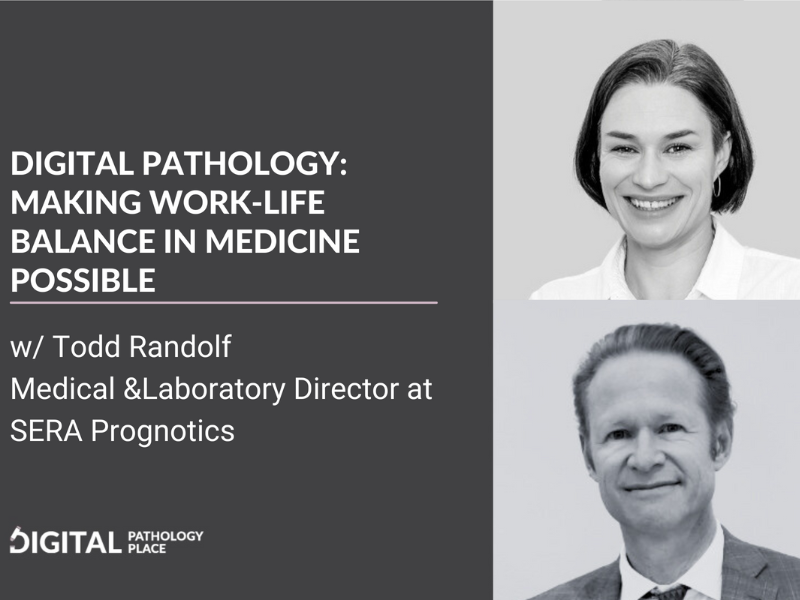
How can you work remotely as a doctor? Clearly some specialties, give more possibilities to do that than others and pathology is one of them.
Today my guest is Dr. Todd Randolph , who is doing exactly that – working remotely as a pathologist. For some it’s a medical “work-life balance dream come true”.
In this episode, he answers, how he architected that dream, how much effort it was, how digital pathology enabled this way of working, and what advice he has for others interested in a similar path.
MEET DR. TODD RANDOLPH
Dr. Todd Randolph is a seasoned pathologist who has transitioned to the remote digital pathology lifestyle. In a recent discussion, we explored his career path, the nuances of digital pathology, and the associated challenges and benefits.
TODD’S PATHOLOGY JOURNEY
Dr. Randolph’s journey began in the mid-90s when he joined a small pathology group that grew significantly over two decades. Specializing in surgical and anatomical pathology, his practice evolved with the healthcare system’s push for specialization. He reflects on how subspecializing in GU pathology shaped his career.
Specialization in Pathology: U.S. vs. the World
Specialization in pathology varies across regions. In the U.S., pathologists often focus on specific areas like dermatopathology and gastrointestinal pathology. However, this wasn’t always the case nor is it the case in other areas of the world. Dr. Randolph discusses the evolution of these subspecialties and their integration into the healthcare system.
Transition to Digital Pathology
Around 2016, Dr. Randolph began exploring opportunities in digital pathology, leading him to join Lumea. This company, focused on digitizing pathology, provided him the platform to integrate digital technologies into his practice.
Working with Lumea
Lumea, founded by Dr. Matt Leavitt, aims to make pathology more efficient through digital solutions. Dr. Randolph’s involvement with Lumea allowed him to practice remotely using advanced digital platforms. He talks about the benefits and efficiencies gained through this digital transition.
Daily Life as a Remote Pathologist
Living the remote pathologist’s life, Dr. Randolph enjoys the flexibility to work from various locations while maintaining high efficiency. He contrasts his current remote setup with traditional on-site pathology, noting both advantages and challenges, like reduced direct interaction with colleagues and clinicians.
Challenges and Benefits of Digital Pathology
Transitioning to digital pathology presents both challenges and benefits. For new pathologists, starting digitally could mean missing out on casual, spontaneous learning experiences typically gained through in-person interactions. However, digital pathology offers greater flexibility and access to specialized expertise, enhancing diagnostic accuracy.
Starting a Career in Digital Pathology
Dr. Randolph stresses the importance of having hands-on experience and interacting with colleagues in traditional settings before fully transitioning to digital pathology. Foundational skills developed in a conventional practice are critical for a successful digital pathology career.
Impact of Digital Pathology on Work-Life Balance
Digital pathology significantly impacted Dr. Randolph’s work-life balance, allowing him to relocate and pursue personal interests while maintaining his professional commitments. The flexibility of remote work has enabled him to tailor his lifestyle to his preferences.
Advice for Aspiring Digital Pathologists
For those interested in digital pathology, Dr. Randolph advises a proactive approach. Building a career in this field requires effort, networking, and exploring technical aspects of digital pathology, including understanding scanners, imaging connections, and interfaces.
The Role of AI in Digital Pathology
AI is set to play a significant role in digital pathology. Dr. Randolph discusses the current use of AI algorithms in prostate pathology and foresees a future where AI enhances diagnostic accuracy and efficiency. He emphasizes the need for regulatory oversight and clinical validation to ensure patient safety and optimal outcomes.
Regulatory Considerations for AI Tools
The use of AI tools in pathology needs a stringent regulatory framework. While numerous AI tools are available globally, not all undergo clinical validation. Dr. Randolph highlights the importance of bodies like the FDA in ensuring the safety and efficacy of AI applications in healthcare.
Conclusion
For those passionate about digital pathology, Dr. Randolph’s journey offers practical insights. While the path may require effort and determination, the rewards are significant. As digital pathology evolves, staying informed and engaged with the latest developments is crucial. Whether you’re an aspiring pathologist or a seasoned professional, the digital revolution in pathology offers promising opportunities for growth and innovation.
Thank you for joining us on this exploration of digital pathology’s future. Stay tuned for more insights and updates as we continue to delve into this evolving field
The Episodes Resources
No audio available for this article yet.
No quiz available for this article yet.