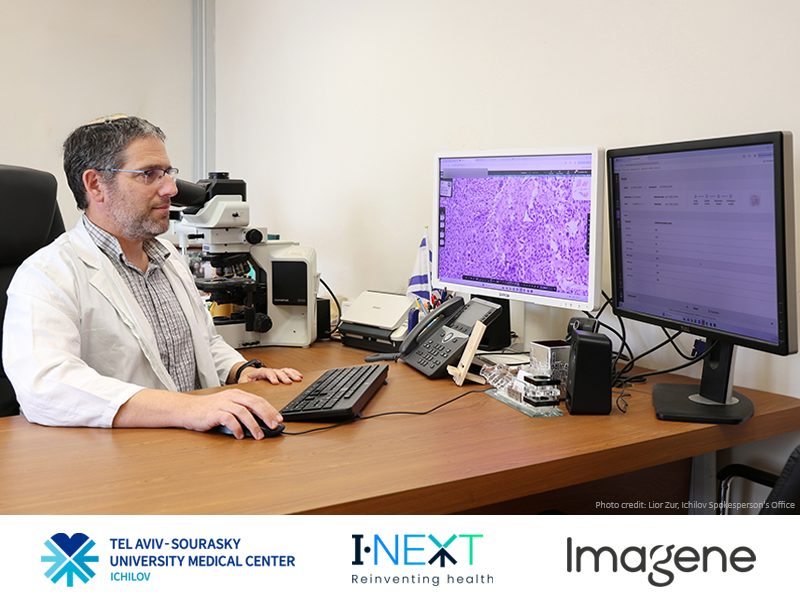
Imagene‘s multi-center retrospective study on AI-driven identification of actionable NSCLC biomarkers is now published in npj PrecisionOncology (Nature Portfolio).
Although biomarker testing is central to modern cancer care, real-world practice often falls short of enabling optimal, personalized treatment planning. Importantly, treatment pathways rely not only on detecting driver alterations, but also on confidently identifying when such alterations are absent.
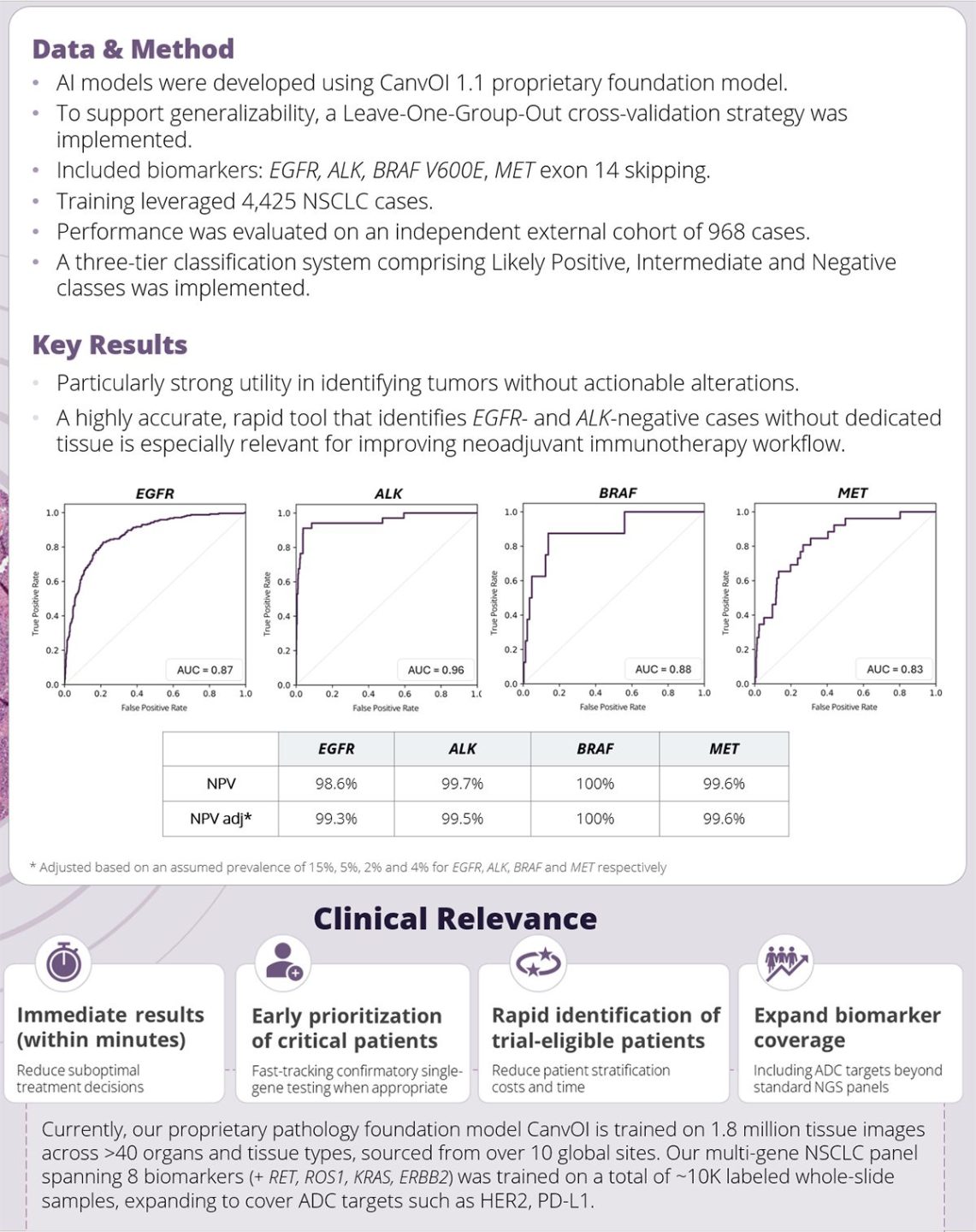
Imagene’s proprietary pathology foundation model CanvOI is trained on 1.8 million tissue images across more than 40 organs and tissue types, sourced from over 10 global sites. Building on this foundation, our multi-gene NSCLC panel spanning 8 biomarkers was trained on a total of ~10,000 labeled whole-slide samples.
In this study, together with Prof. Iris Barshack (Pathology Institute, Sheba Medical Center), Prof. Christian Rolfo (Ohio State University Comprehensive Cancer Center), and other academic collaborators, deep learning models leveraging CanvOI 1.1 were developed and validated. Using a multi-center cohort of >4,000 NSCLC whole-slide images and external validation on ~1,000 cases from international centers. The models supported both the identification of actionable alterations and the reliable exclusion of tumors unlikely to harbor them, focusing here on four key drivers: EGFR, ALK, BRAF V600E, and MET exon 14 skipping, achieving very high negative predictive value (~99%).
Why this matters?
• Deliver immediate results that can help avoid suboptimal treatment decisions made before molecular test results are available, impacting up to 35% of NSCLC cases.
• Enable early prioritization of critical patients through fast-tracking confirmatory single-gene testing when appropriate.
• Support rapid identification of eligible patients for clinical trials within very short decision windows.
• Facilitate more comprehensive biomarker assessment without missing patients, including detection of ADC targets not covered by standard NGS panels and more optimal use of limited tissue samples.
This publication is part of a broader, ongoing effort to further develop and expand the validation of our comprehensive NSCLC biomarker panel using large-scale real-world pathology data. Additional studies extending across biomarkers and clinical settings will follow soon.
Share this article





Follow us
Get Pathology News Delivered to Your Inbox