Author: Sidney Ocanagil-Tunstall
December 15, 2025
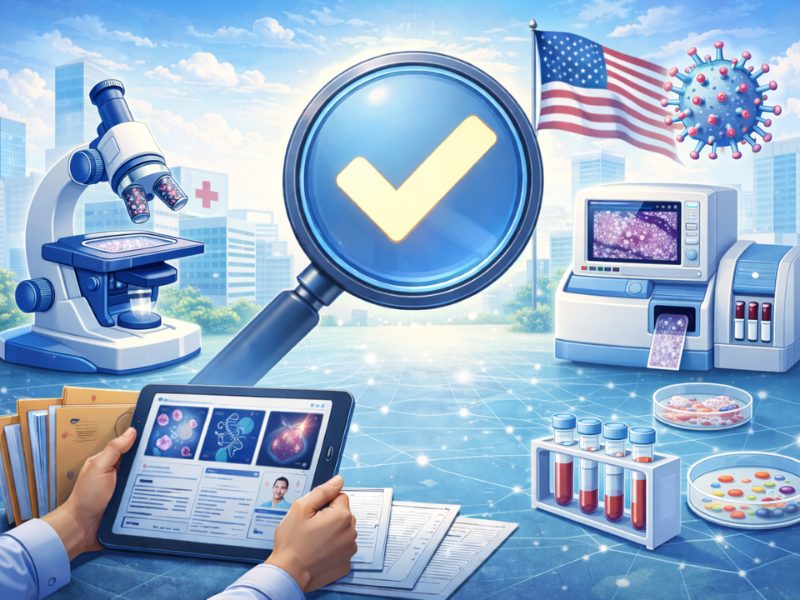
The U.S. Food and Drug Administration (FDA) has today U-turned on a major limitation regarding the use of real-world evidence (RWE) in drug and medical device application reviews. In new guidance for certain types of medical device submissions, the agency states that “it will accept RWE without requiring that identifiable individual patient data collected from real-world data sources always be submitted in a marketing submission.”
This change in policy opens the door to the use of de-identified databases containing millions of patient records. In short, this means that datasets outside of clinical trials are now on the table for medical device applications.
As stated by the FDA, it will now accept “comprehensive datasets that track patient outcomes across diverse populations and real-world treatment settings… including national cancer registries such as the National Cancer Institute’s Surveillance, Epidemiology, and End Results (SEER) program, hospital system databases, insurance claims databases, and electronic health record networks.”
But do digital pathology tools, including whole slide scanners, image management systems, and image analysis algorithms fall within the “certain types of medical device submissions” outlined in the guidance? Moving forward, the FDA will “consider the strength of submitted RWE on an application-by-application basis.”
Why the U-turn?
RWE was first introduced in response to the 21st Century Cures Act of 2016, which was designed to accelerate medical product development and bring new innovations and advances to patients faster and more efficiently. In response, the FDA created a framework known as the Real-World Evidence Program, defining RWE as “the clinical evidence regarding the usage and potential benefits or risks of a medical product derived from the analysis of real-world data (RWD).”
Describing the policy change as a “common-sense reform,” FDA Commissioner Marty Makary, M.D., M.P.H., stated,
“We’re removing unnecessary barriers that have prevented us from using powerful real-world evidence to get life-changing treatments to patients faster.”
The FDA also noted that “the rate of RWE-based authorizations has plateaued in recent years,” acknowledging that the organisation’s previous approach “makes it impractical to use most large databases with valuable macro-level data.”
Are regulators finally catching up?
In recent years, the FDA and other regulatory bodies have come under increasing scrutiny, having been perceived as impeding US lab-based digitisation efforts in histopathology. Particularly as AI-driven tools outpace the frameworks designed to assess them.
What this means in practice will only become clear over time. However, for innovators in the histopathology space, particularly those harnessing AI image analysis algorithms trained and validated on large retrospective datasets, this policy change may ease one of the most persistent bottlenecks in bringing advances to patients more quickly and efficiently.
For now, the message is not that the bar has been lowered, but that the routes to meeting the bar have widened. Against this backdrop, does this shift in policy signal a recognition by regulatory bodies that their processes must evolve at a faster pace to keep up with the technologies they oversee? And will it be followed by further policy changes to support innovation in histopathology as the pace of technological development continues to outstrip current regulatory standards?
No audio available for this article yet.
No quiz available for this article yet.