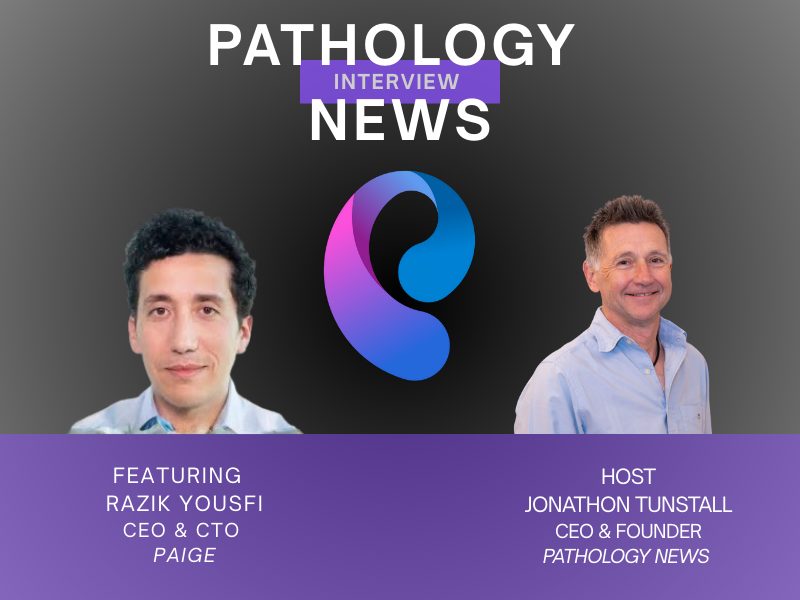
In December 2025, Jonathon Tunstall, CEO of Pathology News, sat down with Razik Yousfi, SVP & General Manager of AI Products at Tempus, and former CEO and CTO of Paige, at DP&AI: London.
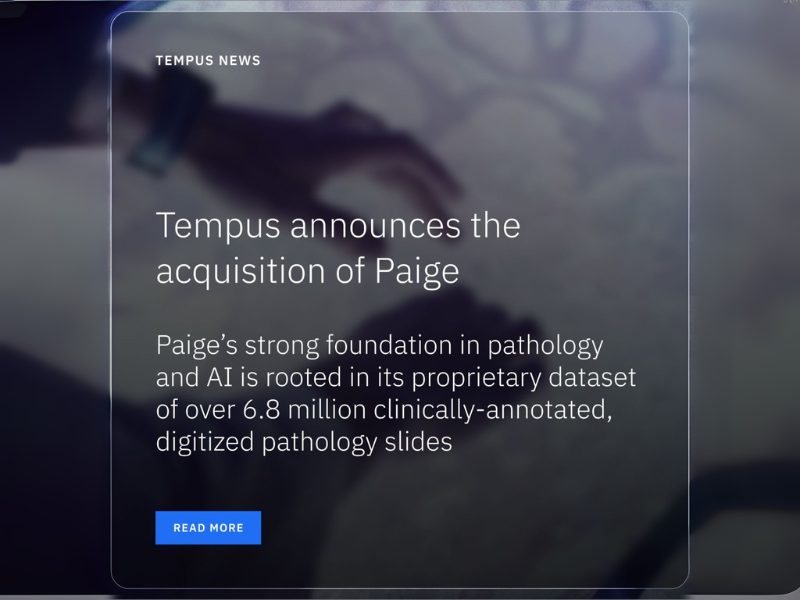
The conversation centred on Tempus’s acquisition of Paige and its implications for the field with Razik reflecting on the evolution of AI in pathology, the challenges ahead, and the opportunities that lie in harnessing intelligent technologies to improve patient outcomes.
Jonathon Tunstall:
Ladies and gents, we’re here live at the DP & AI Conference in London, in December 2025. I wanted to take some private and personal time out with Razik Yousfi, SVP & GM, AI Products at Tempus, former CEO and CTO of Paige, and just have a personal chat and a catch-up about the company—particularly about the recent acquisition.
Razik, hi. How are you?
Razik Yousfi:
I’m doing well. Thank you—thank you for having me.
Jonathon Tunstall:
Good, good. Why don’t we start with a bit about yourself? For our audience—your career and how you came into digital pathology.
Razik Yousfi:
Yeah, happy to. I’ve spent most of my career in technology for medicine. I have a background in computer science and started my career at Siemens mostly working on GPU optimisations for medical image analysis. So, I really spent my early days working with GPUs for healthcare.
After that, I left Siemens, and did a bit of work in natural language processing—language translation in the early days of deep learning for NLP. In 2012, I moved to Silicon Valley to join a company called HeartFlow, which does AI for cardiovascular disease—leveraging CT images to identify blockages in the coronaries.
A few of the people I worked with at HeartFlow ended up going to Paige to grow and ultimately mature the technology that was originally incepted at Memorial Sloan Kettering. The company was very early on at that point. I was very fortunate to join to head up engineering and technology, and in many ways repeat a lot of the successes of HeartFlow in a much earlier-stage organisation, with a ton of similarities between radiology and pathology.
I did that job for many years. We did a lot to trailblaze AI and bring really cutting-edge, AI solutions to the field of digital and computational pathology. Last year I took over as CEO to continue running the business all the way through the acquisition and today, I’m still running Paige at Tempus for that purpose.
Jonathon Tunstall:
I want to talk about the acquisition in a moment, but first—tell me a little bit about the history of Paige. What was the initial strategy, and how do you feel Paige has contributed to the market?
Razik Yousfi:
I think we were very fortunate to be one of the first companies to really give it a shot at dramatically advancing the state of technology in pathology. But like everyone starting early, that comes with a ton of challenges.
Our objective has always been to leverage data and AI to identify insights to help pathologists—help them with their day-to-day tasks or go beyond what they can typically do with the naked eye, and look at things like biomarkers from tissue.
We had this hypothesis that we could help pathologists be more efficient, increase diagnostic accuracy, and also glean additional insights from tissue data that really give them superhuman powers to some extent.
When we started, Dr. Thomas Fuchs—who founded the company alongside Dr. David Klimstra from MSK—had already done a lot of work demonstrating near-perfect accuracy in detecting cancer in prostate, breast, and basal cell carcinoma. We had a good foundation to try to package this technology and ultimately bring it to market and put it in the hands of pathologists.
One thing we realised early on was that the infrastructure and image-management landscape was hyper-fragmented back then. Scanners were using different file formats, viewers came in as many flavours as scanners, and the ecosystem was not AI-native.
So, we decided to build our own image management system to close that gap and enable us to bring that technology to pathologists in routine clinical workflow. We believed the IMS was core to making pathologists more efficient, but we didn’t have a good way of packaging our AI otherwise.
We did that for a few years. Last year, we decided to dramatically slow down investment in the image management system. We still offer it to those who want it and support existing customers, but ultimately, we meet customers where they are and integrate with other partners, we’ve announced a bunch of those partnerships and now we can really focus on AI.
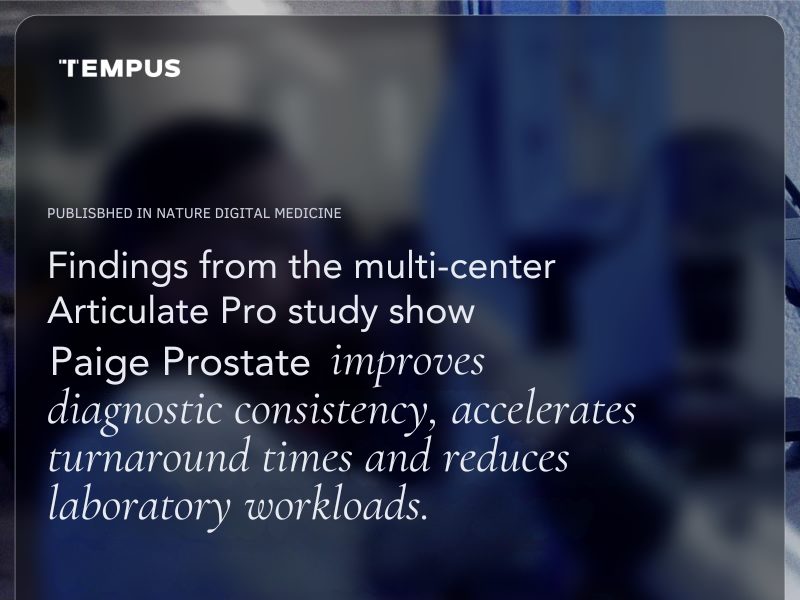
We’ve had a longstanding dual approach to AI: building AI-enabled diagnostic solutions—Paige Prostate, Paige Breast, Paige GI, Paige Pan-Cancer – which can do cancer detection, subtyping, quantification across a wide range of tissue types but we’re also working with life sciences companies. We believe the technology stack for diagnostics can be deconstructed in a way you can offer it to life sciences, enabling research and development for drug discovery.
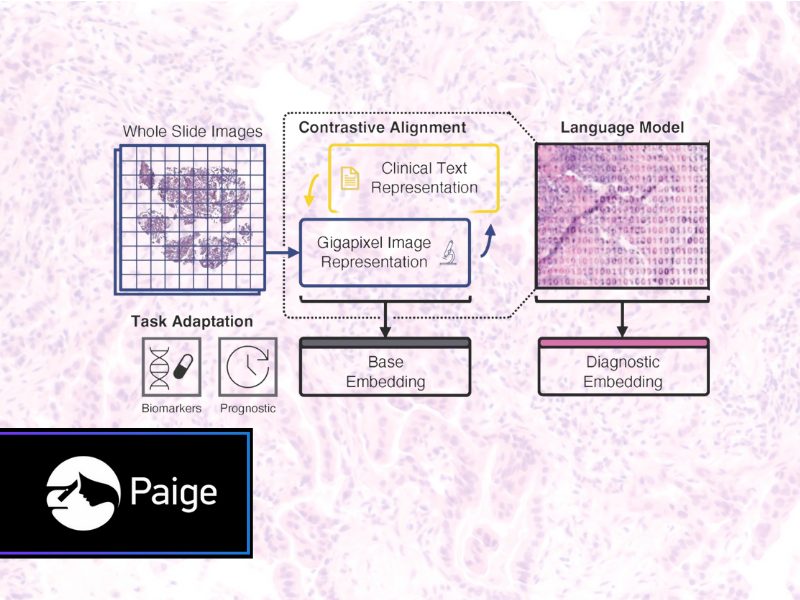
This stack includes all of our AI tools, including our world-class Foundation Models for pathology, that we developed over the last few years and serve as the springboard for novel applications.
Today, including through the acquisition by Tempus, we’re continuing to focus on delivering solutions for pathology labs as well as our pharma and life sciences partners.
Jonathon Tunstall:
Moving on to the acquisition. Obviously, it hasn’t been totally straightforward and has attracted some criticism around the valuation of Paige. Talk us through that decision. Why does this bring value to Paige beyond pure investment numbers?
Razik Yousfi:
It’s a great question, and it’s natural for a strategic move of this scale to generate a lot of discussion and analysis. Unfortunately, adoption of digital pathology and AI is lagging behind where we’d all want it to be. While the goal is for pathology to be fully digital, AI to be pervasive, diagnostics to be more accurate for patients, we’re not there yet.
For Paige, we believe that we’ve built an amazing set of products and are leading in AI for pathology, but commercialising at scale will take time. We saw two real options: continue raising money and waiting for the market to catch up, or to find a strategic partner that could support continued investment in transformative technology with the financial strength to scale responsibly.
Tempus is that partner. We couldn’t be happier with the acquisition, and the synergies between Tempus and Paige are very strong—we share the same mission of using data and technology to make precision medicine a reality.
We are very complimentary—our digital pathology solutions fit directly into Tempus’ oncology offering. We have a mechanism to offer AI in a decentralized fashion. We are now fortunate enough to have access to labs where we can run our AI and deliver these solutions to patients today. Ultimately, the way the acquisition was constructed benefits the technology, the team, and the market.
Jonathon Tunstall:
And Paige has access to a large data lake—that’s a core value of the company from Tempus’ perspective.
Razik Yousfi:
Of course. And that was one of many assets that we [Paige] brought to the table that made the acquisition compelling for [Tempus]. Tempus also has a large, proprietary de-identified dataset of its own and sound training data is foundational to how we build, validate, and scale AI, and it aligned closely with Tempus’ focus on data-driven precision medicine.
Jonathon Tunstall:
Moving forward, you’re now part of a larger organisation. How does Paige maintain its identity and culture? Acquisitions are about people, after all.
Razik Yousfi:
We’ve been very fortunate at Tempus to continue operating largely as we did before. Paige offerings will remain as Paige offerings, and we’ll continue to market Paige digital pathology solutions at Tempus.
We’re coalescing all digital pathology efforts under the same brand and continuing to execute on the roadmap we’ve developed over the last few years. Retaining that identity was a deliberate decision, and we believe we’ll continue to have a positive impact on the market.
Jonathon Tunstall:
You mentioned adoption rates in the clinical market there, that butts straight up against the development of AI which is going at a breakneck pace. And you pointed out how fragmented this market is, with many small companies producing single-disease algorithms. How do you think the market looks in five or ten years? Are these smaller players going to be swallowed up by larger organisations and are you positioning yourself for that new world, with fewer companies in the market?
Razik Yousfi:
Look, I wish I had a crystal ball. I don’t. What I do believe is that technology is ahead of the market’s ability to consume it. Innovation will continue to accelerate, as we see outside healthcare.
The offerings will likely change—what AI can do, what we can do with data, how we build better, more qualified tests for patients. Many companies will have to adapt. They’ll have to adapt with new products, new data sets, and new strategies. How they adapt is up to each individual company. We see many products today in the market that do the same thing. Does the market need many solutions that do the same thing? Probably not.
I do believe there will be consolidation, but I think it’s probably good because it makes buying decisions easier for pathology labs. Ultimately, that’s what we want: to get technology into the hands of pathologists.
We’re confident there’s a new era of predictive and prognostic AI applications coming—helping with therapy selection, patient identification, and so on and so forth. Some players will disappear, and new ones will emerge.
Jonathon Tunstall:
You talked about new generations of AI, and I’ve wondered myself how far can we take extracting information from H&E using AI? And what does that mean for IHC and molecular testing?
Razik Yousfi:
We’ve done quite a bit of work in that space as well. Last year, we announced a technology called OmniScreen, now Paige Predict, pairing digital pathology images with sequencing reports—specifically DNA. The goal is to infer as many biomarkers as possible directly from images.
We’ve published on this, and for many biomarkers, we can predict expression with a pretty high level of accuracy. Where it gets interesting is if you couple this with NGS today. If tissue is limited, you can order the appropriate IHC—without destroying tissue which gives you the ability to look for additional biomarkers that you haven’t been able to look at otherwise.
We also believe that by leveraging tissue with other modalities, you can go beyond what any single modality can do. That opens the door to more predictive tests around cancer progression and its expression morphologically. This is something we believe in and will continue to invest in.
Jonathon Tunstall:
Looking at cancer diagnostics as radiology, tissue pathology, and genomics—it’s a vertical construction at the moment, but ultimately those will merge. I’d say that we can expect that over the next 2-5 years. Are you optimistic that AI remains central to this industry?
Razik Yousfi:
Yes. AI is here to help glean more insights and make sense of very large amounts of data in a way that makes everyone’s time more effective. Can we combine insights from radiology, pathology, and genomics—yes! There is already quite a bit of literature out there today that shows that combining these modalities enables you to do novel things and improve the standard of care in certain situations. So, we really believe that investing in AI is the future.
But AI alone isn’t enough—you need products that deliver clinical value, integrate into diagnostic workflows, and can be delivered at the right time, in the right workflow. Both go hand in hand, considering AI just as a toolbox—you likely won’t be able to recognise its value but at the same time, going digital and not leveraging intelligent tools is probably a missed opportunity to go beyond what we can do today.
Jonathon Tunstall:
With the further development of intelligent tools. Does that ultimately mean digitisation is inevitable?
Razik Yousfi:
Yes. If you can extract novel insights from tissue data tomorrow, which by the way you can do today, digitisation is inevitable. If you can order a test that achieves something you can’t do today, why wouldn’t you? There is information on tissue that makes people make better decisions and ultimately if there is a better therapy or better drug or even just the chance to understand the consequences of a particular decision, you should digitise.
There’s ROI from digitisation—efficiency, consistency, workload sharing—but being able to identify more insights is certainly a major drive for digitisation.
Jonathon Tunstall:
Final question: how do you see Paige and Tempus aligning for this new world?
Razik Yousfi:
Our objective is to marry technology in a way that improves the lives of cancer patients at scale. Combining the Tempus dataset, their technology with ours, and merging teams allows us to deliver higher-calibre tests—delivered both in the lab and at scale in a decentralised fashion.
We believe we can impact not just pathology today, but how oncologists in the future diagnose, screen, and treat patients. That’s been the vision of Tempus, the vision of Paige, and it’s our shared vision going forward.
Jonathon Tunstall:
You’ve established yourselves as a company that will survive in a rapidly changing market—and ultimately, it’s the patient who benefits. Thanks for your time and for your honest answers.
Razik Yousfi:
Thank you. All the best.
Share this article

Follow us
Get Pathology News Delivered to Your Inbox