by Christos Evangelou, MSc, PhD – Medical Writer and Editor
Researchers at Toronto Metropolitan University in Ontario introduced HistoLite, a self-supervised learning framework with 7 million parameters, as a smaller alternative to current foundation models that can exceed 1 billion parameters. When tested on breast cancer slides scanned by two different devices, HistoLite demonstrated the smallest performance drop when switching between scanners, even though it achieved lower classification accuracy than heavyweight models.
“I was curious to investigate whether bigger was in fact better when it comes to foundation models,” stated April Khademi, PhD, PEng, associate professor at Toronto Metropolitan University and the senior author of the study. “Our findings suggest that larger models may achieve higher accuracy, but smaller models can offer stable performance regardless of which scanner is used.”
The study was published in Scientific Reports.
Study Rationale
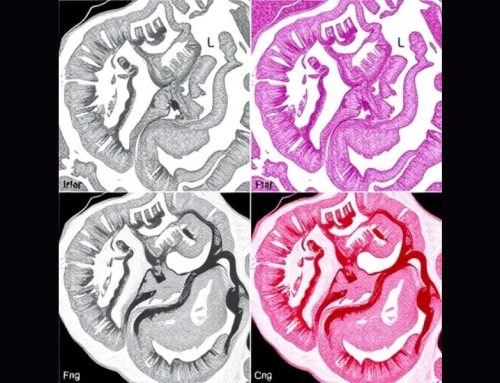
Although whole slide imaging has enabled computer-assisted diagnosis and AI-powered analysis, the use of scanners from different vendors in different laboratories can lead to variations in how the same tissue appears. These differences in color distribution, noise patterns, and other acquisition factors can affect AI model performance.
“Scanner bias is the leading barrier to wide-scale adoption of digital pathology AI tools,” Khademi noted.
The problem creates equity concerns, as an AI model that performs well at one hospital might show lower performance at another simply because they use different scanners. Khademi explained that the model would behave differently across scanners and labs, potentially resulting in inequities in the care delivered to patients.
To study scanner bias, the research team created a novel dataset of 111 breast cancer slides, each scanned on two different platforms: an Aperio AT2 and a Sakura VisionTek. The use of identical tissue samples allowed researchers to isolate scanner-induced variation from other confounding factors such as patient differences or tissue preparation.
HistoLite Design
Unlike current foundation models, such as Prov-GigaPath (1.1 billion parameters) and Virchow2 (632 million parameters), which require extensive GPU clusters and hundreds of millions of training patches, HistoLite was trained on approximately 545,000 patches using a standard personal GPU.
The architecture of HistoLite includes a dual-stream autoencoder with contrastive learning. The first stream processes original images, and the second analyzes augmented versions simulating realistic variations in staining, contrast, sharpness, and field of view. The model forces these two streams to produce similar representations despite perturbations, thereby learning features that remain stable across different scanning conditions.
The team also introduced Adaptive HistoRotate, a rotation augmentation strategy that ensures distinct tissue patches at each training iteration.
Accuracy Versus Generalization
The researchers compared the performance of HistoLite to that of nine state-of-the-art foundation models, measuring zero-shot feature similarity (how similar the embeddings were for the same tissue across scanners) and downstream classification performance (tumor versus non-tumor identification).
HistoLite achieved a mean classification accuracy of 91.8%, which was lower than that of UNI (95.9%), Virchow2 (95.9%), and Prov-GigaPath (95.6%). However, HistoLite showed only a 1.25% performance drop between scanners, the smallest among all models tested.
The research team also studied robustness index, a measure combining tissue discrimination capability with scanner invariance. Although HIPT achieved the highest robustness index, it had the lowest classification accuracy (89.8%). HistoLite demonstrated moderate robustness with modest but consistent accuracy.
Statistical equivalence testing (TOST analysis) confirmed that the performance of HistoLite remained statistically equivalent across scanners. In contrast, several larger models, including KimiaNet, PathDino, and the original Virchow, failed this test, showing significant performance degradation on out-of-domain data.
Khademi noted that these findings suggest a trade-off in that you lose some accuracy at the expense of gaining generalization capabilities.
“As we study generalization and accuracy further, we are learning that accuracy does not guarantee generalization,” Khademi stated. “In fact, some models that perform extremely well on in-distribution data have the biggest drop in performance on out-of-distribution data, likely due to overfitting.”
Surprising Findings About Model Size
UNI, which contains 303 million parameters, outperformed the much larger Virchow (632 million parameters) in both generalization and accuracy. In addition, Prov-GigaPath, the largest model at 1.1 billion parameters, performed comparably to smaller models like Virchow2 and UNI.
The authors noted that, contrary to the common assumption that larger models perform better and generalize better, their findings suggest this is not always the case. Training data diversity and architectural choices seem to matter as much as raw parameter count.
Potential Clinical Implications and Future Work
“Ensuring the models we develop work reliably across centres results in maximal safety and fairness for the patient,” Khademi emphasized. “The models would perform equally well across scanners, and lead to higher healthcare equity.”
Khademi noted that the choice between a lightweight model and a larger foundation model is not solely about accuracy. Instead, it involves weighing computational resources, deployment complexity, and reliability across different technical environments.
“In terms of healthcare, it may be warranted to have a slight degradation in accuracy if you can offer some guarantees that your model works reliably in different hospitals and institutions,” Khademi said. “In a field where diagnostic consistency is paramount, a model that performs at 92% regardless of scanner might be preferable to one that achieves 96% on one scanner but drops to 88% on another,” she explained.
The study focused exclusively on breast tissue, and the researchers acknowledge that results may differ across other tissues. Input patch size also varied between models (HistoLite used 512×512 pixels while most foundation models used 224×224), potentially affecting direct comparisons.
“We are excited by the prospects of smaller models bringing value to medical imaging applications,” Khademi said, revealing plans to test HistoLite with Vision Transformer architectures, evaluate performance in additional tissues, and explore attention mechanisms for learning domain-invariant features.
The code for the HistoLite framework has been made publicly available, allowing other researchers to adapt and extend the approach for their specific needs and computational environments.
References
- Shafique A, Dy A, Qin X, et al. Lightweight self supervised learning framework for domain generalization in histopathology. Sci Rep. 2025;15(1):36631. Published 2025 Oct 21. doi:10.1038/s41598-025-20411-0
No audio available for this article yet.
No quiz available for this article yet.