by Christos Evangelou, MSc, PhD – Medical Writer and Editor
Traditional bulk sequencing methods provide a broad overview of tumor tissues but miss crucial details about cellular context and interactions. In contrast, spatial biology technologies can help uncover tumor heterogeneity by mapping molecular information directly onto tissue architecture.
Sweden’s new Precision Omics Initiative, termed PROMISE, aims to position the country at the forefront of precision medicine by integrating multi-omics research with healthcare implementation. One of the core aspects of the initiative is the use of spatial biology to characterize the tumor microenvironment. To gain a better understanding of this potential, we spoke with Dr. Joakim Lundeberg from SciLifeLab at KTH Royal Institute of Technology, an expert in spatial transcriptomics.
From Research Tools to Clinical Reality
Like next-generation sequencing (NGS) methods, spatial biology technologies have transitioned from research tools to clinical applications. However, challenges persist in integrating these technologies into mainstream clinical use.
“Commercialized spatial technologies are becoming increasingly robust and ready for the clinic,” explained Dr. Lundeberg. “However, although they are powerful, they remain costly and quite resource-heavy, both on the wet and dry lab sides.”
This situation mirrors the early days of NGS implementation. The fundamental technologies are in place, but Dr. Lundeberg noted that “logistical fine-tuning is needed regarding computational standards and getting more vendors to offer lower prices for spatial analysis.”
The PROMISE initiative, as outlined in a recent Nature Medicine correspondence, aims to integrate functional omics at tissue, cellular, and spatial resolutions, particularly for cancer research. The approach involves combining tumor and patient characterization with longitudinal clinical and treatment response data, an area where spatial technologies offer several advantages.
The PROMISE initiative leverages Sweden’s existing strengths in healthcare data integration, biobanking, and technology development. As outlined in the Nature Medicine paper, Sweden has comprehensive longitudinal registries and electronic health records that can be linked to biobanks through each resident’s unique personal identity number.
Capturing Tumor Heterogeneity
Tumor heterogeneity presents challenges in cancer treatment. Bulk analysis methods may miss critical subpopulations of cells that drive disease progression or treatment resistance.
“The hallmark of tumors is their heterogeneity, with proportions of tumor clones often not captured with a bulk analysis,” Dr. Lundeberg emphasized. “For example, you could miss minor aggressive clones.”
This limitation has implications for treatment decisions. As Dr. Lundeberg pointed out, increasing numbers of treatments focus on the non-tumor component, the stroma.
“Spatial methods offer the possibility to stratify the stroma in the patient-specific tumor context,” he added.
The clinical potential extends beyond improved characterization.
“I believe spatial omics-based technologies could impact cancer patients, including discovering new therapeutic targets, biomarkers, or predictive information for patient outcomes,” said Dr. Lundeberg.
Emerging Clinical Applications
When asked which spatial biology applications might move from research to routine clinical care first, Dr. Lundeberg identified several “low-hanging fruit” uses.
“The low-hanging spatial application replaces the already expensive molecular assays done in bulk,” he explained. “For example, the FDA approved assays for breast cancer risk, treatment guidance, and prognosis, such as Prosigna and Mammaprint.”
Dr. Lundeberg identified two methodological principles as being closest to implementation: multiplex protein imaging using a limited set of 40-50 antibodies targeting biomarkers and spatial transcriptomics platforms, ranging from targeted panels to complete transcriptomes.
These platforms build on a long history of spatial analysis in medicine.
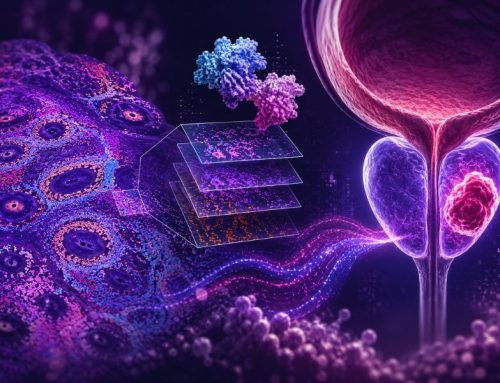
“Spatial biology has long been used in research and clinics, including microscopy and tissue imaging,” noted Dr. Lundeberg. “However, the new generation of spatial biology tools examines hundreds to thousands of molecules with spatial coordinates and tissue morphology.”
Integration With Existing Clinical Workflows
A key concern for clinicians is how new technologies fit into established workflows. However, Dr. Lundeberg sees a seamless integration pathway for spatial biology in pathology.
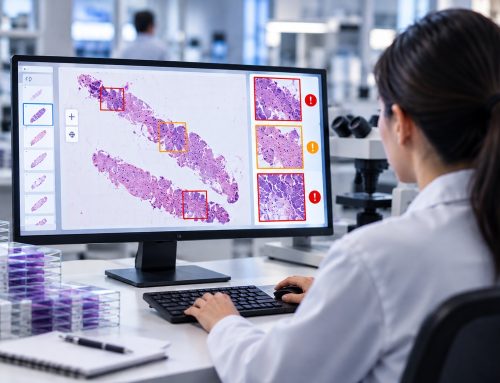
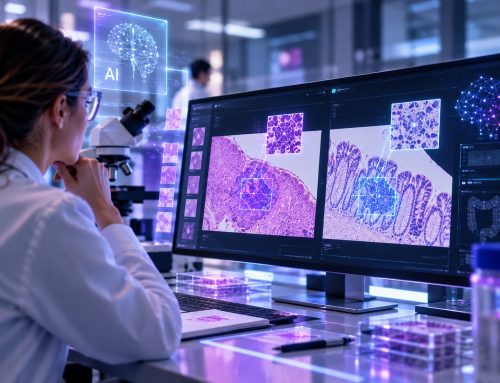
“Several emerging spatial biology methods start from FFPE-stained tissue, meaning that today’s clinical histopathology routine does not need to be compromised to facilitate spatial omics biology,” he explained. “Instead, omics will provide layered molecular data on histopathology, most likely increasing the precision in the interpretation and directly benefiting the patient.”
This integration approach aligns with PROMISE’s goal of enhancing the reuse of omics data produced in healthcare. Sweden is already leading in genomics implementation for routine clinical care, with whole-genome or exome sequencing of more than 14,500 patients in 2024, according to the Nature Medicine paper.
Data Integration and Patient Communication
Spatial biology generates complex, multi-dimensional datasets that must be integrated with other omics data and communicated effectively to both clinicians and patients. The PROMISE initiative includes plans for a centralized, continuously growing data hub to support this integration.
For patient communication, Dr. Lundeberg suggests leveraging existing frameworks:
“The spatial biology community will piggyback on the routines and systems used for NGS. This is exceptionally straightforward for spatial biology methods that use sequencing as a readout.”
He envisions two distinct information streams: actionable information presented to the treating physician and research information that may later be used in the “actionable bin,” an apparent synergy effect with PROMISE.
The Path Forward: A Five to Ten-Year Vision
Looking ahead, Dr. Lundeberg sees spatial biology becoming increasingly embedded in routine clinical practice through the PROMISE initiative, with minimal disruption to existing workflows.
While Sweden’s population of 10 million may limit sample sizes compared to larger nations, the authors argue that the country’s competitive advantage in an era of large national cohorts is unlikely to lie in sample size alone but rather in its excellent capabilities for high-quality longitudinal phenotyping, multi-omics profiling and bidirectional integration of healthcare and research.
References
- Kämpe A, Gudmundsson S, Walsh CP, et al. Precision Omics Initiative Sweden (PROMISE) will integrate research with healthcare. Nat Med. Published online April 4, 2025. doi:10.1038/s41591-025-03631-9
No audio available for this article yet.
No quiz available for this article yet.