
The Numbers No One Wants to Hear
The numbers tell a story that workforce planners seem reluctant to hear. Only 3% of NHS histopathology departments have enough staff to meet clinical demand. Three percent.
Let that sink in for a moment – 97% of the labs processing the tissue samples that determine cancer diagnoses, guide treatment decisions, and shape patient outcomes are running understaffed.
Yet when trusts scramble to meet their efficiency targets, where do the cuts land? Not on addressing the consultant pathologist vacancies that sit at the heart of the problem. Instead, 90% of NHS organisations are targeting non-clinical staff – the very administrative and technical support that makes pathology services function smoothly.
This isn’t just poor planning. It’s a masterclass in false economy.
The Real Numbers Behind the Crisis
The pathology workforce crisis has been building for years, but the scale is staggering.
- 200–300 consultant histopathology vacancies across the UK
- A quarter of all histopathologists aged 55 or over, facing retirement soon
- £27 million annually spent on locums and outsourcing in 2017/18 (costs have only risen since)
- 4.5% year-on-year growth in histopathology requests since 2007, driven by screening, personalised medicine, and an ageing population
The maths is brutal: a shrinking workforce, an expanding workload, and efficiency targets that demand more for less.
But here’s where workforce planning diverges from operational reality: the solutions being implemented don’t address the core shortage – they make it harder to manage.
Cutting the Wrong Posts
When NHS England demands cuts to “corporate costs” and trusts target administration below 7% of income, the axe falls on exactly the roles that support efficient pathology services:
- Lab managers who coordinate complex workflows
- Administrative staff who track specimens and reports
- Technical support who maintain systems that prevent errors
These aren’t luxuries. They are the infrastructure that allows consultant pathologists to focus on what only they can do best – making diagnoses.
Strip them away, and you create inefficiencies that ripple through patient pathways.
Without adequate administrative support, slide filing becomes delayed, MDT preparation is pushed back, and time to treatment is extended. Pathologists are pulled into triaging tasks that technical staff could handle. The consultant shortage remains, but now the remaining workforce is drowning in administrative work.
The Complexity Multiplier
The irony deepens when trusts turn to external partners or mutual aid arrangements to manage capacity. These partnerships require more coordination, not less. Someone has to manage case transfers, track reporting timelines, align quality standards, and reintegrate results into local systems.
Cut administrative support, and these partnerships become sources of complexity rather than solutions.
This is where the gap between planning assumptions and operational reality becomes a chasm. Workforce models assume that reducing “non-essential” staff will create efficiency savings. But in pathology, the administrative layer isn’t overhead – it’s what makes the clinical work possible. Remove it, and the entire system slows down.
The result? Departments that were already struggling with consultant shortages now face additional operational friction. Cases take longer to process not because of diagnostic complexity, but because of administrative bottlenecks that could be easily resolved with proper support.
Beyond the Planning Horizon
The disconnect between workforce plans and pathology reality reflects a broader NHS challenge: short-term financial pressures driving decisions that create long-term operational problems.
Cutting administrative support might deliver immediate savings, but it reduces the system’s capacity to function efficiently – exactly the opposite of what efficiency targets should achieve.
The most effective pathology services understand that efficiency comes from having the right infrastructure, not fewer people. They:
- Invest in robust administrative systems to handle routine tasks
- Use technology to streamline workflows rather than creating new manual burdens
- Maintain dedicated coordination that ensures seamless integration with referring teams
Where Diagnexia Makes the Difference
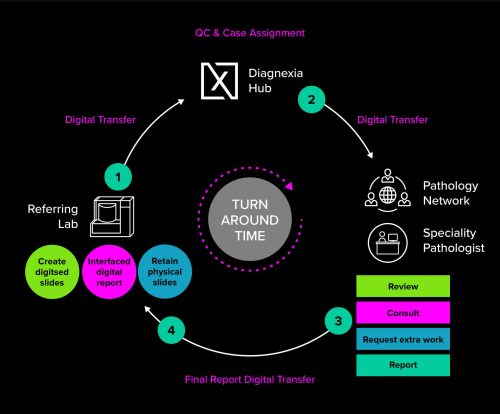
This is exactly what makes external partners like Diagnexia effective – they provide the complete infrastructure that many trusts are cutting internally.
- While departments lose their administrative coordination, Diagnexia invests in dedicated case management teams.
- While trusts reduce technical support, Diagnexia builds robust digital integration systems.
- While internal services struggle with workflow bottlenecks, Diagnexia creates streamlined processes designed specifically for rapid turnaround.
The speed and reliability departments experience with Diagnexia doesn’t happen by accident – it’s the direct result of maintaining exactly the support infrastructure that efficiency drives have stripped away.
From Problem to Partnership
For departments facing the impossible choice between efficiency targets and service quality, this represents a practical solution. Rather than cutting the infrastructure needed to run pathology efficiently, they can access it through partners who understand that administrative excellence isn’t overhead – it’s what makes rapid, reliable reporting possible.
The NHS faces genuine workforce challenges in pathology, but the solution isn’t to make the problem harder by removing essential support. It’s to work with partners who have already built the infrastructure to deliver what internal efficiency drives have made impossible: faster service with higher reliability.
Diagnexia restores the infrastructure that pathology needs, enabling faster reporting, greater reliability, and better patient outcomes.
Share this article




Follow us
Get Pathology News Delivered to Your Inbox