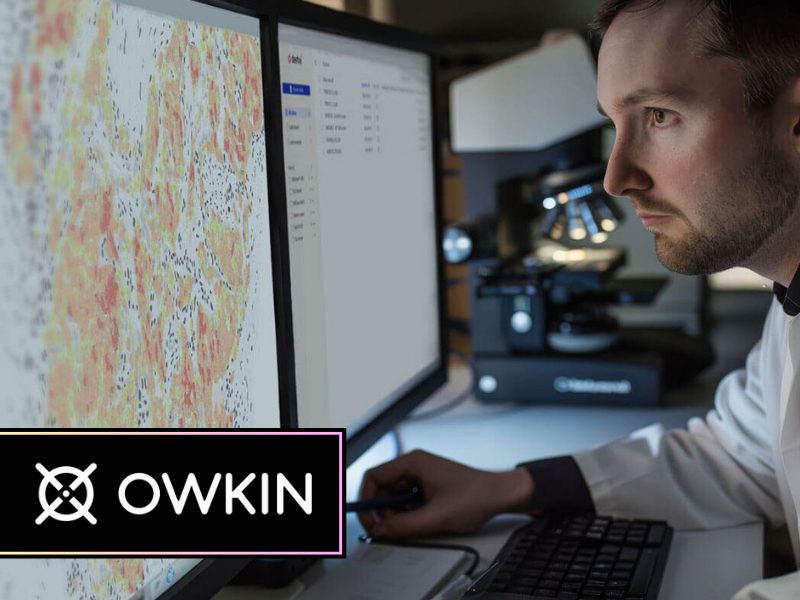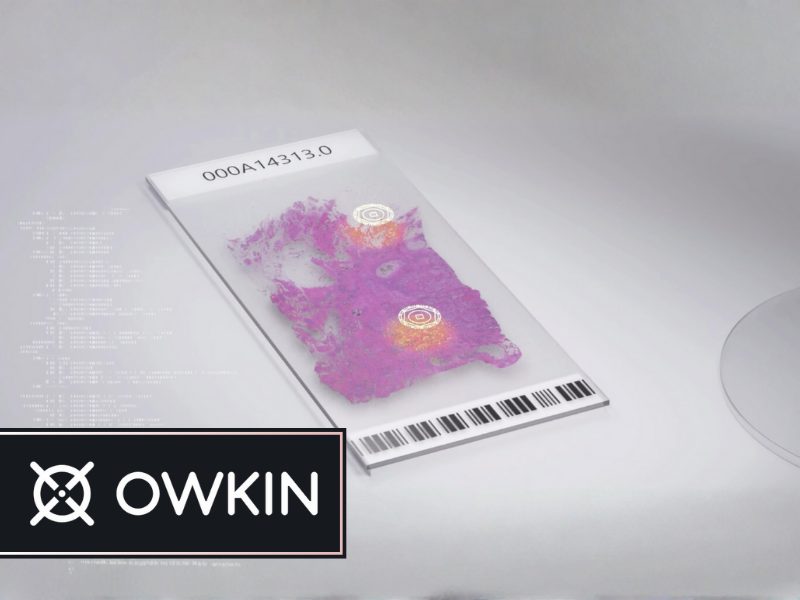
Owkin shares promising validation results for BRCAura RUO, a clinical-grade research-use-only AI product designed to screen for germline BRCA1/2 mutations (gBRCAm) directly from digitized breast cancer pathology slides.
Breast cancer remains the leading cause of cancer-related deaths among women worldwide. Identifying patients with germline BRCA1/2 mutations is essential for guiding targeted treatment decisions, but testing is not always consistently offered to eligible individuals, and implementation varies between countries.
The model concept was initiated as part of Owkin’s ongoing partnership with Gustave Roussy and Centre Léon Bérard through PortrAIt, a French consortium dedicated to advancing precision medicine with AI-enabled digital pathology. Fostered through collaboration with AstraZeneca, as announced in October 2024, the development of BRCAura aims to accelerate and expand identification of BRCA mutations in patients with breast cancer.
Strong validation across international cohorts
Recently published research at ESMO 20251 highlights robust results achieved across multiple independent cohorts from Centre Léon Bérard (France), Washington University School of Medicine in St. Louis (USA), and King’s College London (UK).
Trained on an enriched cohort of germline BRCA mutation patients from Gustave Roussy, BRCAura RUO demonstrated strong and reproducible performance:
- Area Under the Curve (AUC) of 80% in predicting mutation status
- Ability to rule out approximately 40% of patients unlikely to carry gBRCA mutations with a high sensitivity of 93%
- Robustness across different staining types and scanners, ensuring consistent performance across real-world conditions
Supporting research and accelerating access to testing
“We developed BRCAura with the vision of expanding access to gBRCA testing and identifying more patients at risk of harboring BRCA mutations to determine the best personalized treatment approach,” explains Meriem Sefta, Chief Diagnostic Officer. “This first step is being leveraged in research settings, to enhance workflows, but also to gain an understanding of how morphological factors could be systematically leveraged to expand and accelerate gBRCA testing.”
“These recent results are promising as they highlight a robustness to pre-analytical and clinical variability that is a necessary requirement for any screening solution to optimize clinical routine diagnosis of gBRCA mutations” says Sheeba Irshad, Professor of Cancer Immunology at King’s College London and Breast Cancer Medical Oncologist. “While further evaluation will be essential, approaches like this may eventually help support earlier and better-informed decisions about patient management.”
These results support BRCAura RUO as a powerful, standardized histopathology-based solution with increased reliability when compared to current clinical scoring methods relying upon age, and family history. These methods, typically validated, remain highly diverse in approach across different hospital settings. This paves the way for a clinically approved version of the device to introduce a more standardized approach to help streamline patient selection for genetic testing and next-generation sequencing (NGS). Additionally, by ruling out patients unlikely to carry the gene, BRCAura could help expand testing access to those patients not routinely considered for genetic testing.
“To advance our bold oncology ambitions, we are building a collaborative ecosystem across leading AI companies and academia to develop AI solutions that can transform care,” said Greg Rossi, Senior Vice President Oncology, Europe and Canada, AstraZeneca. “These validation results underscore how histopathology-based AI can help bridge the gap between pathology and genomics – paving the way for faster and broader genetic testing.”
The PortrAIt consortium is a French consortium financed by the government within the framework of France 2030 and by the European Union – Next Generation EU within the framework of the France Relance Plan. It consists of the following members:
- Owkin
- Gustave Roussy
- Centre Léon Bérard
- Unicancer
- Cypath
- Tribun Health
About Owkin
Owkin is an AI company on a mission to solve the complexity of biology. It is building the first Biology Super Intelligence (BASI) by combining powerful biological large language models, multimodal patient data, and agentic software. Owkin’s Dx division is a leader in clinically validated digital pathology AI testing. These solutions seamlessly integrate into digital pathology workflows, enhancing patient diagnosis and therapeutic decision-making through advanced biomarker screening and outcome prediction. Owkin’s proven track record and platform spans utility for pharma R&D and clinical trials to regulatory-approved IVD tests for routine clinical use.
About Gustave Roussy
Ranked first in France, first in Europe and sixth in the world, Gustave Roussy is a centre of global expertise entirely dedicated to patients living with cancer. The Institute is a founding pillar of the Paris-Saclay Cancer Cluster. Source of therapeutic innovations and diagnostic breakthroughs, the Institute welcomes nearly 50,000 patients each year, including 3,500 children and adolescents, and develops an integrated approach combining research, care and teaching. An expert in rare cancers and complex tumours, Gustave Roussy treats all cancers at all stages of life. It offers its patients personalised care that combines innovation and humanity, taking into account both care and the physical, psychological and social quality of life. With 4,100 employees at two sites, Villejuif and Chevilly-Larue, Gustave Roussy brings together the expertise essential for high-level cancer research; 32% of treated patients are included in clinical studies.
About Centre Léon Bérard
The Centre Léon Bérard (CLB) is a regional, national and internationally recognized reference cancer center and one of twenty Comprehensive Cancer Centres in France, providing a global management of cancer patients from diagnosis to treatment and beyond. The Centre excels in multidisciplinary research, and reinforces the bench-to-bedside process through facilitating translational research to accelerate innovation and patient access to diagnoses and therapies.
About King’s College London
King’s College London is amongst the top 35 universities in the world and 5th best in the UK (QS World University Rankings 2026), and one of England’s oldest and most prestigious universities. For nearly 200 years, King’s students and staff have used their knowledge and insight to make a positive impact on people, society and the planet. Focused on delivering positive change at home in London, across the UK and around the world, King’s is building on its history of addressing the world’s most urgent challenges head on to accelerate progress, make discoveries and pioneer innovation. World-changing ideas.
1Tchita, O. et al. Development and validation of BRCAura: A histology model to predict germline BRCA1/2 mutations from HR+/HER2- breast cancer images, poster 327P)
Share this article



Follow us
Get Pathology News Delivered to Your Inbox