Inflammatory bowel diseases, including ulcerative colitis (UC), are chronic gastrointestinal conditions that profoundly impact patients’ quality of life. Recently, treatment goals for patients with UC have shifted away from symptom control towards true healing of the colonic epithelium, with histologic remission emerging as a key metric of disease activity.1
Factors pathologists consider when examining UC biopsies for histologic remission include the degree of visible microscopic inflammation. Residual inflammation is associated with increased risk of complications such as surgery, colon cancer, and risk of relapse.2-9 Overall, histology findings better predict clinical outcomes than endoscopy.2,3,10-15
To assess UC histology, pathologists assign histology scores (e.g., Geboes Score,16 Robarts Histopathology Index,17 Nancy Histologic Index18) based on the composition of the underlying inflammatory microenvironment. However, a key problem facing UC histologic scoring is inter- and intra-pathologist variability.17,19 This challenge highlights the need for standardized, reproducible histologic scoring in UC as histology continues to emerge as a key indicator of therapeutic response in clinical trials.
This is the transformative potential of AIM-HI™ UC*, an innovative digital pathology tool now available on the AISight® Clinical Trials Platform.
What is AIM-HI™ UC?
AIM-HI™ UC was developed by PathAI in collaboration with the Foundation for National Institutes of Health (FNIH) Biomarkers Consortium Mucosal Healing in Ulcerative Colitis project team, which consists of eight life sciences companies, non-profit foundations, leading academic medical centers, world-renowned key opinion leaders, and regulatory representatives from the FDA, united with the goal of bringing standardized scoring and deeper biological insights to the UC community. AIM-HI™ UC leverages the PLUTO pathology foundation model to predict whole slide image level Geboes subgrade scores with precision from routine hematoxylin and eosin (H&E)-stained intestinal biopsies20,21 (Figure 1). From these predictions, Grade Level Geboes, Robarts Histopathology Index (RHI), Nancy Histologic Index (NHI) can be extracted from each specimen.
Importantly, the tool goes beyond routine histologic scoring to simplify endpoint analysis through the identification of samples meeting key clinical cutoffs, such as Histologic Improvement (GS < 3.1) and Histologic Remission (GS < 2).
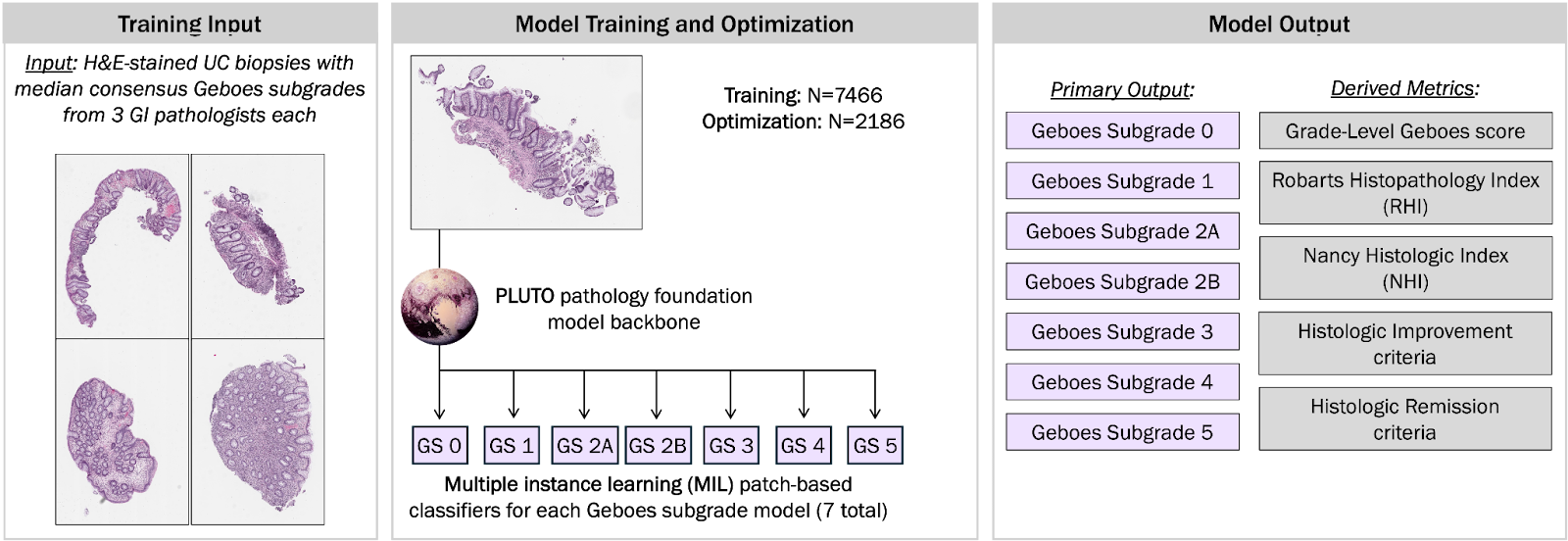
Figure 1. AIM-HI UC training process and outputs
Bringing precision to UC scoring with AIM-HI™ UC
Previous studies have shown that intra-pathologist reliability varies with scoring systems, with reliability for Geboes subgrade scores ranging from 72-90%, 94% for grade-level Geboes, 94% for RHI, and 92% for NHI.17,19 In contrast, AIM-HI™ UC is over 99% repeatable across repeated deployments on the same slide (Figure 2). This precision supports the tool’s potential to provide repeatable, automated histology scoring for UC, enabling standardization across clinical trials.
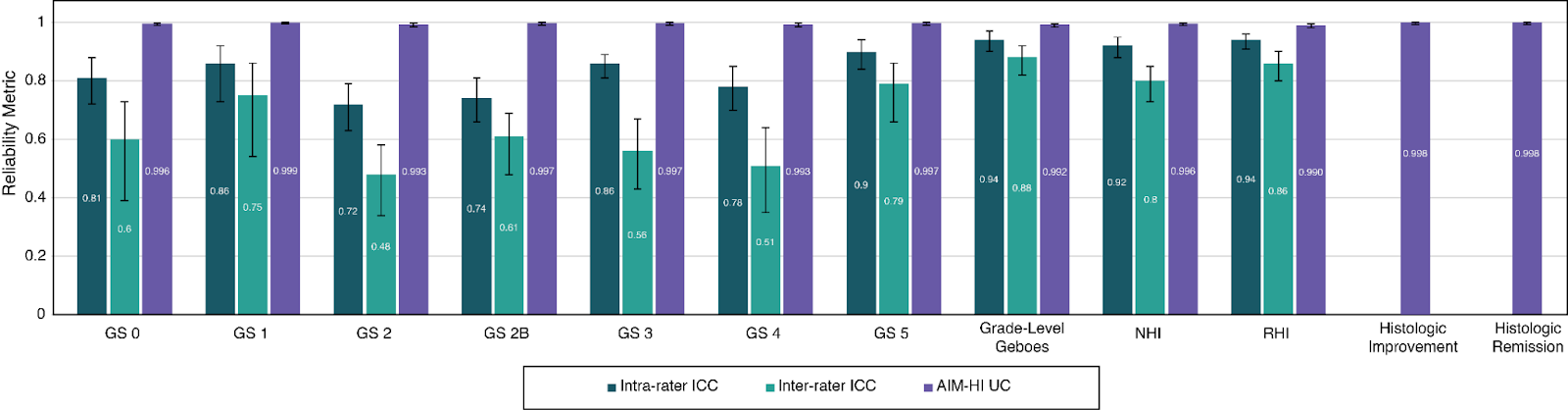
Figure 2. Repeatability of AIM-HI™ UC outputs compared to historical manual data. AIM-HI UC repeatability was assessed by deploying the algorithm ten times on the same slides. Historical intra-rater and inter-rater ICC values were obtained for Geboes subscores,17 grade-level Geboes,19 RHI,19 and NHI.19
AIM-HI™ UC as an AI-Assist tool
AIM-HI™ UC was designed as an AI-assist tool to provide pathologists with a highly reproducible, consensus-trained first read to inform pathologists’ final assessments. Such pathologist-in-the-loop tools have been shown to improve pathologist performance for multiple tasks across pathology.
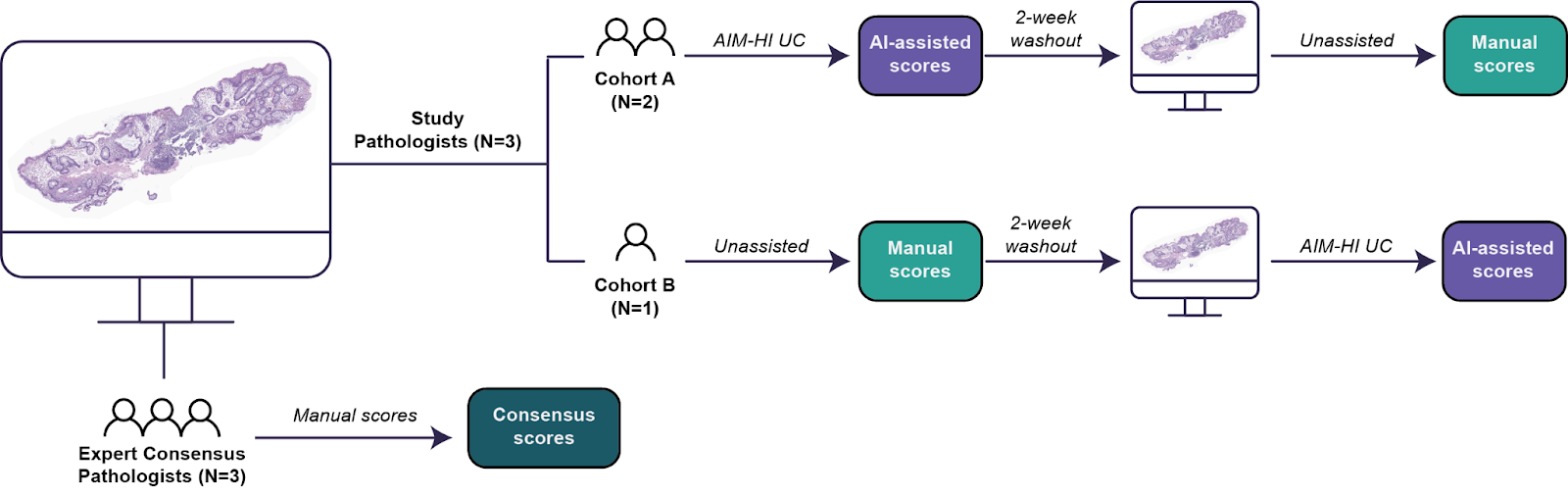
Figure 2. Repeatability of AIM-HI™ UC outputs compared to historical manual data. AIM-HI UC repeatability was assessed by deploying the algorithm ten times on the same slides. Historical intra-rater and inter-rater ICC values were obtained for Geboes subscores,17 grade-level Geboes,19 RHI,19 and NHI.19
To begin to understand how use of AIM-HI™ UC AI-Assist can impact clinical trial outcome metrics, we conducted a small pilot study of 146 UC cases, in which we compared the agreement of three study pathologists with or without AI-assistance to consensus scores from three expert pathologists (Figure 3). This study design allowed us to compare how pathologists scored cases in this cohort both manually and with the AI-Assist tool, revealing that AI Assistance is non-inferior to manual scoring for all Geboes subscores, as well as Geboes grade-level score, RHI, and NHI (Figure 4). Notably, pathologists assisted by AIM-HI UC were superior to unassisted pathologists in the sub-scoring of GS 0. Given that proper sub-scoring of GS 0 is necessary to better characterize patients who have achieved histologic normalization, this superior performance may have implications in UC clinical trials.
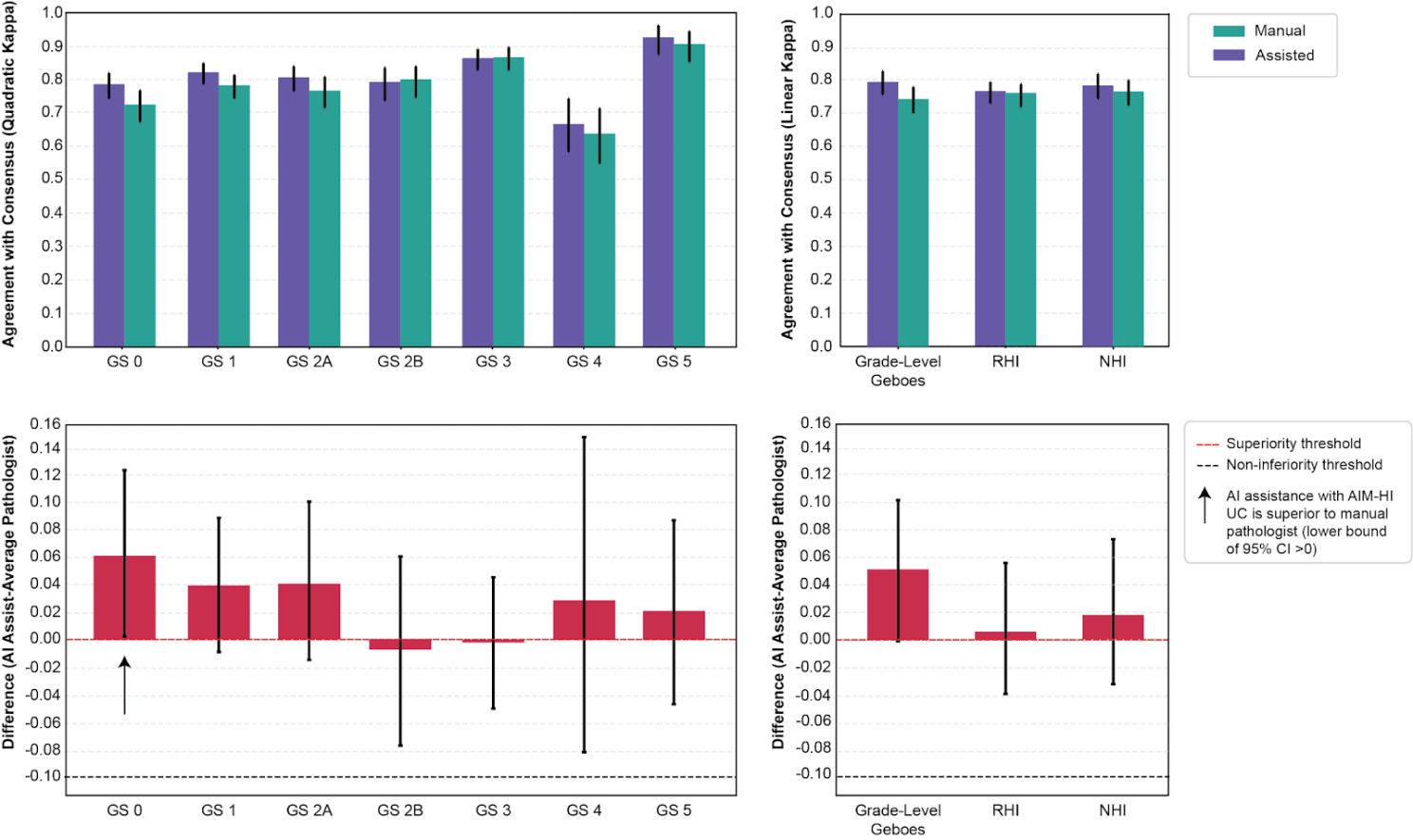
Figure 2. Repeatability of AIM-HI™ UC outputs compared to historical manual data. AIM-HI UC repeatability was assessed by deploying the algorithm ten times on the same slides. Historical intra-rater and inter-rater ICC values were obtained for Geboes subscores,17 grade-level Geboes,19 RHI,19 and NHI.19
But the question remains – can AI-powered histology analysis further enhance pathologists’ ability to detect histologic responses?
To answer this question, the criteria for histologic improvement and histologic remission was derived from study pathologists’ assessment with and without AI assistance. Using the consensus scores for comparison, histologic improvement detection with AI-assistance was non-inferior to manual evaluation for both PPA and NPA (Figure 5). Interestingly, for the detection of histologic remission, while NPA was statistically equivalent between AI-assisted and manual evaluation, pathologists using AIM-HI™ UC AI-Assist identified patients with histologic remission with superior PPA to unassisted pathologists (Figure 5).
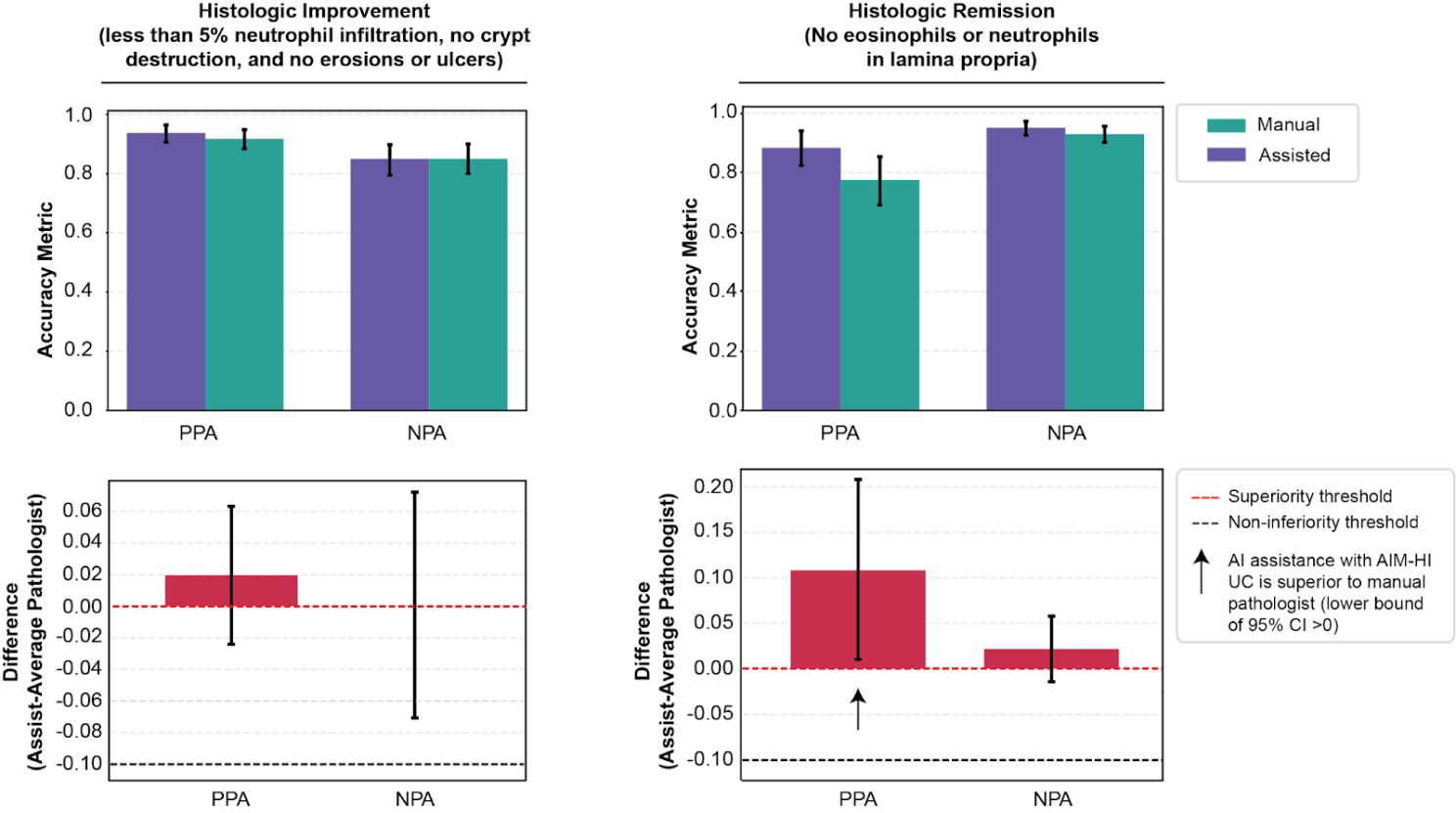
Figure 2. Repeatability of AIM-HI™ UC outputs compared to historical manual data. AIM-HI UC repeatability was assessed by deploying the algorithm ten times on the same slides. Historical intra-rater and inter-rater ICC values were obtained for Geboes subscores,17 grade-level Geboes,19 RHI,19 and NHI.19
In other words, pathologists are able to better detect patients with true histologic remission using AIM-HI™ UC as an AI-assistant than through manual evaluation alone, while identifying those without histological remission equally well using AI-assisted and manual evaluation. While larger-scale studies are needed to further illuminate the gains provided through the use of AIM-HI™ UC as an AI-assistant, these preliminary results suggest that using this tool for AI-assisted histology scoring in UC has the potential to standardize this process.
The preliminary findings show the potential of AIM-HI™ UC in UC clinical trials, simultaneously providing standardization and improved precision to the histologic evaluation process. By directly addressing the challenge of inter- and intra-pathologist variability and demonstrating superior performance in detecting true histologic remission, this AI-assist tool offers a path forward for more reliable endpoint analysis. This enhanced precision in measuring therapeutic response is not only vital for validating the efficacy of new treatments but holds the potential to significantly expedite the development and approval of transformative therapeutics, ultimately ushering in an era of better-defined outcomes and new hope for patients living with UC.
*AIM-HI™ UC is For Research Use Only. Not for use in diagnostic procedures.
References:
- Turner D, Ricciuto A, Lewis A, et al. STRIDE-II: An update on the Selecting Therapeutic Targets in Inflammatory Bowel Disease (STRIDE) initiative of the International Organization for the Study of IBD (IOIBD): Determining therapeutic goals for treat-to-target strategies in IBD. Gastroenterology 2021;160:1570–1583.
- Gupta RB, Harpaz N, Itzkowitz S, et al. Histologic inflammation is a risk factor for progression to colorectal neoplasia in ulcerative colitis: a cohort study. Gastroenterology 2007;133:1099–105; quiz 1340–1.
- Rutter M, Saunders B, Wilkinson K, et al. Severity of inflammation is a risk factor for colorectal neoplasia in ulcerative colitis. Gastroenterology 2004;126:451–459.
- Narang V, Kaur R, Garg B, et al. Association of endoscopic and histological remission with clinical course in patients of ulcerative colitis. Intest Res 2018;16:55–61.
- Yoon H, Jangi S, Dulai PS, et al. Incremental Benefit of Achieving Endoscopic and Histologic Remission in Patients With Ulcerative Colitis: A Systematic Review and Meta-Analysis. Gastroenterology 2020;159:1262–1275.e7.
- Gupta A, Yu A, Peyrin-Biroulet L, et al. Treat to target: The role of histologic healing in inflammatory bowel diseases: A systematic review and meta-analysis. Clin Gastroenterol Hepatol 2021;19:1800–1813.e4.
- González-Partida I, Martínez-Lozano H, González-Lois C, et al. Histological inflammatory activity can predict endoscopic relapse in patients with ulcerative colitis who have achieved mucosal healing. Eur J Gastroenterol Hepatol 2021;33:e796–e802.
- Marchal Bressenot A, Riddell RH, Boulagnon-Rombi C, et al. Review article: the histological assessment of disease activity in ulcerative colitis. Aliment Pharmacol Ther 2015;42:957–967.
- Ma C, Sandborn WJ, D’Haens GR, et al. Discordance between patient-reported outcomes and mucosal inflammation in patients with mild to moderate ulcerative colitis. Clin Gastroenterol Hepatol 2020;18:1760–1768.e1.
- Riley SA, Mani V, Goodman MJ, et al. Microscopic activity in ulcerative colitis: what does it mean? Gut 1991;32:174–178.
- Bessissow T, Lemmens B, Ferrante M, et al. Prognostic value of serologic and histologic markers on clinical relapse in ulcerative colitis patients with mucosal healing. Am J Gastroenterol 2012;107:1684–1692.
- Bitton A, Peppercorn MA, Antonioli DA, et al. Clinical, biological, and histologic parameters as predictors of relapse in ulcerative colitis. Gastroenterology 2001;120:13–20.
- Hefti MM, Chessin DB, Harpaz NH, et al. Severity of inflammation as a predictor of colectomy in patients with chronic ulcerative colitis. Dis Colon Rectum 2009;52:193–197.
- D’Haens G, Sandborn WJ, Feagan BG, et al. A review of activity indices and efficacy end points for clinical trials of medical therapy in adults with ulcerative colitis. Gastroenterology 2007;132:763–786.
- Bryant RV, Burger DC, Delo J, et al. Beyond endoscopic mucosal healing in UC: histological remission better predicts corticosteroid use and hospitalisation over 6 years of follow-up. Gut 2016;65:408–414.
- Geboes, K., Riddell, R., Ost, A., Jensfelt, B., Persson, T., & Löfberg, R. (2000). A reproducible grading scale for histological assessment of inflammation in ulcerative colitis. Gut, 47(3), 404–409.
- Mosli, M. H., Feagan, B. G., Zou, G., et al. (2017). Development and validation of a histological index for UC. Gut, 66(1), 50–58.
- Marchal-Bressenot, A., Salleron, J., Boulagnon-Rombi, C., et al. (2017). Development and validation of the Nancy histological index for UC. Gut, 66(1), 43–49.
- Jairath V, Peyrin-Biroulet L, Zou G, et al. Responsiveness of histological disease activity indices in ulcerative colitis: a post hoc analysis using data from the TOUCHSTONE randomised controlled trial. Gut 2019;68:1162–1168.
- Juyal D, Padigela H, Shah C, et al. PLUTO: Pathology-Universal Transformer. arXiv [eessIV] 2024. Available at: http://dx.doi.org/10.48550/ARXIV.2405.07905.
- Altepeter T, Bhattacharya S, Brosnan-Cashman J, et al. Su1904: Consortium-driven development of pathology foundation model-based approaches for automated scoring of histopathology in ulcerative colitis. Gastroenterology 2025; 169 (1 Supplement): S882.
Share this article




Follow us
Get Pathology News Delivered to Your Inbox