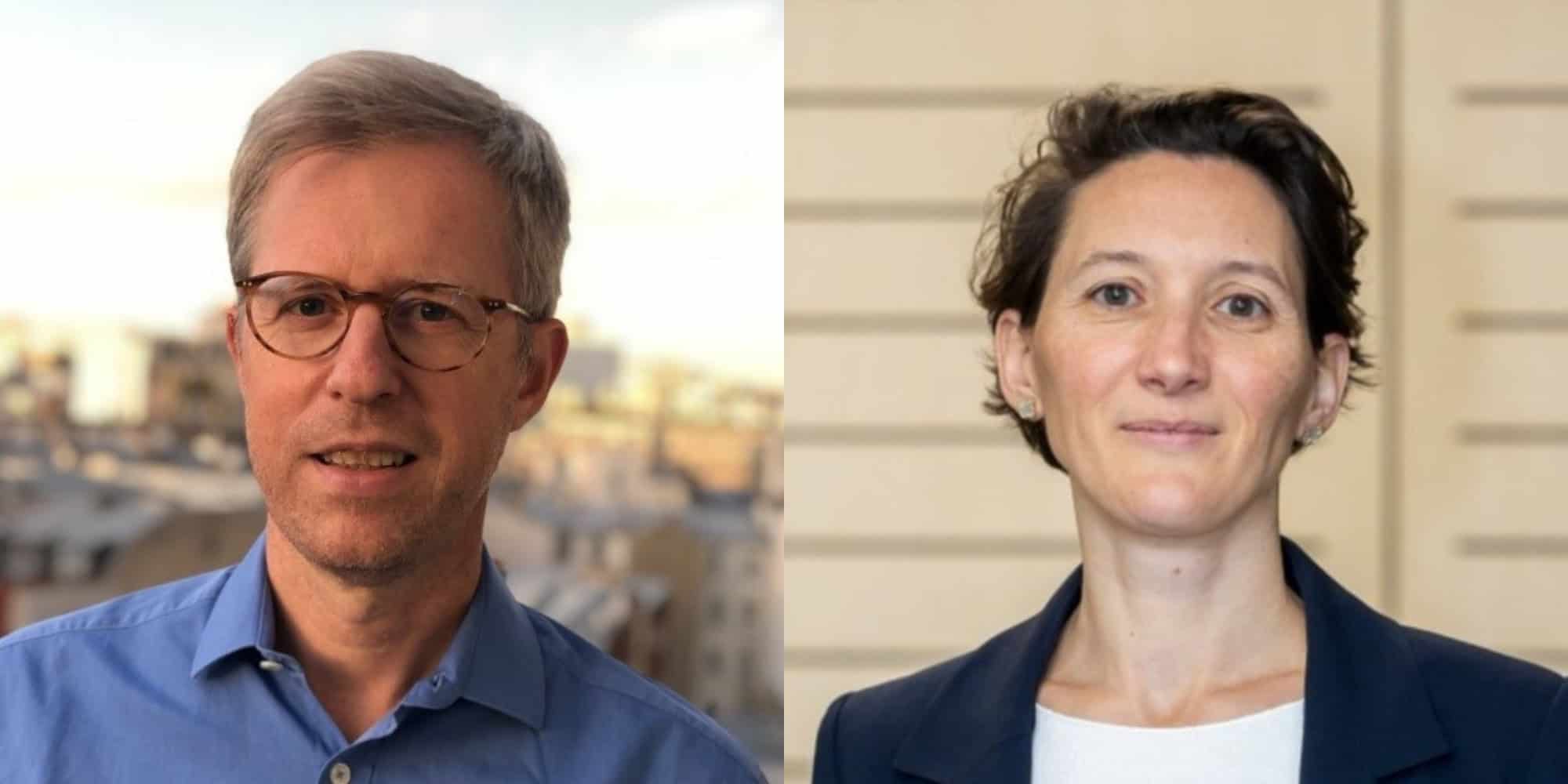
Jean-François Pomerol
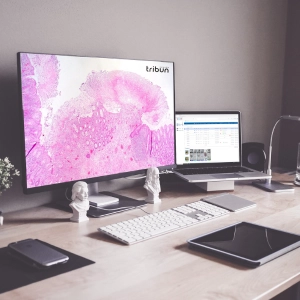
Tribun Health is one of only a few companies able to accompany its customers on the complete transition from optical microscope to full digital pathology implementation…
We have a long track-record of sucessful implementation of digital pathology projects which bring efficience and long-term return on investment to our clients.Marie Brevet
It is important to understand that the process of digital transition mobilises, medical, technical and infrastructure teams and disrupts the entire laboratory organisation. That is why it is such a big challenge. When we propose a digital solution, the course of actions we plan for implementation is absolutely critical.
“The overall aim for Tribun Health and for the scientific and medical board is to inform as many people as possible about the ongoing digital revolution, to assist pathologists in the transition, and to instruct managers who are embarking on this journey by providing them with practical insights from the field.”
Conversation with Jean-François Pomerol and Marie Brevet
Tribun Health, Paris, France.
BIOSKETCH Jean-François Pomerol:
Upon his graduation from the prestigious HEC Paris, Jean-François embarked on his professional journey in the realms of auditing and corporate finance, honing his skills at Société Générale in Frankfurt. In 1999, he joined TRIBVN, a trailblazer in digital imaging, where he significantly contributed to its growth and development. Recognizing the potential of digital pathology, Jean-François co-founded Tribun Health in 2016, a company he continues to lead as CEO. His comprehensive understanding of the sector and its stakeholders has positioned him as a key influencer in the industry. His strategic acumen has been instrumental in ensuring the company’s success in the digital pathology market, both domestically in France and on a global scale. He is also the Chairman of a French task force dedicated to digital pathology and promoting priority actions to sustain the entire sector.
BIOSKETCH Marie Brevet:
Marie Brevet, a pathologist, began her career at the Amiens University Hospital before moving to Japan and the United States. As a University Professor – Hospital Practitioner at the Lyon University Hospital, she conducted several research projects and held various managerial positions from 2010 to 2019. In 2020, she joined the Cypath group, the second largest French group in pathological anatomy and a major player in medical innovation. Passionate and convinced that medical research benefits from public-private partnerships, and relying on the expertise of the Cypath group, she created Cypath-RB in early 2021, the first private research structure dedicated to pathological anatomy and cytology. With her in-depth medical knowledge and scientific rigor, she plays an important role in the development of digital pathology and artificial intelligence algorithms. Her public and private experiences are assets to meet the various challenges of digital pathology. She left Cypath in 2023 to found “Biwako”, a company dedicated to research and development, at the interface between health professionals and health industry players. Marie Brevet is also a member of the board of the French Pathology Society (SFP), and the organizing committee of the national pathology congress, as well as a professor in master’s and doctoral programs.
Interview with Jonathon Tunstall
Interview date – 26 April 2024
Publication date – 16 July 2024
JT – Hello and welcome to our latest pathology News interview.
Today we are interviewing one of the leading organizations in our industry, Tribun Health based in Paris, and we have two representatives from the company with us today. Jean-François Pomerol is the co-founder and CEO of the company and Marie Brevet is both a practising pathologist and a member of the Tribun Health Medical and Scientific Board.
A big welcome to both of you and Marie, perhaps I could start with you. Could you tell us something about yourself, your experience in this field, and how you came into the domain of digital pathology?
MB – Yes sure. I am a medical doctor, I am a pathologist, and for a few years I worked as a full professor at a university hospital in Lyon. At this time, as well as during my previous roles, I had always been used to conducting research. I had done various projects including basic research as well as some translational and clinical research. Then in 2020, when I joined a private group in France named Cypath, which consisted of 70 physicians, I started the first research group truly dedicated to pathology.
My aim in this research group at Cypath was to assist the digital transition of my specialty. Over a period of time, I coordinated the transition to 100% digital workflow, and I also helped the group to obtain some financial support to develop a few artificial intelligence algorithms in collaboration with Tribun Health and Owkin.
My real ambition however was to connect the digital transition of my own specialty with biology and radiology, and so I moved on from this research group last year to found my own company named Biwako. Biwako is a company focussed on research and development in digital health and it operates at the intersection between professional care and the industry stake holders.
At the same time, I still continue to perform some medical diagnoses for a company called Technipath and because Technipath is also in digital transition, I now have digital pathology in all aspects of my work, through Biwako for research and via Technipath for daily clinical diagnosis.
JT – thank you Marie, that’s a fascinating background. Jean-François, perhaps you could also introduce yourself and tell us something about your background and your experience in the field of digital pathology.
J-FP – Yes certainly. I am the CEO and co-founder of Tribun Health and the company was founded back in 2016 on a vision that primary diagnosis would finally become digital. My team and I had already been involved in the field of imaging in pathology for almost 15 years before that, but with a different vision, more focussed on education and research. So, we already had a lot of experience, but in 2016 we came to the view that that we now had the technology in place to digitize the whole pathology practice.
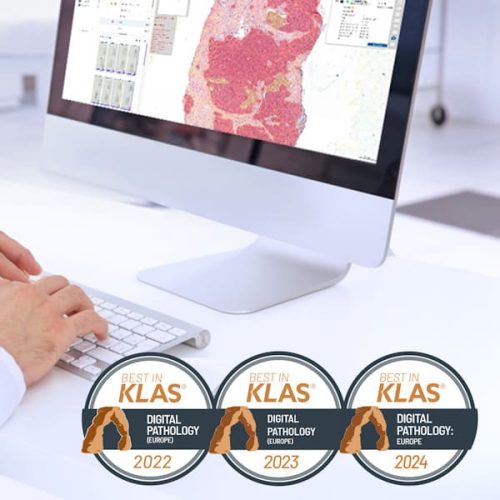
JT – Okay thanks, and I notice that Tribun Health has recently won the Best in KLAS Digital Pathology Europe award. I think this is the third consecutive year if I am correct there?
J-FP – Yes, exactly.
JT – Well congratulations to Tribun Health. Could you tell us something about that award and what are the key factors for success with Best in KLAS?
J-FP – Well, as you probably know, KLAS ranks IT solutions across different domains and one of their categories is digital pathology. They way they conduct that ranking is by interviewing actual customers, seeking customer testimonials, and then ranking companies according to the solution offered, the service provided and overall value for money. I think this award is therefore a recognition of these three aspects of our business.
Thinking firstly about the product, you can’t expect to receive good customer feedback if your product is not one the best on the market. Secondly, the services are key, because obviously we are in the software business and it’s not just about a product. You must be able to offer a lot of services and support mechanisms in order to act as a true partner to your customer. The third aspect of the KLAs ranking, value for money, is about whether you get the value you should expect when you have paid this price for such a solution.
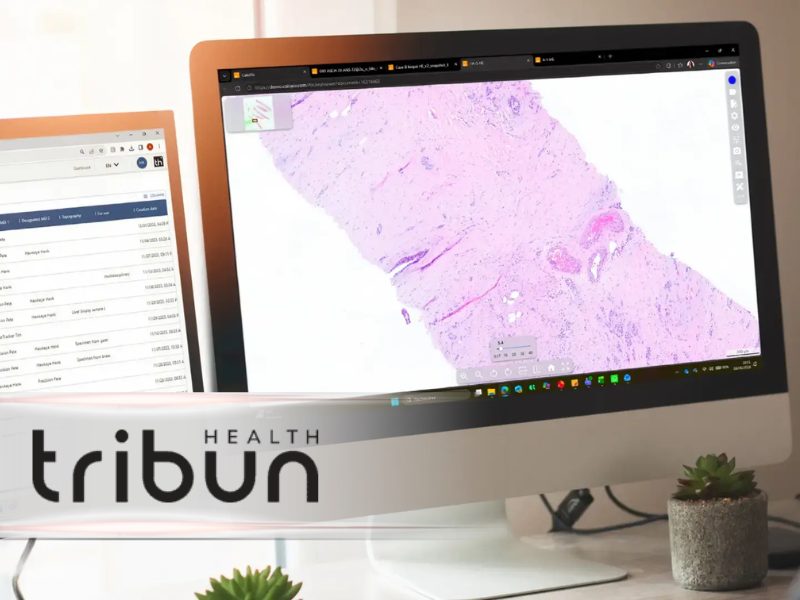
I do think the KLAS assessment process is quite comprehensive and so when we say we are Best in KLAS, it is at least on these three aspects, product, service, and value for money. The key factor behind that, is of course, to have a very good product. We invest substantially every year in new versions; we offer a true zero footprint solution both for workflow and viewer; we provide a state-of-the-art architecture which can be operated by any size of organization; and our platform is very easy to use in terms of ergonomics. When it comes to services, as I already said, my team and I have been involved for quite a long time in pathology and I think we therefore have an intimate understanding of the domain. We recognise the challenges that our customers are facing and we can be proactive on their behalf. I think this is something that is really key to our success. The value question, is about whether we keep our promises and that is something which, for me, is critically important. When we say we will deliver something, we make sure that we do that, and I think our customers value this approach very much.
JT – You have also put together a Medical and Scientific Board, so could you tell us something more about that? How long has the board been in effect and what is the role of this group in Tribun Health’s business?
JFP – Yes, we launched this a scientific and medical advisory board back in 2021, so shortly after our first fundraising event. The objective is to have a group of renowned pathologists working alongside us, so that we could better understand the daily practical challenges that they face as working pathologists. We do recognise that if we want to design and develop good products, we must be close to the day-to-day practice of our customers. It is much more difficult to develop at a distance from a purely engineering perspective. We do that by visiting customer sites, by spending time in labs and through the Medical and Scientific Board. We have put together a committee to help us understand what the pathology practice will look like in the short to medium term. We have regular discussions with our advisory board and we keep in close contact with users and others persons involved in the medical imaging field. These regular touchpoints help us to better design the product roadmap as well as our marketing communications.
JT – So Marie, you are a member of the Tribun Health Medical and Scientific Board. Could you tell us something more about that role from your own perspective?
MB – Yes, the role is to help Tribun Heath to develop the best tools which will enable pathologists to work confidently in digital pathology. This involves sharing my medical practices, my vision for the future, and providing feedback on the projects developed by Tribun Health. For example, I regularly test certain development ideas, give feedback, and advise on any adjustments or changes that might be required.
JT – Are there any projects or initiatives in particular that you could share with us?
MB – The Scientific and Medical Board together with Tribun Health, has put together several educational type events. For example, last year, we organized a digital pathology day where I shared my personal experiences of digitization with laboratory managers and pathologists who wanted to understand how to make the move to digital pathology; and to get a feel for the pitfalls to avoid etc.
We also held a seminar last year during the USCAP meeting in New Orleans where I presented my experience of the digital transition at Cypath. I discussed why we made this choice, the advantages that flow from a 100% digital workflow in terms of organisational efficiency, and the constraints, including the financial and infrastructure challenges.
More recently Tribun Health organised a webinar aimed at introducing a broader audience to digital pathology by providing information for some of the peripheral professions who need to be involved.
The overall aim for Tribun Health and for the scientific and medical board is to inform as many people as possible about the ongoing digital revolution, to assist pathologists in the transition, and to instruct managers who are embarking on this journey by providing them with practical insights from the field.
JT – Certainly, practical insights are very important, but I think we would all agree that there are still a lot of challenges facing effective adoption, particularly in the clinical market. Do you have a view on what are the most pressing of the current challenges for clinical adoption of digital pathology and perhaps you could give us some insights into any solutions you see to overcome them?
MB – Yes of course, digital transition is underway in many organizations but many others still hesitate to take this step and it is true that there are numerous challenges. I think the first and foremost of those challenges is financial, because digital slides require the purchase of high-speed scanners and the corresponding IT infrastructure. You also have to be able to handle and view the digital slides, so cost and the funding aspect is probably the most important challenge.
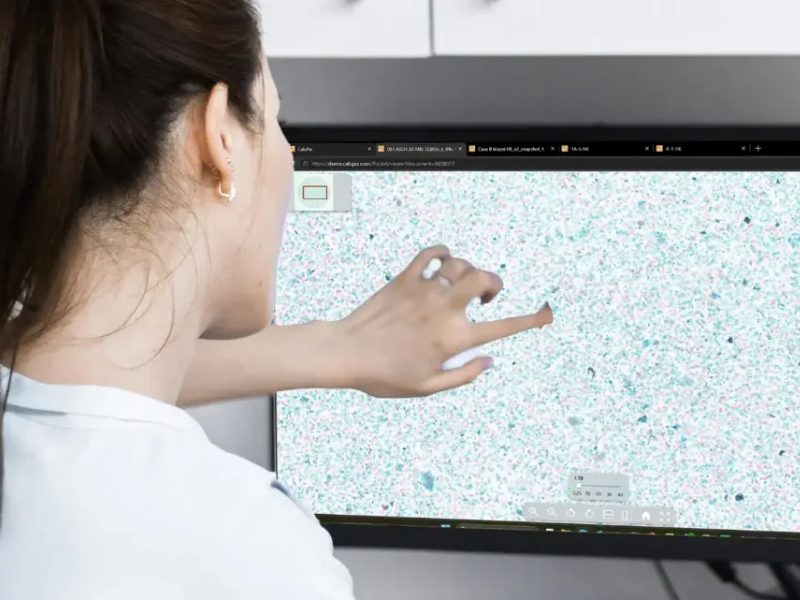
Secondly, I would point to the challenge of changing the technical and medical workflow, as digital slides represent an additional step in the overall workflow process. This requires significant involvement from the IT team and represents a big change for both the technicians and the pathologists who must now work with digital slides on a screen rather than the microscope. That alters the routine practice and diagnostic analysis and given that medical diagnosis and patient care depends on this analysis, the change management process for the pathologists is a critical factor to consider. Some pathologists will tell you that they are not confident with the digital workflow and will want to revert to their microscope, so building their confidence is an important challenge here.
It is important to understand that the process of digital transition mobilises, medical, technical and infrastructure teams and disrupts the entire laboratory organisation. That is why it is such a big challenge. When a laboratory decides to adopt a digital solution, the course of actions planned for implementation is absolutely critical and through my interaction with Tribun Health as well as with other industry players I always try to demonstrate the benefits of digital transition by sharing my own experiences.
I do think AI is now becoming an important factor in that package of benefits. I am convinced that digital transition will be more readily accepted, especially by the private pathologists, if it supports the use of image analysis tools. That is because the more efficient analysis tools we have and the more efficient we will become in our routine practice.
JT – Yes quite, and also regulation is a challenge isn’t it at the moment? Regulators seem to be quite slow moving in this direction.
MB – Yes, right!
JT – So Jean- Francois, let me ask you the same question. In your opinion, what are the most pressing challenges currently facing healthcare professionals in effective adoption and use of digital pathology and do you have any thoughts on solutions to overcome those challenges?
Each time I speak with pathologists – and this is certainly the case in France, but I think these issues are global – the first challenge is the workload. ‘How can you help us reduce workload? Each year we have more and more cases, the cases are becoming more complex and yet we have only the same or even a decreasing number of available pathologists.’ That is the primary issue and if the industry cannot find a solution to alleviate this increasing workload, we will be in trouble. That is both in terms of burn out for the physicians and also in turn-around time for the patient. So, I think this is the first and major challenge that we see everywhere and we need to develop solutions that can mitigate the workload issue.
Another related point which also comes up frequently is ‘how can I keep my lab attractive for young pathologists?’ That can of course be achieved through promoting an environment which is digital, with reduced workflow, which allows a flexible work environment through the possibility to work remotely or partly in the home office.
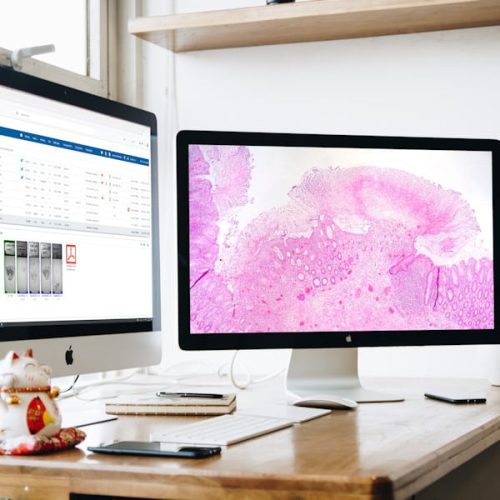
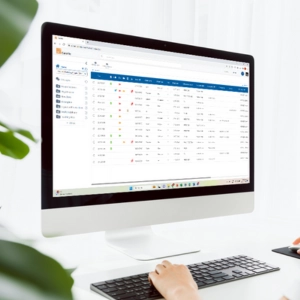
I would say that those are the two common things that we hear and the way we address those is by offering a product which can save time and improve the workflow of the day to day practice of pathology. When we are developing a product, we do put a lot of emphasis on easing the workflow. For example: on making it straightforward to assemble and assign cases; being able to easily find and prioritise cases; being able to choose the right slides that are ready to screen and not blurred or awaiting further staining.
Designing efficient workflow saves a lot of time for the pathologist. Registering the number of clicks just to open a case is something that we constantly work on and particularly so when trying to automate tasks such as QC workflows and worklist design.
This is how we, as a company, are trying to meet this challenge of productivity by reducing the overall time for the workflow. This starts even before we open an image as we can introduce an AI algorithm at that stage to do some kind of tedious quantitative screening or counting task. That helps us to both propose and deploy a solution which is very efficient in terms of workflow.
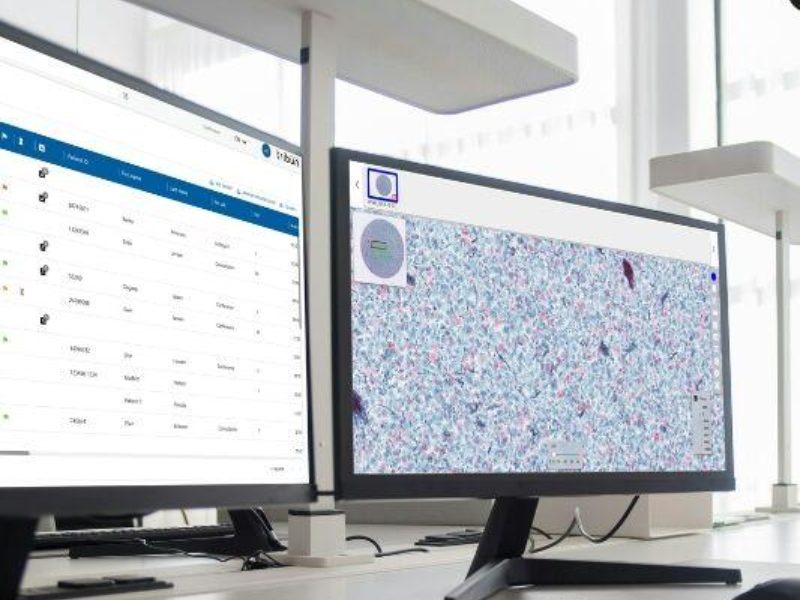
One example I can cite is that in our latest software version, we have included a feature which allows one click case sharing with somebody outside of your lab. This sends all the relevant information for second opinion in a single click and you don’t have to spend time assembling the different slides together with your question and all the existing clinical information. You simply select your expert and our CaloPix® solution will gather everything that you need to make this request. That is an example of how we are working to address the workload issue by providing software solutions that really save time.
JT – You have both mentioned the new AI technologies in pathology and I know that Tribun Health is quite involved in this revolution, so let’s talk a little about that. Marie, perhaps I could start with you? From your perspective as a pathologist how do you see the integration of AI and image analysis working out in the practice of clinical pathology?
MB – I feel very confident that we will use image analysis tools alongside digital pathology in the future, but I think the integration of these tools is a challenge and will probably remain a challenge for the next 20 years.
During my career, I have already witnessed an Immunohistochemistry revolution and then a molecular biology revolution and now we are witnessing the revolution in digital pathology. I am sure it will ultimately succeed, but it will take some time.
As with the arrival of any innovation, we see early adopters of digital pathology and we now have some new AI tools. Through research projects and the founding of partnerships, the early adopters are already using these image analysis tools in their routine practice. The challenge however, will be to find a viable business model which allows these tools to be disseminated to the majority pf pathology laboratories and used by most pathologists.
I witnessed the arrival of molecular biology in the early 2000s, but just now at the beginning of this current year, 2024, we have obtained the first reimbursement from the French social security for molecular biology procedures. It took many years, but now molecular biology is an integral part of our routine practice and is used in almost all pathology laboratories, even if that is just a small PCR. I’m sure the same will be true for digital pathology. It will take time, energy and probably the mobilization of all the stake holders, but I think that project after project we will refine the tools, use them in our daily work and conduct the necessary validations for their adoption.
I am part of the pathology national congress in France and I do a lot of work with a task force for France Biotech. I would say that the pathology community is already mobilized at the national level and we are ready for this transition, so I am sure it will happen. I am very happy to be part of these changes and I am certain that I will use these tools in routine practice before the end of my career.
JT – Do you think then that digitization is inevitable and that the microscope will ultimately disappear.?
MB – It will take time, because at the moment some slides cannot easily be analysed by digital pathology, but yes, I am sure in the future the microscope will disappear from the routine lab. Not from the research lab, but from the routine lab.
JT – We already have cases where young pathologists are being trained digitally and I was speaking with someone in the US recently who said that some of their new pathologists couldn’t report from microscopes because they had never done that.
MB – Yes, that is an interesting trend. When I was a young pathologist, we had lessons on how to align and adjust a microscope and now the young people don’t know how to change the lamp or even how a microscope actually works. This convinces me that the microscope will ultimately disappear from the routine lab.
JT – So Jean-François , Marie has given us her thoughts there on AI from the perspective of a pathologist, let’s talk a little about what Tribun Health offers in this respect. How are you adapting to this new revolution in pathology and what is your strategy to bring these tools to your customers?
JFP – For artificial intelligence we have three simultaneous approaches, so there are three pillars to our strategy. The first of these is our own AI developed in-house and I mentioned that earlier. Here we focus mainly on optimising workflow. For example, we have developed algorithms which assist in the QC of the scanning process to ensure that the slide is properly scanned with no blur, no missing tissue, and no artifacts. We can detect artifacts such as folds or air bubbles so that we can just focus on the remaining tissue. We also have an algorithm dedicated to detecting tumor. Is there tumor present or not? We can use this algorithm for many purposes, one being to prioritize cases by saying, here in this case we have something which is abnormal, we don’t know what it is, but we know this is abnormal. Then you may want to look at this slide first before going to the normal biopsies. So that is the first pillar of our strategy, designing our own AI mainly for QC, workflow, and some quantitative tasks such as counting cells or finding tumor.
The second pillar we have is the distribution of AI solutions from other vendors. We have agreements currently with Mindpeak and Owkin and we are in discussion with other companies in the field to have their solutions seamlessly integrated into our CaloPix® platform. We target those providers who are able to provide AI decision support. If you take an algorithm from Mindpeak, for example, you can quantify the PDL1 biomarker or if you use one from Owkin, you can estimate breast cancer relapse. So, these are clearly tools for decision support, helping the pathologist to do his tasks more efficiently and with better precision. That is the second level of our strategy, integrating and distributing third party AI.
The third and final pillar of our AI strategy is to recognise that there are many vendors out there and also that some of our customers in the universities and academic medical centers have developed their own AI algorithms. These groups want to be able to plug their AI into our system, and so we have developed a generic API through which we can let anyone connect a specific AI algorithm to our solution. This way, we provide the workflow, we ensure that the correct slide is presented to the algorithm and the result is returned into our viewer.
This approach allows anyone to connect to our CaloPix® platform and that is important because we have always aimed to be agnostic and open. We work with any slide scanner and with any type of infrastructure, whether local or on the cloud, and we are also agnostic for LIS systems. We want to give this same promise to our customers with respect to AI, so having this capability to connect any AI through a generic API is something which is a really important element of our strategy.
We think with this type of three-pronged strategy, with some in-house AI, a few distribution partners, and our generic API, we should be in a position where we can offer a large number different applications to a pathology practice. I think this brings a lot of value to our customers.
JT – That sounds like a very comprehensive approach, but as you and I both know, this is a very competitive market and that is the case particularly when we look at AI applications. I was at a conference recently and I counted 18 companies which were offering some form of artificial intelligence algorithm for digital pathology. In that context, how does Tribun Health stand out from the crowd? What is unique and different about Tribun Health?
JFP – I would say that this comes back to basics and to some of the things I was saying earlier. I believe that we have an outstanding product, a deep understanding of the challenges faced by our customers, and a very proactive, customer-oriented approach to service. This is why we have been awarded Best in KLAS, why our customers say they will buy from us again, and why so many people would recommend Tribun Health as an essential partner for digital pathology.
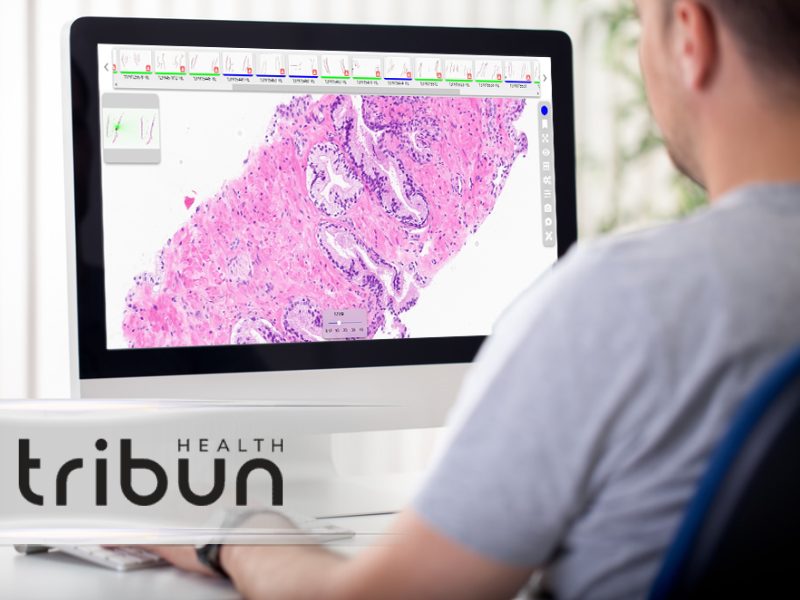
I think that it’s what makes us stand apart from the crowd. Of course, we are not the only player, there are many vendors, but Tribun Health is one of only a few companies able to accompany its customers on the complete transition from optical microscope to full digital pathology implementation. That is from grossing, through workflow, and viewer, to the application of AI. There are not so many other vendors able to offer this type of complete solution to support the success of their customers in the transition to digital pathology. I do think our customers recognise that.
JT – Well Jean-François and Marie, I think we will end it there, but thank you for this discussion. These are certainly exciting times for both Tribun Health and for our entire industry.
JFP – Thank you Jonathon. I think the next few years will be very exciting. I see everywhere more and more traction, more and more adoption. As you know yourself, it has been a long journey to digital pathology, but I do feel that we are now very close to massive adoption and this will completely change the pathology practice. I’m very confident in the future of this industry and in the future of Tribun Health as a key player in this domain.
JT – Thank you Jean-François and also to you Marie for a fascinating discussion today. I wish Tribun Health the best of luck and I will look forward to hearing about the next phases of development for the company.
Share this article

Follow us
Get Pathology News Delivered to Your Inbox