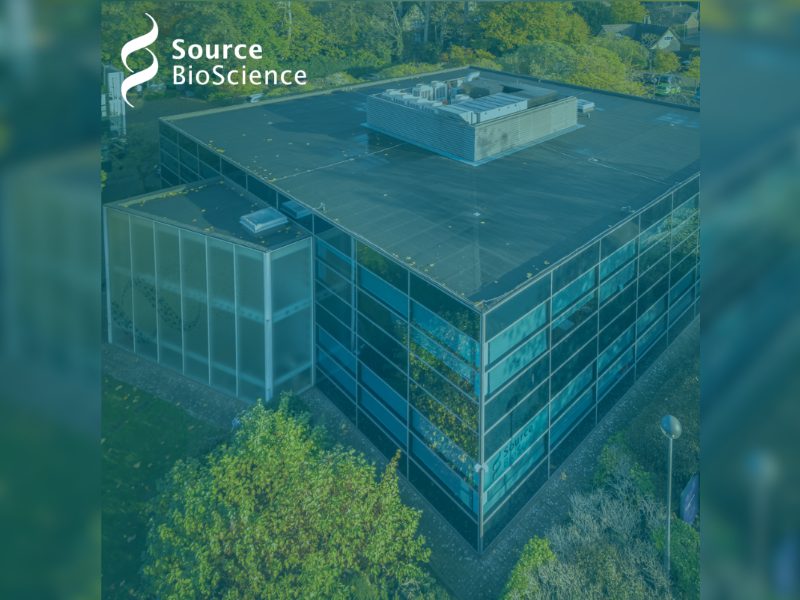
Source BioScience, comprised of Source LDPath and Source Genomics, is an international provider of histopathology and genomics laboratory services. Source LDPath is market leading in histopathology services in the UK, supporting NHS and private healthcare increase reporting capacities and clear backlogs of cellular and molecular diagnostic pathology samples. Source LDPath provides an end-to-end clinical healthcare service from histopathology, including digital pathology and AI, through to molecular diagnostics services, and hosts a significant and growing network of 250+ Specialist Consultant Pathologists, all registered with the Royal College of Pathologists and General Medical Council, to ensure the highest quality reporting for patients.
” I’d like to think that this is not going to be a technology that will take away a pathologist’s job. I think it is more of a complementary tool, because the expertise of the pathologist is always going to be required…
… I think we will always need the expert eye. “ – Andrew Wilson
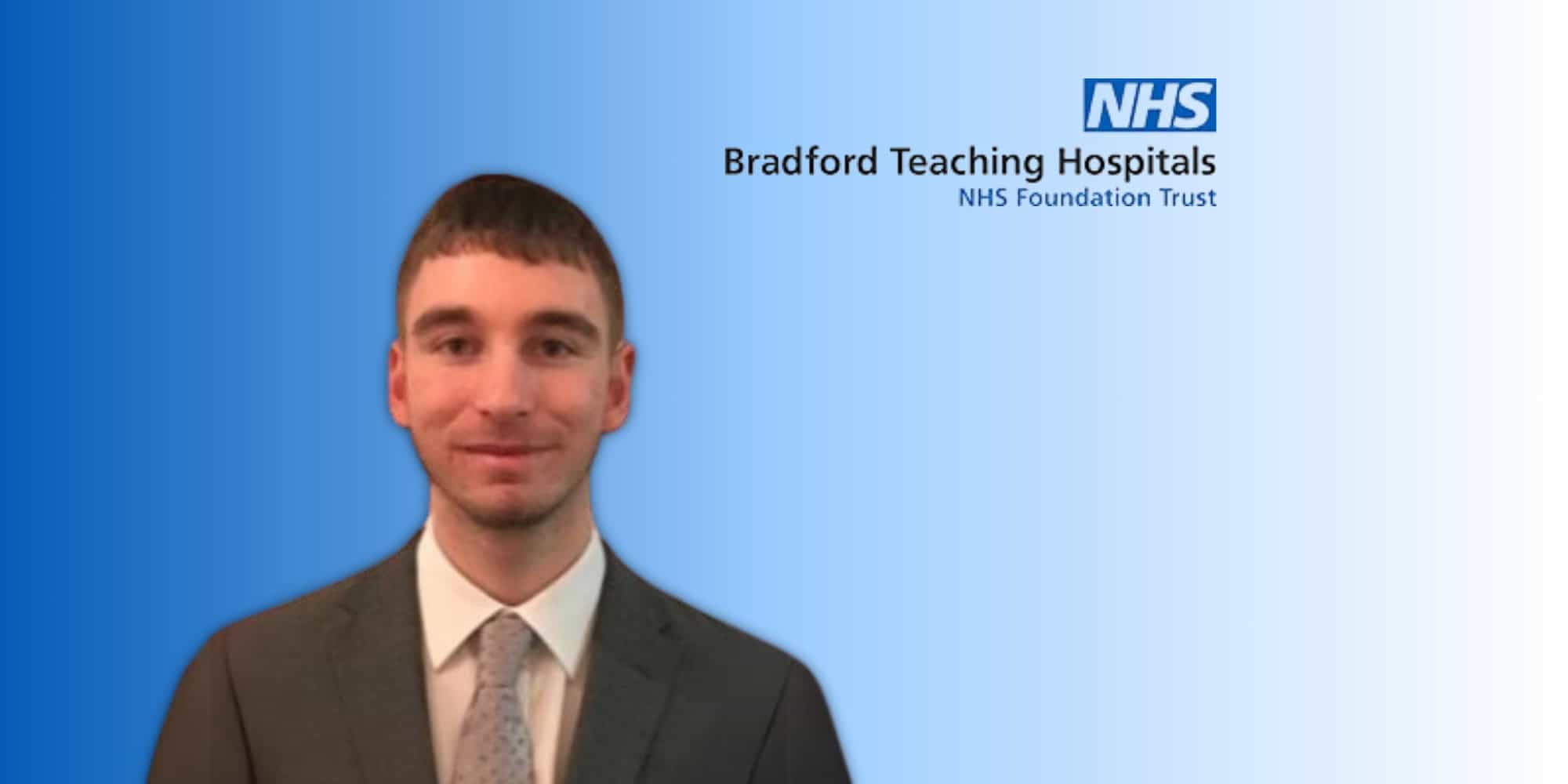
Conversation with Andrew Wilson
Service Manager at Bradford Teaching Hospitals NHS Foundation Trust.
Interview with Jonathon Tunstall
Interview date – 22 April 2024
Publication date – 23 October 2024
JT – Welcome to Pathology News. Today, I’m speaking with Andrew Wilson, Service Manager at Bradford Teaching Hospitals NHS Foundation Trust and we’re going to talk about the progress of the digitisation process at Bradford.
Andrew, welcome to Pathology News.
AW – Thank you. Nice to be here.
JT – Wll Andrew, perhaps you could start by telling me a little bit about your background, what you do, and how you developed an interest in the domain of digital pathology.
AW – Well actually, I don’t come from a world of pathology or histopathology, my background is in finance and economics, so completely different to what you may expect for someone in this role. I did an economics degree, became an accountant for a while and then found myself moving more into operational type roles where I eventually became a service manager for pathology. I would say my interest really spiked when I paid a visit to Source LDPath’s headquarters in Nottingham. They showed us their systems and how our samples could go all the way from the bench to the slides being reported. I was especially interested in the end step, where slides could be scanned and sent anywhere in the world for reporting. At the time, I knew there was a plan to introduce this technology at Bradford Teaching Hospitals, but the project was still in the pipeline. I thought this was an incredible, game changing piece of equipment and really, that is where my interest all started.
JT – Great! So, you mentioned Bradford Teaching Hospital and Bradford’s own digitisation process. So how is that proceeding to date? Is Bradford fully digital now or are you still in the process of implementation?
AW – We’re still very much in the process. Every office still has its microscopes, but we also now have nice big screens that the pathologist can use to start to get familiar with the digital software. We have already installed the new, powerful computer systems, we are through stage one validation and there are currently just a few people who. haven’t yet done stage two validation. We are at a stage where slides are being scanned, so our process is well underway, but we have a fairly low number of slides that have been reported digitally. It’s still early days yet.
JT – You mentioned Source LDPath there, have they been a partner in this process?
AW – Not directly in the integration of digital pathology as of yet. They have given us some advice as to what equipment and services they can provide us with. Going forward, Source LDPath will definitely be a part of our process for reporting and outsourcing cases.
JT – OK, so plan to use the Source LDPath service for external reporting or enhancing your reporting capacity?
AW – Yeah, absolutely.
JT – So tell me a little bit more about Source LDPath and how you see that relationship evolving. I know Source LDPath also provide AI solutions for example.
AW – Yes, we’ve been working with Source LDPath for many years now and I couldn’t believe when I started this job, that no one from Bradford had ever visited their site. Personally, I felt it was really important to go and meet the team who were dealing with our cases. They’ve been phenomenal in helping us with our backlog.
We have a couple of potential approaches to AI. NPIC have some possibilities via Sectra and Source LDPath are also working on a few AI algorithms that can diagnose cases or make suggestions of a diagnosis almost instantly. For a number of our cases that they scanned for us, we literally received an immediate diagnosis. The result does need checking over by a pathologist, but I think this is going to be game changing for the NHS.
JT – From what you have seen so far, do you think there are any particular cancer types for which the algorithms are more effective? For example, I hear a lot of talk about prostate cancer algorithms being generally quite advanced.
AW – I am hoping that we will be able to use quality algorithms for a number of different tissues. For example, we only have three people in our whole team who diagnose prostate cancers, and we are chronically short of breast pathologists. So, if there was a way for AI to assist with these diagnoses, that would dramatically enhance our service and reporting times. We should also consider the sheer volume of slides that a pathologist has to look through, and AI could potentially shorten the time needed to deal with each slide.
Another area we could use some assistance is in skin diagnosis. The majority of pathologists can do it, but because they are focussed on their own subspecialties, the skin samples tend to be given a lower priority.
JT – So from what you are saying, there are two potentially big benefits to the digitisation process at Bradford. One is that you are able to reach more pathologists through the Source LDPath network and also locally via NPIC. Then, you can also use AI to actually shorten the workload required for each individual pathologist. This sounds like a double benefit to the patient in terms of turnaround time.
AW – Yes, turnaround times are always an issue and we are constantly being informed by the MDTs that cases have been delayed because of our turnaround times or because the case is awaiting extra work. Source LDPath have pathologists in different countries, so that is one way we can increase our capacity and harness expertise from anywhere in the world for either a diagnosis or a second opinion. This is something that we definitely need to do.
JT – Has there been any resistance to the new technology at Bradford?
AW – Well, it is true that a lot of the consultants are in an older age group and certainly they didn’t train on the new emerging technologies of today. Mainly, they have always used microscopes for diagnosis and so sometimes even the introduction of a second screen in an office can be interpreted as a barrier to their day-to-day work. Now, when we are introducing a massive digital screen together with supercomputers and suggesting a move away from the microscope, that has definitely been a bit of a shock for some.
JT – Well, even if we don’t consider AI, digitisation dramatically impacts the role of the pathologist, doesn’t it? Then, when you bring AI into the equation, it’s not hard to imagine that some people must be fearful of this new technology taking away their job completely. How do you think the balance will work out ultimately between pathologist and the technology, or between pathologist and algorithm?
AW – I’d like to think that this is not going to be a technology that will take away a pathologist’s job. I think it is more of a complementary tool, because the expertise of the pathologist is always going to be required. Although AI will be trained to pick up the patterns of a particular case, there may be certain things it will miss and the AI can only be trained on the basis of the number of slides it has already been exposed to. That could be millions potentially, but I think we will always need the expert eye.
In our case, we have not been using digital slides for long at all, yet one of our pathologists has already highlighted certain elements on the digital slides which are not showing up under the microscope. This could be a problem with the image resolution and potentially a quality issue. Digital technology is clearly integral to the future of diagnostic processing.
JT – I wonder if the general process of digitisation is kind of self-fulfilling? For example, there are many labs now where young pathologists are being trained on computer screens rather than microscopes. Do you think the digitisation of all clinical pathology services is ultimately inevitable?
AW – Yes, even if we look at things like MDTs, traditionally you would have seen different consultants and specialties sitting together in a big boardroom sharing paperwork and discussing cases. MDTs can now be done over the internet using applications such as Teams Even when we look at the size of the waiting lists and the need and expectation of patients to get their results and start their treatment as quickly as possible.
JT – So digitisation is inevitable, meaning that the sceptical pathologists have to come on board at some point, that is if they don’t retire, they will have to accept the new technology?
AW – Yeah, I absolutely think so.
JT – Thinking about the future at Bradford, do you have a timescale in mind for completing the digitisation process?
AW – We are working towards a full rollout of the new software by the end of August this year. So that’s means all our pathologists being stage two validated and starting to reporting cases using the software. I’d like to say that we are on target. Of course, we have some assistance and we are able to seek advice from our contacts at Source LDPath and surrounding leaders in the digital transformation world. I am currently speaking with some people at SourceLD Path to get a few case studies and some of the work that they’ve been doing for us integrated with other trusts, We can send cases straight from the scanner to Source and that does not slow down the introduction of the technology at our site.
JT – I guess you could move to a world where you have both of those systems operating side by side, right? This gives an ability to flex your capacity, so if you’ve got a higher caseload at any point, you can just send more out to Source LDPath.
AW – Something that keeps me awake at night is that we are now in the summer again. During last summer we had a massive influx of skin cases and we just had no capacity to deal with them. Although we did ultimately deal with those, it was all far too slow and there is always a squeeze on capacity at this time of year due to an increase of skin referrals.
JT – So Source LDPath is really a key part of your future, part of the evolution of the pathology service at Bradford?
AW – Yes certainly. At the moment, we have difficulties recruiting pathologists and it’s not just about recruitment we also have to provide equipment and training. The ability to send cases to Source LDPath for analysis or to get second opinions is invaluable. We can also make use of neighbouring trusts, though they may not have the same expertise as some of the pathologists at Source LDPath.
JT – I assume Source LDPath also gives you access to pathologists who can deal with rare cases?
AW – Yes, if the expertise is on the other side of the world, then the only way we can do that is by using digital pathology and Source LDPath. Source LDPath have great access to specialist consultants for all disciplines of specimen, which is something that is invaluable for getting timely diagnostic results to our patients.
JT – Andrew, I think we’ll leave it there. Thanks you for your time today.
Share this article

Follow us
Get Pathology News Delivered to Your Inbox