How do you answer one of the most consequential questions in cancer care: not just whether a patient has cancer, but which treatment will actually help them? For years, the answer was hidden in plain sight.
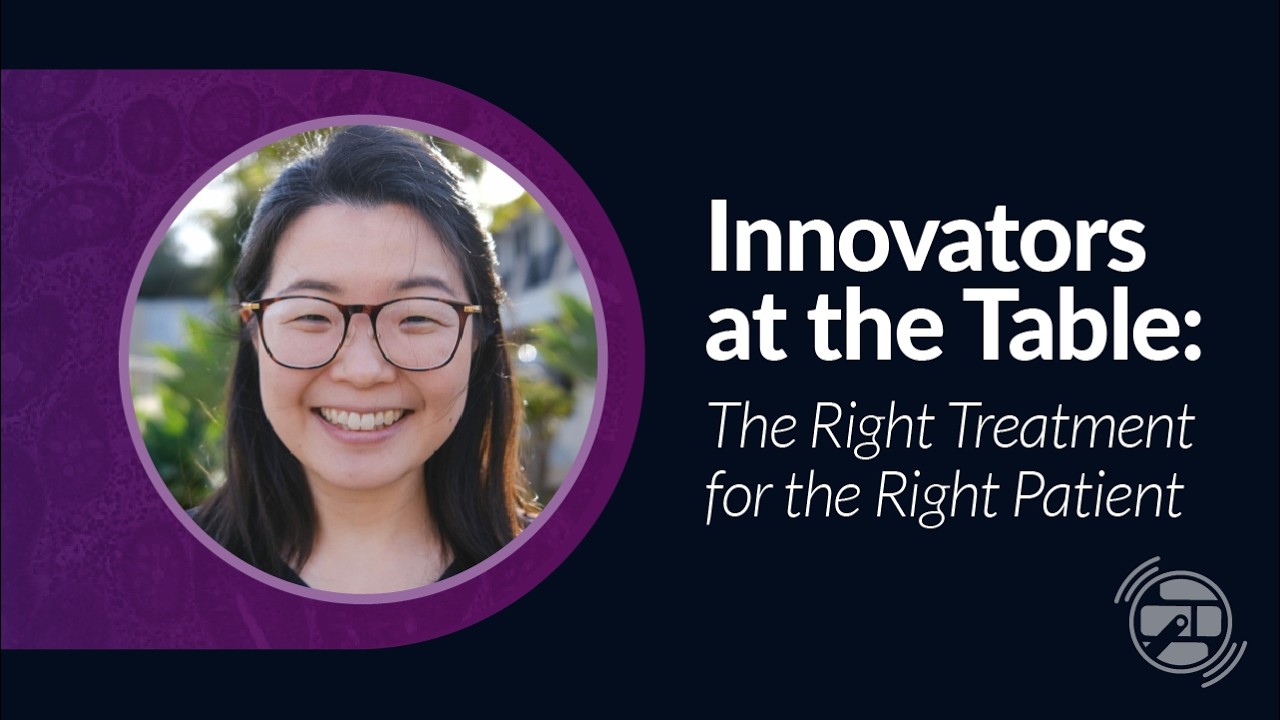
In this episode of PathPulse, part of our Behind the Summit series spotlighting the sponsors of the Digital Diagnostic Summit, host Bianca Collings sits down with Laura Chang, Chief Product Officer at Artera AI. Founded by a radiation oncologist and a Stanford-trained AI scientist, Artera built the first test that uses AI to read digital pathology images and clinical data together to predict whether a specific patient will benefit from hormone therapy. Their work is so groundbreaking that it’s already written into the NCCN Clinical Practice Guidelines for Prostate Cancer as the recommended standard of care.
Laura discusses her journey from a one-person startup to leading product at Artera, the critical need to solve overtreatment in prostate and breast cancers, and how digital pathology makes precision oncology faster and more accessible than traditional genomics. She also shares a deeply personal story of a pathologist friend who relied on Artera’s test for his own cancer diagnosis when traditional testing fell short. If you’ve ever wondered how AI is turning standard glass slides into personalized treatment roadmaps, this one’s for you.
Artera was one of the sponsors of the 2026 Digital Diagnostic Summit at The St. Regis Deer Valley in Park City, Utah. Get on the 2027 Summit waiting list to meet innovators like this next year during 3 days of sessions, hands-on conversation, and mountain-air networking with the people mapping diagnostic innovation to patient impact. [Register now →]
Transcript
Bianca Collings
Welcome to Path Pulse, the Digital Diagnostic Podcast. I am Bianca Collings, the Chief Marketing Officer for Lumea and the Executive Director of the Digital Diagnostics Summit. And today, we are talking about one of the most consequential questions in cancer care. Not just whether a patient has cancer, but which treatment will actually help them.
For men diagnosed with localized prostate cancer, that question has never had a reliable answer. The histopathology slide held the answer, but no human eye could read it. Artera AI was built to change that.
Founded by a UCSF radiation oncologist and a Stanford-trained AI scientist who watched patients receive the wrong treatment for the right diagnosis, Artera built the first test that reads both the digital pathology image of a biopsy and a patient’s clinical data together to predict whether that specific patient will benefit from hormone therapy. It is now written into the NCCN Clinical Practice Guidelines for Prostate Cancer. Not experimental, not emerging, but the recommended standard of care.
Today I am joined by Laura Chang, Chief Product Officer at Artera AI. Laura holds a PhD from the University of Michigan and brings a rare combination of scientific depth and product leadership to this work. She is the person responsible for translating Artera’s science into the clinical tools that reach the patients. Laura, would you mind introducing yourself to our listeners and walking us through your path to where you are today?
Laura Chang
Yes, thank you so much, Bianca. So I am Chief Product Officer at Artera AI. With my current role, I oversee our clinical, medical, product, and regulatory teams. So really, all the teams that are looking to develop new science and move all of what we’re developing into clinical care.
I actually started my career as a staff scientist at a one-person startup where I was the only employee, and my role was to develop multi-gene signatures for radiation benefit in breast cancer. And in that experience, I had first started working with our, you know, the future co-founder of Artera, who was Felix Feng. He’s a radiation oncologist that, at the time, was at the University of Michigan. And he, together with other colleagues, Lorie Pierce and Corey Speers, all radiation oncologists, were really trying to address the question of over-treatment in breast cancer.
And Artera really follows in the same steps as that first company. Because we know that, for many cancers, like in prostate cancer and breast cancer, overtreatment is an issue. These are cancers in which there is a long natural history. But there are, you know, areas of indolent disease that must be captured.
And so we want to make sure that every patient is getting the right treatment for them, that they are not over-treated, they’re not under-treated, but actually have the right level of treatment that will really manage their cancer care. And so when I was initially a staff scientist at PFS Genomics, I was developing new tools based off of clinical trial information. And that led to the first predictive signatures and breast cancer for radiation benefit.
Following the success of that scientific work, we really wanted to push it into clinical care. In order to do that, I led the acquisition of that company to a much larger one called Exact Sciences. The whole goal was to make sure that it could really be accessible to patients. And around that time, I started hearing more and more about digital pathology and its promise. And I think some of the drawbacks to genomics are that they’re really hard to access. It requires really specialized equipment, specialized tools. It can take multiple days in order to just extract the RNA and then provide back a genomic result.
But when I realized that you could actually just take a picture of a prostate cancer, a breast cancer specimen, and then find very similar information about patient’s risk stratification and treatment benefit, you know, that that really changed the game, I think, for precision oncology, that we’d be able to have a faster, a more accessible solution for patients.
And so when I joined Artera, my agreement was to make sure that this test could be used by and accessible by almost anyone. And Artera today, we hold some really great accomplishments, including having the first, and currently only, FDA-cleared tool in our space for both prostate and breast cancer, as well as CE marking, and a slew of of really critical clinical validation work that really shows the impact of our test for multitudes of different clinical questions today.
Bianca Collings
That’s incredible. So we’re talking, I mean, our focus really is the impact of your innovation on a patient. And was that like you, I mean, we just saw so many different implications to the patient. If you were to identify one—something in cancer care that needed a change, what would that be?
Laura Chang
I would say it’s hormone therapy in prostate cancer. So there are many men that receive hormone therapy as a part of standard of care. And the data have shown that not all men benefit from hormone therapy when provided with radiation. And what Artera was able to show was the first predictive validation in a randomized controlled trial that was randomized to plus-minus short-term ADT with radiation, that our tests can identify patients who benefit greatly from hormone therapy, but a very large portion of patients who don’t at all.
And so that, I think, was the most significant moment for Artera—that we could show in a really clear validation that our test is identifying patients who truly do benefit and those who don’t within a randomized control trial that was randomized for that purpose. And so because of that, we’ve seen great utility of our test for patients who really want to avoid ADT or to have comfort knowing that if they receive it, that’s the right decision to do.
Bianca Collings
Wow, so accurate care faster is absolutely a value here. What was the moment you knew this had to be built and that AI was the way to build it?
Laura Chang
For me, it was all based on the clinical validation. When I saw the Kaplan-Meyer curves that really separate out those patients, showing that it was the biomarker that could, that could more greatly stratify patients who benefit versus not, that’s when I was sold. And I knew that, you know, of course, there’s always more work to do. We want to make sure that not only do you have the right clinical performance, that you can replicate it again and again, that you can also then make that test available to patients. But it was that first hint that the clinical performance was good, that you really could use a biomarker for this case. That really sold me on digital pathology.
Bianca Collings
Walk me through, now, how Arteta’s test changes the experience for a patient, a physician, or a care team that’s making that treatment decision.
Laura Chang
So for the Artera test, the way that patients and physicians have access to this test is through our web portal. And so after a patient is diagnosed with prostate cancer and has their standard of care workup on them, that kind of divides them into different risk groups within prostate cancer, then they know what range of treatments that they’re eligible for.
And so that’s when the Artera test comes in. It’s really in the space of clinical equipoise, where there can be many different treatment decisions for a particular group of patients. And we’re really trying to personalize that decision even more by providing more precise estimates of 10-year distant metastasis, 10-year prostate cancer specific mortality, and also those predictive outputs. So after a patient’s been diagnosed with their prostate cancer, knows their clinical risk group, the Arteria test is then applied.
Because of the fact that we run on digital pathology and AI, you know, every patient already has our diagnostic biopsy specimen. And so that or you know a sequential specimen just has to be retrieved. It uses typical HE, so there’s no special stains involved, there’s no special annotation. That slide is digitized, and then the AI only takes a few hours to run, providing back this very comprehensive result of that patient’s risk and predictive insights and predictive results for patients that have certain treatments eligible to them.
Bianca Collings
Wow. Can you, or would you be able to, share a story or an example, even a representation of one that reminds you of why this work matters?
Laura Chang
You know, I have a close personal friend who was also a GU pathologist. And we had been talking about how we should be collaborating more at Artera. And he kept saying to me, “You know, I really want to, I really want to access the Artera test. I want to bring it in.”
I said, that’d be great. You know, let’s talk about integrations, let’s talk about validation. And he’s like, “No, you don’t understand. I want this test for myself.” And that’s when he told me that he had been diagnosed. That he had actually run his sample on the typical testing process that they do within his hospital. And so he actually had his specimen profiled by a genomics test. But it came back, initially, as quantity not sufficient, not enough tissue for them to analyze. Then he sent it back again and it came back again, but it didn’t give the right level of confidence in the information.
And so with the Artera test, we were able just to run the image of his H&E slide, and we’re able to provide him a result in a matter of a couple of days. And he was able to get the insights he was looking for with the precise estimates of risk stratification, but also a knowledge of how his cancer could be managed.
So when when that happened, that for me…I don’t know how to put it. It wasn’t necessarily like a happy moment because I knew that my friend had been going through a lot. And it’s not it’s not easy for anyone to go through this type of cancer diagnosis and management. And he knew better than anyone what to expect with these types of results. Because he was a pathologist that all you know had been preparing specimens for genomic analysis. but I was really happy that you know the Artera task provided him an answer and that provided him confidence in how he was being treated.
And we were able to do it because, for whatever reason, his tissue specimen wasn’t easily profiled by genomics, but it could be just by using the image. So that for me was just a really touching moment that I knew that, you know, for all this work that we had done, it at least impacted one person and it impacted them in a really positive manner.
Bianca Collings
Okay, that is probably the most powerful story. You have the pathologist and the patient loop full circle with the pathologist being the patient. And look where he turned, coming to you at probably one of the most I wouldn’t say devastating, but potentially. points in his life that that is that is absolutely an incredible reminder to all of us why this is so important, and that technology does impact these lives.
So, expanding on that, five years from now, what does the world look like if our Artera succeeds in what it’s setting out to do?
Laura Chang
Five years from now, if Artera succeeds in what it’s setting out to do, you will see that the Artera test is being used routinely for clinical decision making across multiple cancers. You will see greater depth in prostate cancer, that not only will we have really robust evidence for hormone therapy prediction, but also for ARPIs, for active surveillance, and not only localized space, but also the metastatic space.
And you will see Artera’s tests being used in other disease areas as well. You know, we’ve had our flagship product in prostate cancer. We’ve also released really great data in breast cancer, showing that the same underlying technology can work for risk stratification in breast cancer, that is also validated as predictive for chemotherapy benefit. And we see that what we are doing today, in prostate and breast, can then be used in other disease areas as well.
We also will show that this model can be used not just here in the United States, but also elsewhere. And one of the things that I keep hearing from my colleagues outside the United States is that many of the existing technologies for risk stratification are either just underperforming or they’re too expensive.
And so for the Artera test and our, you know, all the tests in the pipeline, we’ve kept a really, really keen eye on how we can make it more accessible. Our prostate and breast cancer tests are currently CE marked, and we’re continually working on new regulatory filings and other ways to make sure that the tests can be placed on market in other areas so that patients can access them.
We see that this technology is simpler, just logistically, than a lot of the alternatives out there, like in genomics. And so that also can lead to the test being more cost-effective as well. And so we really want to make sure that we are impacting as many patients as possible and allowing them to access these tests that they might not previously have had access to.
Bianca Collings
That’s actually, again, incredible. If you don’t mind, I have a couple questions I’d like to ask about Artera and the digital pathology movement and adoption, being that Artera has been an incredible partner of the Digital Diagnostic brand and, you know, the podcast—actually for five years now. What does the advancement of digital pathology mean to Artera? How critical is that for you?
Laura Chang
Yeah, the advancement of digital pathology is extremely critical to the advancement of Artera, because it is the foundation upon which all patients can quickly generate this information about themselves in a digitized form that can be used for these really exciting tests that Artera has.
So, you know, I think that Artera takes a very proactive approach and being very hand-in-hand with other partners in the digital pathology community, like Lumea is one of them. We want to make sure that digital pathology is not an exception, that it is the rule. That it is just being used by everyone because really it accelerates the way that you can provide care.
Bianca Collings
Absolutely. And this goes full circle back to the very first thing you talked about that it’s providing the right treatment, but it’s also faster. And at the end of the day, the patients don’t know, with the exception of the patient that you mentioned that was a pathologist, patients don’t know that there is this massive diagnostic care team working on their sample. They have no idea what goes on behind the scenes.
But what they do know is that every, every minute, actually every second matters here. It’s waiting. And if, through this technology, digital pathology, Artera, they can get those answers faster, but also have the confidence to know that they are accurate, that is a great comfort to the patients. I think it’s great comfort for those of us on the side of technology, too, that it’s, you know, we’re doing our piece to make that as seamless as possible for those patients.
So we really do love these partnerships and we know that it takes a team. We can’t, we can’t do it individually. And Artera is a huge piece of that workflow that alleviates the burden on the physician and the pathologist to make sure that they are delivering a speedy, accurate diagnosis. So, thank you so much. We just again are in awe of everything that you have done, that you are doing, and that you will do. So thank you, Laura, so much for joining us today.
Laura Chang
Great, thank you so much. My pleasure.
Share this article




Follow us
Get Pathology News Delivered to Your Inbox